
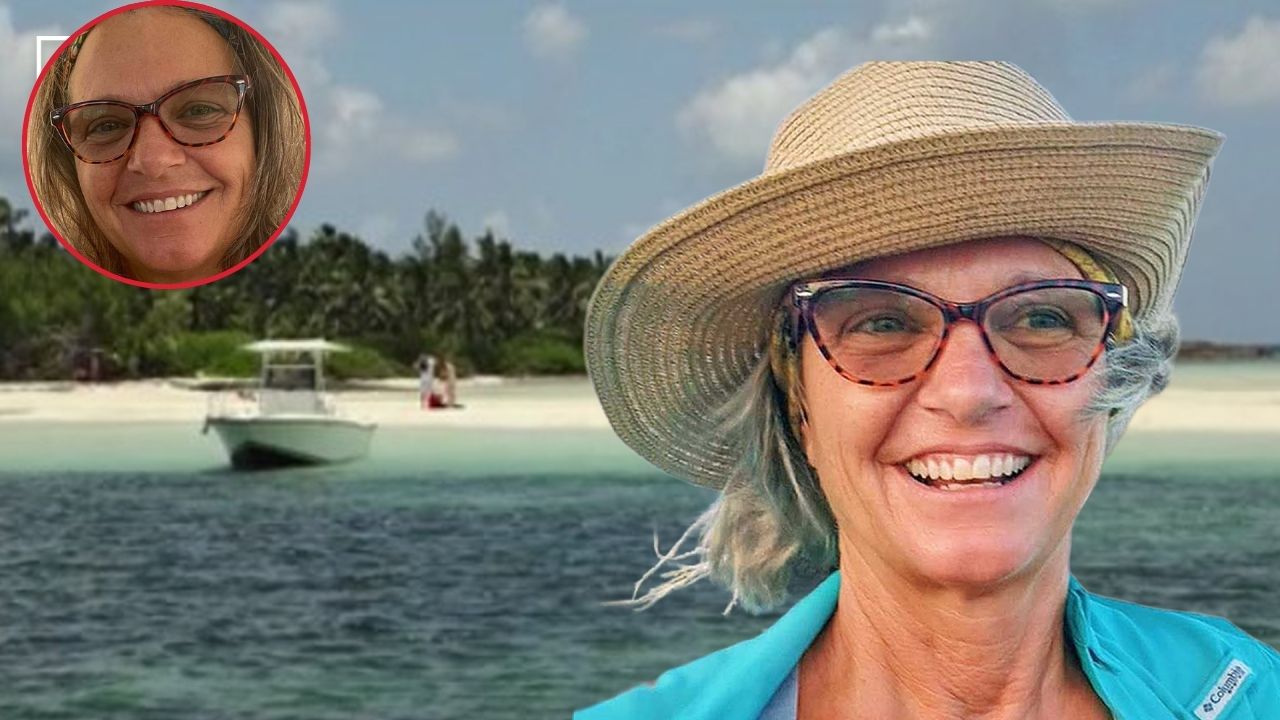
The disappearance of Lynette Hooker, an experienced sailor from Michigan, has evolved from a tragic search-and-rescue effort into a complex criminal investigation spanning multiple jurisdictions.
Lynette, 55, vanished while boating in the Bahamas on April 4, 2026. For weeks, authorities focused on locating a missing person believed to have accidentally fallen into the water. However, recent investigative developments have raised significant questions about what happened during the final hours before she disappeared.
Federal investigators are now examining digital evidence, conducting targeted underwater searches, and analyzing a seized sailboat as they work to determine whether Lynette’s disappearance was the result of an accident or something more troubling.
Final Evening at Sea
According to information provided during the investigation, Lynette and her husband, Brian Hooker, spent the evening of April 4 in Hope Town, a popular boating destination in the Bahamas.
The couple reportedly departed around 7:30 p.m. in a small hard-bottom dinghy with the goal of returning to their primary sailboat, Soulmate, which was anchored offshore.
That short trip would become the last known journey Lynette ever took.
What occurred afterward remains the central question investigators are trying to answer.
Husband’s Account
Brian Hooker told authorities that difficult sea conditions developed during the crossing.
According to his account, Lynette fell overboard while holding the emergency safety lanyard attached to the dinghy’s engine. The lanyard allegedly disconnected the motor when she entered the water, leaving the vessel without power.
Brian stated that he was unable to recover her and was forced to paddle the disabled dinghy back toward shore.
His explanation initially formed the foundation of the search effort launched by Bahamian authorities and rescue teams.
However, later discoveries would prompt investigators to take a closer look at that timeline.
Delay Raises Questions
One of the earliest concerns involved the amount of time that passed before the disappearance was officially reported.
Authorities say Brian arrived at the Marsh Harbour Boat Yard around 4:00 a.m. on April 5 to notify others that Lynette was missing.
The timeline suggested that approximately eight hours had elapsed between the reported accident and the request for help.
Investigators examined those hours carefully, seeking to understand exactly where Brian had been and what actions were taken after Lynette reportedly entered the water.
Those questions remain a major focus of the investigation.
Arrest and Release
Several days after Lynette disappeared, Bahamian authorities detained Brian Hooker as part of the ongoing investigation.
He was arrested on April 8 and held for several days while investigators reviewed evidence and conducted interviews.
After five days in custody, he was released without criminal charges.
Since returning to the United States, Brian has maintained that his account of events is accurate and that Lynette’s disappearance was a tragic accident.
No charges have been announced against him as of the latest public updates.
GPS Data Creates New Questions
The investigation took a significant turn when authorities reportedly analyzed location information extracted from Brian’s electronic devices.
According to investigators, the data did not align with portions of the timeline he provided following Lynette’s disappearance.
Officials believe the information indicates movement through geographic areas that had not previously been included in search operations.
The discrepancy has become one of the most closely examined pieces of evidence in the case.
Investigators are now working to determine whether the location data can provide new clues about what happened during the critical overnight hours.
New Dive Search Planned
Armed with the updated digital evidence, investigators have expanded their search strategy.
Federal authorities are reportedly organizing targeted underwater operations focused on specific locations identified through GPS records.
Unlike the broader search efforts conducted immediately after Lynette vanished, the new mission is designed to examine smaller, highly specific zones that investigators believe could contain evidence.
Divers will search these areas for physical clues that may help reconstruct the events of April 4 and April 5.
The operation represents one of the most significant developments since the case began.
Questions About Search Efforts
Additional scrutiny has emerged regarding equipment available aboard the couple’s sailboat.
Friends familiar with the vessel have noted that Soulmate was reportedly equipped with a sophisticated infrared and thermal imaging system valued at approximately $33,000.
Such technology can help detect heat signatures and locate people in low-light conditions.
Investigators have examined why the equipment was apparently not deployed on the night Lynette disappeared.
Authorities have not publicly stated whether this issue has altered their assessment of the case, but it remains a subject of interest within the investigation.
Sailboat Under Examination
In another major development, the U.S. Coast Guard seized the couple’s sailboat near Melbourne, Florida.
The vessel was transported to a federal forensic facility in Quantico, Virginia, where specialists are conducting an extensive examination.
Forensic analysts are expected to inspect the boat for biological evidence, digital records, structural damage, and any materials that could assist investigators.
The results of that analysis have not yet been publicly released.
Officials continue to describe the examination as an important part of the ongoing inquiry.
Family Challenges Narrative
As investigators pursue new leads, Lynette’s family has become increasingly vocal.
Her daughter, Karli Aylesworth, has publicly questioned aspects of the account provided by her stepfather.
According to family statements, Lynette was an experienced sailor and a strong swimmer with extensive time spent on the water.
Aylesworth has also stated that the couple experienced frequent conflicts throughout their relationship.
While family concerns do not establish wrongdoing, they have added another layer of complexity to an already complicated investigation.
Investigation Remains Active
Months after Lynette Hooker vanished in the Bahamas, investigators continue to search for answers.
What began as a presumed boating accident has evolved into a case involving conflicting timelines, digital evidence, forensic examinations, and renewed search operations.
Authorities have not reached a final conclusion regarding what happened on the night Lynette disappeared.
Until additional evidence emerges, her whereabouts remain unknown, and one of the most closely watched maritime investigations of 2026 remains unresolved.