
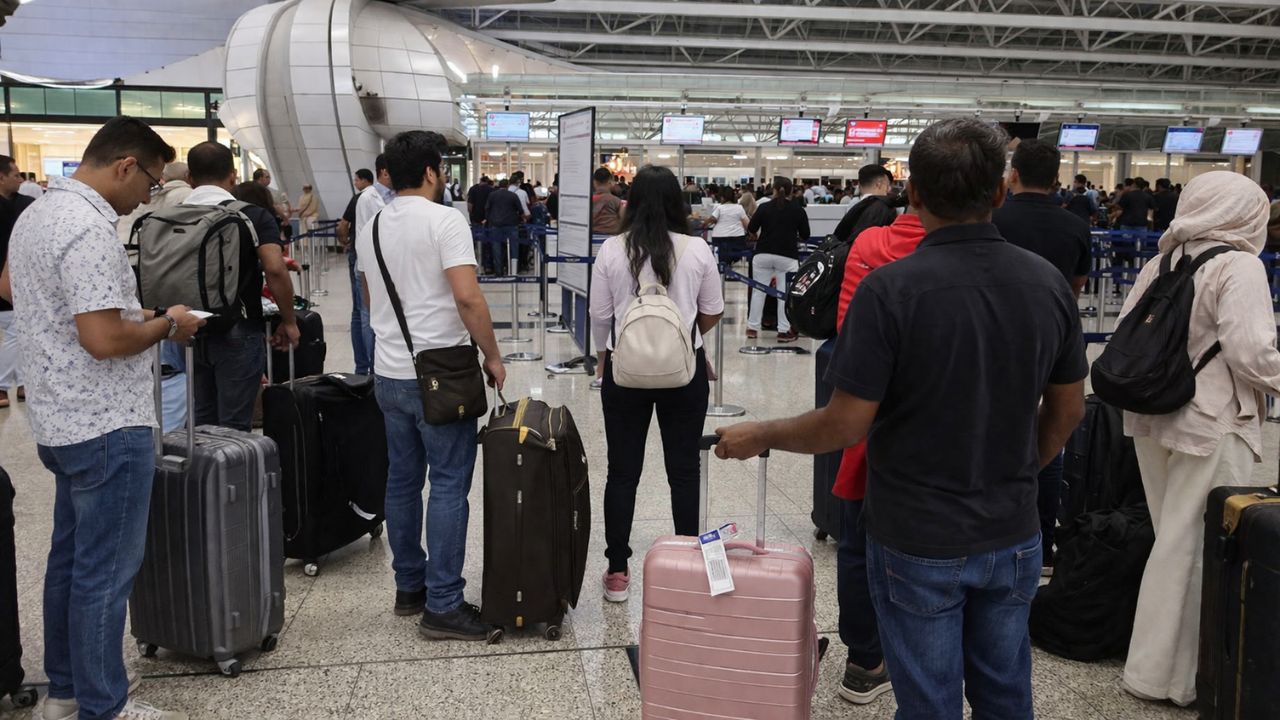
The global tourism industry is entering a turbulent phase in 2026, with Bahrain now joining a growing list of countries grappling with severe hospitality challenges. Alongside nations such as Turkey, the UAE, Egypt, Saudi Arabia, Cyprus, and Oman, Bahrain is facing a sharp downturn driven by geopolitical instability, widespread travel cancellations, and declining international confidence.
At the same time, major outbound travel markets including the United States, India, Italy, and Thailand are also at risk of sustained losses, as global travel patterns shift dramatically in response to ongoing disruptions.
Rising Geopolitical Tensions Disrupt Global Travel
The primary trigger behind this global tourism slowdown is the escalating geopolitical tension in the Middle East, particularly involving the United States, Israel, and Iran. This conflict has significantly impacted global aviation routes, forcing airlines to reroute or cancel flights and creating widespread uncertainty among travelers.
More than 5,000 flights were cancelled in the early phase of the crisis, while key airspaces across the region were restricted, disrupting international connectivity on a massive scale.
The Middle East, a major global transit hub accounting for around 14% of international air traffic, has been hit especially hard. As a result, even destinations outside the region are experiencing ripple effects due to delays, longer travel times, and higher operational costs.
Bahrain and Regional Destinations Face Hospitality Fallout
Bahrain’s tourism sector, which has been steadily growing in recent years, is now under pressure as cancellations rise and hotel occupancy declines. The situation mirrors what is happening across the Gulf and surrounding regions.
Countries such as the UAE, Saudi Arabia, Egypt, and Oman are witnessing:
- Sharp declines in hotel bookings
- Reduced international arrivals
- Increased last-minute cancellations
- Lower airline capacity
Industry data suggests that the Middle East tourism sector is losing approximately $600 million per day in international visitor spending due to reduced travel demand.
This downturn is particularly concerning because the region had emerged as one of the fastest-growing tourism markets globally, welcoming nearly 100 million visitors in 2025 before the crisis struck.
Global Spillover: Travel Demand Shifts Away from Affected Regions
The impact is not limited to the Middle East. Travelers from key outbound markets such as the US, Europe, and India are actively avoiding affected destinations and shifting their plans elsewhere.
Travelers are now choosing:
- Short-haul European destinations
- Southeast Asian countries
- Domestic or regional trips
This shift has created a sudden imbalance in global travel demand. While some destinations face heavy losses, others are seeing unexpected surges.
For instance, Thailand continues to attract tourists despite disruptions, recording over 7 million visitors in early 2026, although still facing a slight decline due to reduced long-haul travel.
India and Other Key Markets Witness Booking Declines
India, one of the fastest-growing outbound travel markets, is already showing signs of caution. Travel agencies report a 20–25% drop in new bookings following airspace uncertainty and rising travel risks.
Many Indian travelers are:
- Postponing international trips
- Opting for safer destinations
- Avoiding transit routes through conflict zones
Similarly, travelers from the United States and Europe are rethinking their travel plans, especially those involving Middle Eastern stopovers.
Hotel Industry Under Pressure Worldwide
The hospitality sector is bearing the brunt of this crisis. From luxury resorts in Dubai to beachfront hotels in Thailand, businesses are struggling to maintain occupancy levels.
In Thailand, for example, luxury hotels have slashed room rates by up to 70% to attract domestic tourists as international arrivals decline.
Other regions are experiencing:
- Reduced revenue per available room (RevPAR)
- Increased dependence on domestic tourism
- Aggressive discounting strategies
- Delayed expansion and investment plans
Even destinations far from the conflict zone, such as Sri Lanka, have reported nearly a 20% drop in tourist arrivals due to disrupted travel routes.
Long-Term Risks for Global Tourism Recovery
The biggest concern for the travel industry is the potential long-term impact. Historically, tourism sectors take time to recover after geopolitical crises, especially when traveler confidence is shaken.
Experts warn that if tensions persist:
- Travel demand may remain unstable for months
- Airlines could reduce international routes
- Tourism-dependent economies may face prolonged financial strain
Additionally, rising fuel prices and inflation are further increasing travel costs, making international trips less accessible for many travelers.
A Resilient Yet Uncertain Future
Despite the challenges, the global tourism industry has shown resilience in the past. Countries are already adapting by:
- Promoting alternative travel routes
- Targeting regional markets
- Offering competitive pricing and incentives
However, recovery will largely depend on how quickly geopolitical tensions ease and traveler confidence returns.
For Bahrain and other affected nations, the road ahead will require strategic adjustments, strong policy support, and renewed efforts to rebuild trust among international travelers.
As the situation continues to evolve, one thing is clear: the global travel landscape is undergoing a significant transformation, and both destinations and travelers must adapt to a new era of uncertainty.