
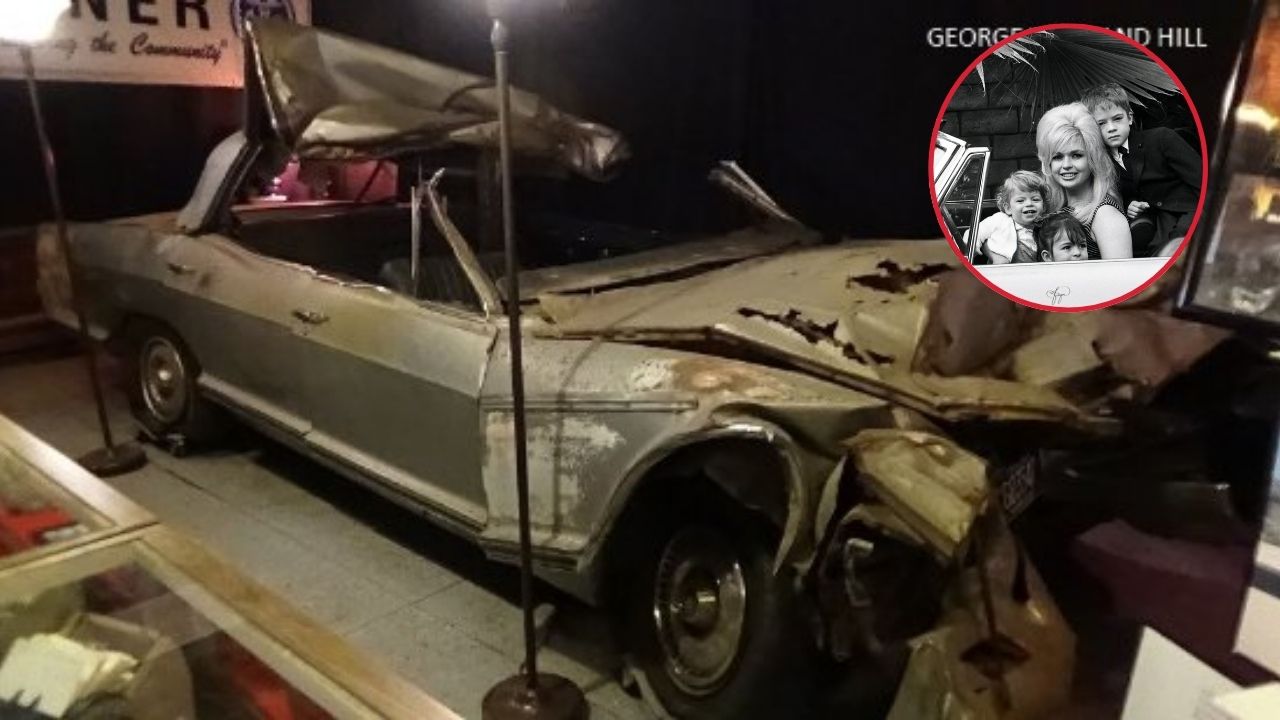
The Jayne Mansfield car accident remains one of the most tragic and influential traffic disasters in American entertainment history. On June 29, 1967, the Hollywood actress, singer, and television personality lost her life in a devastating collision on a Louisiana highway. She was only 34 years old.
While the crash shocked fans around the world, its impact extended far beyond Hollywood. The circumstances surrounding the accident eventually led to major transportation safety reforms that continue to save lives on American roads today.
More than five decades later, the story remains a powerful reminder of how a single tragedy can drive meaningful change.
A Star at the Height of Fame
During the 1950s and 1960s, Jayne Mansfield was one of Hollywood’s most recognizable celebrities.
Known for her glamorous image, platinum blonde hair, and larger-than-life public persona, she became a major film star and media attraction. Mansfield appeared in movies, television programs, stage productions, and nightclub performances throughout her career.
By the summer of 1967, she was balancing entertainment appearances with family life while continuing to maintain a busy travel schedule.
It was one of those work-related trips that ultimately ended in tragedy.
The Journey Through Louisiana
On the night of June 28, 1967, Mansfield had completed a nightclub engagement in Biloxi, Mississippi.
She then began traveling toward New Orleans, where she was scheduled to appear on television the following morning. Accompanying her were attorney and companion Samuel S. Brody, chauffeur Ronald B. Harrison, and three of her young children.
The group traveled in a 1966 Buick Electra along U.S. Route 90, a highway connecting communities across the Gulf Coast region.
As the vehicle moved through Louisiana during the early morning hours, conditions ahead became increasingly dangerous.
Visibility Suddenly Disappears
At approximately 2:25 a.m., the Buick approached an area near Slidell, Louisiana, where a truck was conducting mosquito-control operations.
The vehicle was spraying insecticide and creating a dense cloud of fog-like mist over the roadway. Drivers entering the area faced dramatically reduced visibility.
At nearly the same location, a tractor-trailer had slowed its speed on the highway.
Investigators later concluded that the Buick’s driver had little time to react after entering the thick cloud. The combination of darkness, reduced visibility, and the slower-moving truck created a hazardous situation.
Within moments, disaster struck.
The Fatal Collision
The Buick crashed into the rear of the tractor-trailer at high speed.
Because the trailer sat significantly higher than the passenger vehicle, the car slid underneath the rear section of the truck during the impact. The force of the collision destroyed much of the front passenger compartment instantly.
The severe underride crash left little chance of survival for anyone seated in the front row of the vehicle.
Emergency responders arriving at the scene encountered one of the most devastating highway accidents of the era.
The incident immediately attracted national attention because of Mansfield’s celebrity status and the shocking nature of the crash.
Lives Lost in the Crash
Three adults occupying the front seat were killed instantly.
Jayne Mansfield died alongside Samuel S. Brody and driver Ronald B. Harrison. The collision was so violent that emergency personnel could do little to help the victims.
Several of Mansfield’s beloved pet dogs were also killed during the accident.
The deaths generated extensive media coverage across the United States and internationally. Newspapers carried dramatic headlines, while television networks reported extensively on the loss of one of Hollywood’s most famous stars.
The tragedy marked an abrupt and heartbreaking end to Mansfield’s life and career.
The Children Who Survived
Amid the devastation, one remarkable detail emerged.
Three of Mansfield’s children had been asleep in the rear seat of the vehicle at the time of the collision. Eight-year-old Mickey Hargitay Jr., six-year-old Zoltan Hargitay, and three-year-old Mariska Hargitay all survived.
Their survival was largely due to the fact that the most severe damage occurred in the front portion of the vehicle.
Although the children sustained injuries, they escaped the catastrophic trauma experienced by the adults in the front seats.
One of those children, Mariska Hargitay, would later become a globally recognized actress through her long-running role on the television series Law & Order: Special Victims Unit.
The Decapitation Rumor
Over the years, one of the most persistent myths surrounding the accident involved claims that Mansfield had been decapitated.
The rumor spread quickly because of graphic accident photographs published in newspapers and magazines following the crash.
Images from the scene showed blonde hair tangled among the wreckage, leading many people to assume the actress had suffered decapitation.
However, official reports and medical documentation did not support this claim. Authorities later clarified that the hair seen in photographs belonged to a wig that had been thrown from Mansfield during the collision.
While her injuries were unquestionably fatal and severe, the commonly repeated version of events was inaccurate.
Birth of the Mansfield Bar
The most lasting legacy of the crash was its influence on vehicle safety regulations.
Following investigations into the accident, transportation officials focused on the dangers posed by underride collisions involving large commercial trucks. When passenger vehicles slid beneath elevated trailers, the upper portions of cars often absorbed catastrophic damage.
To reduce this risk, safety authorities promoted the installation of rear underride guards on commercial trailers.
These steel barriers were designed to stop passenger vehicles from traveling underneath trucks during rear-end collisions.
Over time, federal regulations required such protective devices on many commercial trailers. Within the trucking industry, these structures became widely known as “Mansfield Bars.”
A Lasting Legacy
Today, the Jayne Mansfield car accident is remembered not only as a tragic loss for Hollywood but also as a turning point in transportation safety.
The crash highlighted a hidden danger on American highways and helped inspire changes that have protected countless motorists over the decades.
While Mansfield’s career, beauty, and celebrity status made her a cultural icon, her unexpected legacy became linked to a safety innovation that continues to save lives.
More than half a century later, the lessons learned from that tragic morning in Louisiana remain an important part of highway safety history.