
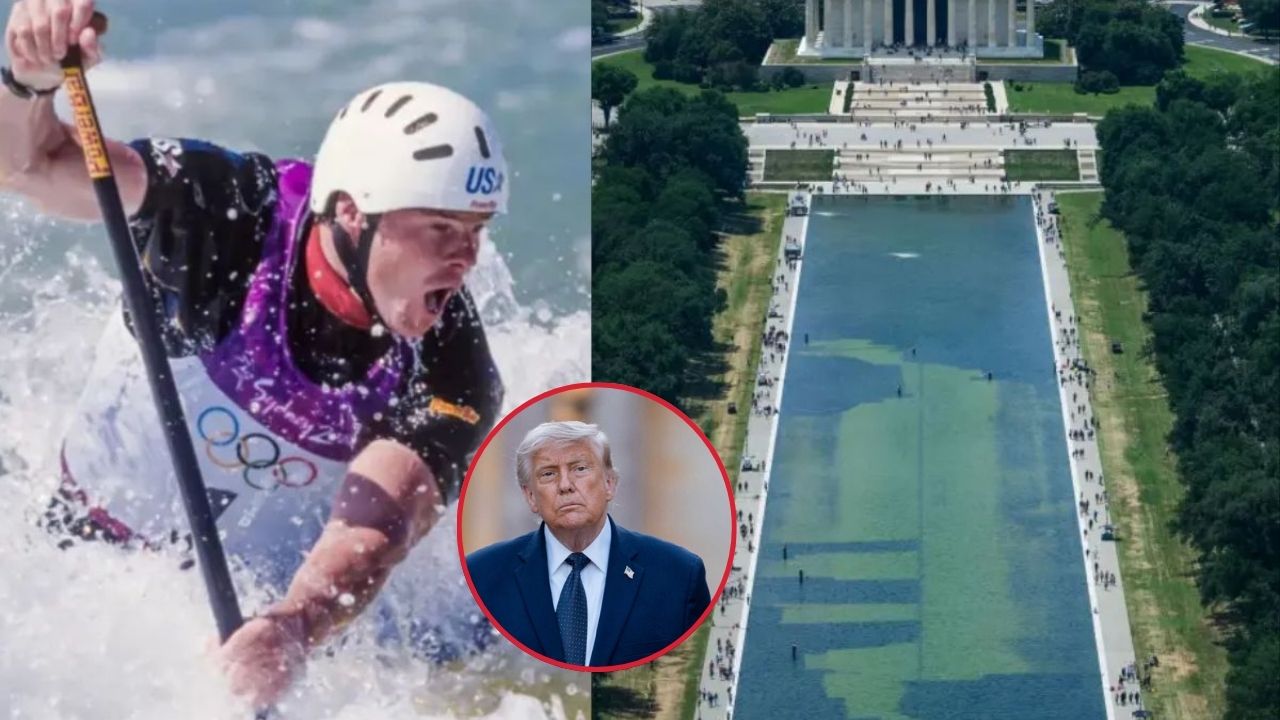
A routine stop during a bicycle ride through Washington, D.C., turned into a highly publicized legal controversy for former Olympic athlete David Hearn. The 67-year-old canoeist, who represented the United States at three Olympic Games, was arrested after authorities accused him of damaging property at the recently renovated Lincoln Memorial Reflecting Pool.
The incident quickly gained national attention after videos of Hearn being questioned and detained near the famous monument spread across social media. While federal authorities charged him with misdemeanor destruction of government property, Hearn strongly disputes the allegation and insists he did nothing wrong.
The case has since become part of a broader debate involving public monuments, government renovation projects, and the circumstances surrounding his arrest.
Incident at the Reflecting Pool
The encounter occurred on June 19, 2026, at the Lincoln Memorial Reflecting Pool, one of Washington’s most recognizable landmarks.
According to reports, Hearn had stopped at the monument while taking part in a lengthy bicycle ride through the city. During his visit, authorities accused him of damaging a section of the reflecting pool’s recently installed lining.
Law enforcement officers from the U.S. Park Police, assisted by National Guard personnel, approached Hearn and began questioning him about the condition of the pool.
Witness videos later showed officers surrounding the former Olympian while his bicycle remained nearby.
The situation escalated into a lengthy detention that eventually ended with Hearn being placed under arrest.
Five Hours in Custody
Following the initial confrontation, Hearn was reportedly detained for approximately five hours.
Authorities ultimately charged him with misdemeanor destruction of government property, a charge that alleges damage to federally owned infrastructure.
The arrest generated significant online discussion after footage of the interaction circulated widely on social media platforms and news outlets.
Many viewers questioned the circumstances of the arrest, while others focused on the broader concerns surrounding the condition of the reflecting pool itself.
The viral nature of the footage helped transform what might have been a local incident into a nationally discussed story.
Hearn Denies Any Vandalism
Hearn has publicly rejected the accusations against him.
According to his account, he noticed a section of the newly installed blue lining in the reflecting pool already peeling away from the surface. He said the loose material appeared to be floating in the water and caught his attention.
Describing himself as a curious visitor rather than a vandal, Hearn claims he simply reached toward the loose material to examine it.
He maintains that he did not tear, remove, damage, or alter any part of the structure.
The former athlete has consistently argued that the material was already detached before he approached it.
His defense is expected to be central to upcoming court proceedings.
Spotlight on a High-Profile Renovation
The arrest comes amid heightened attention surrounding the Lincoln Memorial Reflecting Pool’s recent renovation project.
The pool underwent a major rehabilitation effort costing approximately $14 million. The project attracted national interest because it included a highly visible redesign intended to prepare the landmark for upcoming national celebrations connected to America’s 250th anniversary.
One of the most discussed elements of the renovation involved the installation of a blue-colored interior coating, a change that generated significant public debate.
Supporters viewed the project as a patriotic enhancement, while critics questioned both the design and the overall cost.
The renovation has remained under scrutiny since completion.
Problems Emerged After Completion
Reports indicate that the reflecting pool experienced maintenance issues shortly after the project concluded.
Observers noted algae growth and visible sections of the new coating that appeared to be peeling away from portions of the structure.
Photographs and videos circulating online showed areas where the blue lining seemed to be separating from the surface beneath it.
These concerns became a major topic of discussion in the days leading up to Hearn’s arrest.
According to Hearn, the material he touched was already loose and floating when he encountered it.
Whether investigators agree with that description remains a key question in the case.
Political Attention Intensifies
The incident occurred during a period of increased political attention surrounding the condition of the reflecting pool.
Just hours before Hearn’s arrest, public statements and social media posts had raised concerns about alleged vandalism at the site.
The timing fueled speculation and intensified public interest in the case.
Some observers questioned whether concerns about damage to the pool contributed to a heightened law enforcement response, while others argued that authorities were simply protecting a nationally significant monument.
Regardless of perspective, the incident quickly evolved beyond a simple property damage investigation.
Olympic Legacy Draws Public Interest
Part of the reason the story attracted widespread attention is Hearn’s athletic background.
The longtime canoeist represented the United States in three Olympic Games and remains a respected figure within the paddling community.
His decades-long involvement in competitive sports has earned him recognition among athletes and outdoor enthusiasts across the country.
As a result, news of his arrest surprised many who knew him primarily through his accomplishments on the water rather than any legal controversy.
The contrast between his public reputation and the allegations against him has contributed to the intense interest surrounding the case.
A Strange Historical Connection
Remarkably, this is not the first time Hearn has encountered legal issues involving federal park authorities.
Reports indicate that nearly three decades ago he was arrested after canoeing in the Potomac River during a period when access restrictions had been imposed because of dangerous flooding conditions.
That earlier case ultimately did not result in a conviction after legal challenges focused on jurisdictional questions.
The unusual parallel has added another layer of public curiosity to the current situation.
While the circumstances differ significantly, both incidents involved outdoor recreation, federal authorities, and highly publicized legal disputes.
What Happens Next?
Following his release from custody, Hearn was ordered to appear in court to address the misdemeanor charge.
A hearing has been scheduled in the District of Columbia Superior Court, where prosecutors and defense attorneys will present their respective arguments.
The court will ultimately determine whether evidence supports the allegation that Hearn intentionally damaged government property.
For now, the former Olympian continues to deny wrongdoing and insists that he merely examined material that was already detached from the reflecting pool.
Case Continues to Draw Attention
The David Hearn arrest has become more than a simple property damage case. It sits at the intersection of public landmarks, government renovation projects, politics, and personal accountability.
As investigators continue reviewing evidence and legal proceedings move forward, many questions remain unanswered. Was the damage already present before Hearn approached the pool? Did his actions contribute in any way to the condition of the structure? And how will the court evaluate the competing versions of events?
Those answers may emerge in the weeks ahead as the case proceeds through the legal system. Until then, the arrest of the former Olympic canoeist remains one of the most talked-about public incidents involving a national monument this year.