
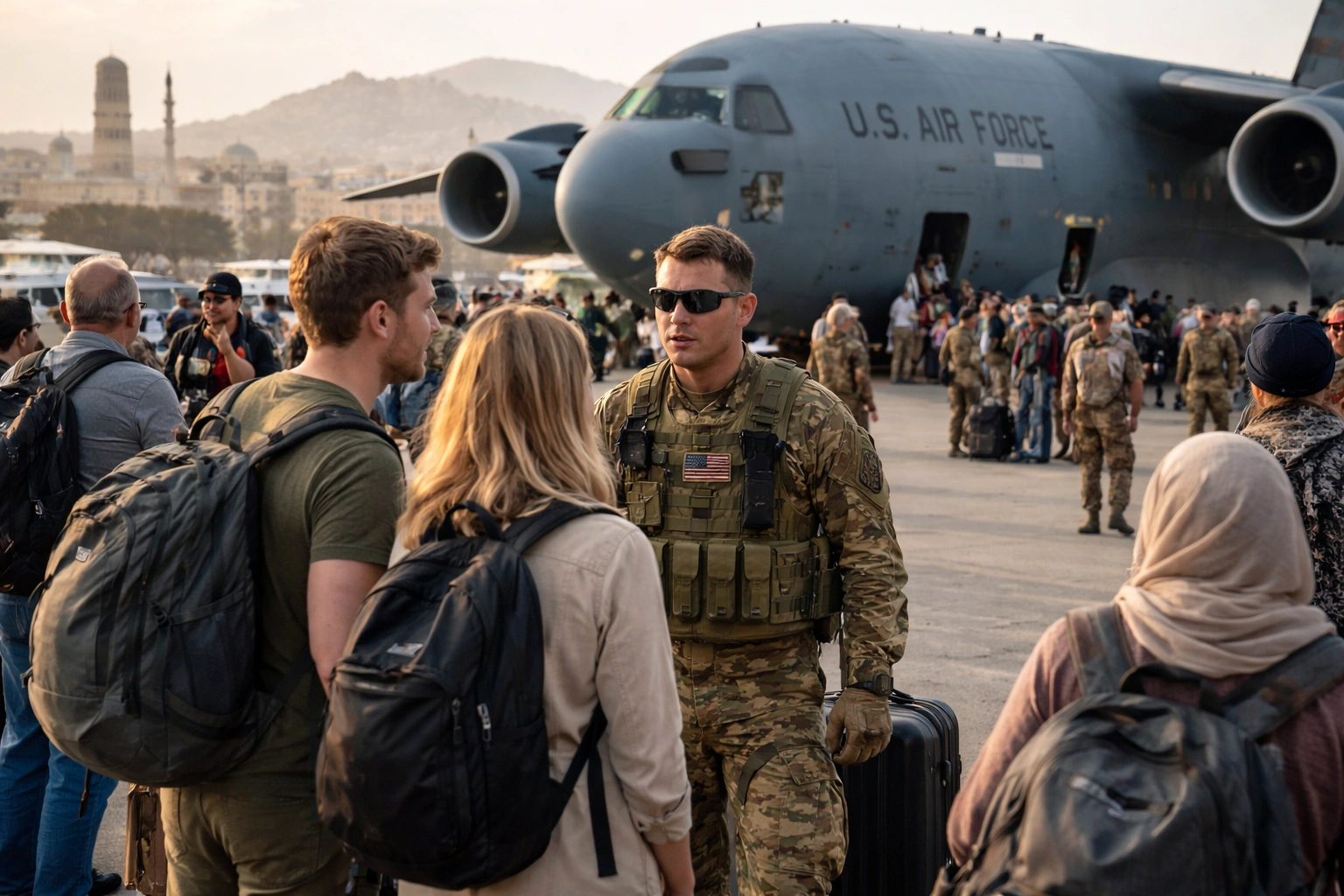
The United States government has rolled out new safety measures and evacuation planning efforts as tensions across the Middle East continue to escalate. With April identified as a critical window, authorities are working to secure escape routes and bring back Americans who remain stranded in the region.
Jordan has now joined countries such as Saudi Arabia, the UAE, Iran, Israel, Lebanon, Qatar, and Oman in coordinating with international partners and monitoring the evolving situation. The move reflects growing urgency as geopolitical risks continue to disrupt travel, airspace, and ground mobility.
Countries on High Alert
The Middle East remains on heightened alert as multiple nations respond to security concerns and shifting regional dynamics. Governments across the region are increasing surveillance, strengthening border controls, and preparing for emergency scenarios.
Jordan’s involvement highlights its strategic role as a key transit and diplomatic hub. Similarly, Gulf nations like Saudi Arabia, the UAE, Qatar, and Oman are maintaining operational readiness at airports and ports to support potential evacuation movements.
Meanwhile, countries such as Israel and Lebanon remain under close observation due to their proximity to areas of active tension.
New US Safety Measures Announced
US authorities have introduced a series of safety measures aimed at protecting citizens currently in the region. These include updated travel advisories, enhanced embassy support, and emergency communication systems.
Americans in affected countries are being urged to register with their nearest US embassy or consulate. This allows officials to maintain contact, provide real-time updates, and coordinate evacuation logistics more effectively.
The government has also expanded its crisis response teams to ensure rapid assistance for those in need.
Escape Routes Being Secured
A major focus of the US response is the establishment of secure escape routes. These include both air and land evacuation options, depending on conditions in specific locations.
Airports in countries such as the UAE, Qatar, and Jordan are being positioned as key transit points for evacuation flights. In cases where air travel is restricted, land corridors are being explored to move citizens to safer areas.
Coordination with allied governments is playing a critical role in ensuring that these routes remain viable and secure.
Airlines and Airspace Challenges
Air travel in the region continues to face disruptions due to airspace restrictions and safety concerns. Several airlines have adjusted routes, canceled flights, or reduced frequency on key corridors.
This has complicated evacuation planning, as limited flight availability can slow down the process of moving large numbers of people. Authorities are working closely with airlines to prioritize evacuation flights where possible.
Passengers are being advised to remain flexible and prepared for last-minute changes to travel plans.
Embassy Support Expanded
US embassies and consulates across the Middle East have ramped up operations to support citizens. Additional staff, extended working hours, and dedicated helplines are being introduced to manage increased demand.
Embassy teams are assisting with documentation, travel arrangements, and emergency services. In some cases, temporary shelters and support facilities are being made available for those awaiting evacuation.
The enhanced presence underscores the importance of diplomatic networks during crisis situations.
What Americans Should Do Now
US citizens in the region are being strongly advised to stay alert and follow official guidance. Registering with the embassy, monitoring travel advisories, and maintaining communication with local authorities are essential steps.
Travelers should keep important documents readily accessible and be prepared to move quickly if evacuation instructions are issued. Having a contingency plan, including alternative routes and emergency contacts, can make a significant difference.
It is also recommended to avoid high-risk areas and limit non-essential movement.
Regional Coordination Intensifies
The current situation has prompted increased coordination among Middle Eastern nations. Governments are sharing intelligence, aligning security measures, and facilitating transit arrangements for foreign nationals.
Countries such as Jordan and Oman are playing key roles in providing safe passage and logistical support. Gulf nations, with their advanced infrastructure, are acting as major hubs for evacuation operations.
This collaborative approach is helping streamline efforts and reduce potential bottlenecks.
Uncertainty Continues into April
While evacuation planning is underway, uncertainty remains high as the situation continues to evolve. Much will depend on geopolitical developments and the stability of transport routes in the coming weeks.
April is expected to be a critical period, with authorities aiming to accelerate evacuation efforts during this time. However, changing conditions could impact timelines and strategies.
Citizens are being urged to remain patient and adaptable as plans unfold.
A Critical Moment for Global Mobility
The unfolding situation highlights the fragility of global mobility during times of geopolitical tension. From disrupted air travel to emergency evacuations, the impact is being felt across borders.
The US government’s proactive approach, combined with regional cooperation, is aimed at ensuring the safety of its citizens while navigating complex challenges.
For now, the priority remains clear: safeguard lives, maintain communication, and execute evacuation plans efficiently as conditions allow.