
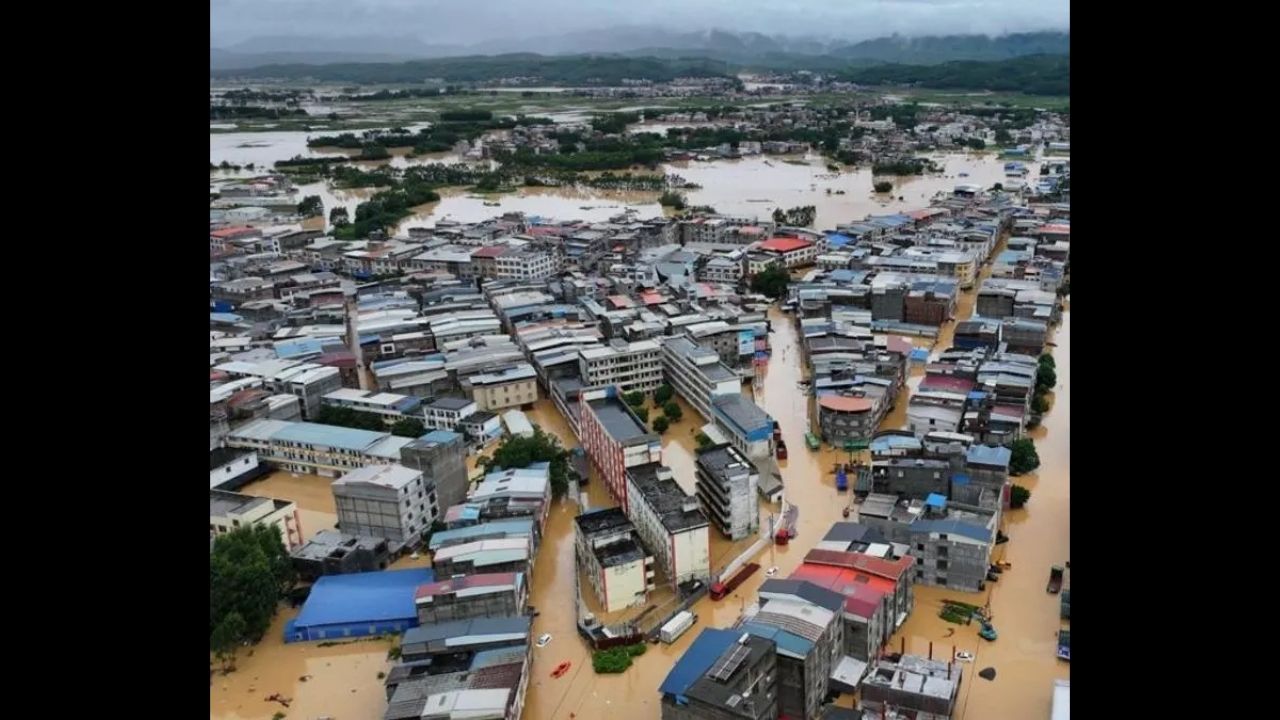
Typhoon Maysak has brought widespread destruction across several regions of China, leaving communities struggling with catastrophic flooding, powerful tornadoes, damaged infrastructure, and large-scale evacuations. The storm system, which struck on July 6, 2026, produced dangerous weather conditions that affected both southern and central parts of the country.
Authorities reported significant casualties, hundreds of injuries, and tens of thousands of displaced residents as emergency crews worked around the clock to rescue stranded families and restore essential services. The disaster has also raised concerns about additional severe weather, with meteorologists closely monitoring the approach of another major storm system.
Powerful Storm
Typhoon Maysak delivered torrential rainfall and destructive winds across multiple provinces, creating one of the most severe weather emergencies China has experienced this year.
Southern Guangxi Province experienced widespread flooding after reservoirs overflowed, while central Hubei Province faced an unusual outbreak of destructive tornadoes. Together, these events created simultaneous emergencies stretching emergency response resources across a large geographic area.
Officials quickly activated disaster response plans and issued emergency warnings to residents in vulnerable locations.
Rising Toll
Authorities confirmed that the severe weather resulted in at least 21 fatalities across the affected regions.
Guangxi Province reported at least four fatalities linked to the flooding, while Hubei Province recorded 17 fatalities following the tornado outbreak and associated storm damage.
Hundreds of people were also injured, and many communities continue assessing the full extent of property damage as rescue operations remain underway.
Officials caution that casualty figures could change as search and recovery efforts continue.
Reservoir Collapse
One of the most serious incidents occurred in Hengzhou, Guangxi.
According to local officials, sections of the Liulan Reservoir dam collapsed after prolonged heavy rainfall placed enormous pressure on the structure.
Reports indicate that approximately 50 meters of the dam gave way, sending powerful floodwaters rushing downstream toward nearby communities.
The sudden surge forced emergency evacuations and significantly increased flood risks throughout the surrounding area.
Flood Crisis
The flooding spread rapidly through residential neighborhoods, giving many residents little time to prepare.
Homes became submerged within minutes, roads disappeared beneath rising water, and electricity supplies failed across numerous villages.
Many families escaped carrying only essential belongings, while others became trapped as floodwaters isolated communities from emergency responders.
Authorities declared the highest flood alert in several areas and urged residents to move immediately to safer ground.
Residents Stranded
Survivors described frightening conditions as rescue teams attempted to reach isolated communities.
Residents reported shortages of food, drinking water, and emergency supplies after floodwaters cut access to numerous villages.
Communication also became a major challenge because widespread power failures disrupted internet and mobile phone services.
Many families were unable to contact relatives for extended periods, adding emotional stress to an already dangerous situation.
Emergency shelters continue supporting displaced residents while relief operations expand.
Snake Escapes
Flooding also created an unexpected public safety concern.
According to local reports, floodwaters washed through snake breeding facilities, allowing numerous reptiles to escape into nearby villages.
Residents reported seeing snakes inside homes and flooded streets, prompting authorities to issue safety warnings and advise people not to approach the animals.
Wildlife specialists and emergency teams have been working together to safely capture escaped snakes while continuing flood response efforts.
Rare Tornadoes
Hundreds of kilometers away, Hubei Province experienced a separate disaster as Typhoon Maysak interacted with colder northern air.
Meteorologists reported that this atmospheric collision generated several rare tornadoes with estimated wind speeds reaching approximately 260 kilometers per hour.
The violent storms damaged buildings, overturned vehicles, shattered windows, and caused widespread destruction across urban and rural communities.
Such tornadoes remain relatively uncommon in China, making the event especially significant.
Urban Damage
Cities including Ezhou and Huanggang experienced some of the worst tornado damage.
Buildings suffered structural damage, debris covered streets, and emergency crews responded to numerous rescue calls throughout the evening.
One widely reported incident involved a resident who was blown from a high-rise apartment along with furniture after intense winds struck the building.
Medical teams quickly transported injured residents to nearby hospitals as emergency workers continued searching damaged neighborhoods.
Student Accounts
Students inside school dormitories also experienced the powerful tornadoes.
Several described how what initially appeared to be an ordinary thunderstorm rapidly transformed into an extreme weather emergency.
Broken windows, flying debris, and powerful winds created dangerous conditions inside buildings before the storms eventually moved away.
Many students later shared that they had never experienced weather of such intensity and were grateful emergency responders arrived quickly.
Rescue Efforts
Chinese authorities have launched large-scale emergency operations across the affected provinces.
President Xi Jinping directed rescue agencies to prioritize saving lives, treating injured residents, and assisting communities displaced by flooding and tornado damage.
Emergency personnel continue delivering food, medical supplies, drinking water, and temporary shelter while engineers inspect damaged infrastructure.
Meteorological agencies are also monitoring Super Typhoon Bavi, which could bring additional severe weather to China’s eastern coastline.
Latest Update
Typhoon Maysak has caused widespread devastation across China after triggering severe flooding in Guangxi Province and rare tornadoes in Hubei Province. Officials report at least 21 fatalities, hundreds of injuries, and tens of thousands of displaced residents. The storm also caused reservoir failures, extensive property damage, power outages, and the escape of snakes from flooded farms. Rescue teams remain active across the affected regions as authorities continue recovery efforts and prepare for the possible arrival of Super Typhoon Bavi.