
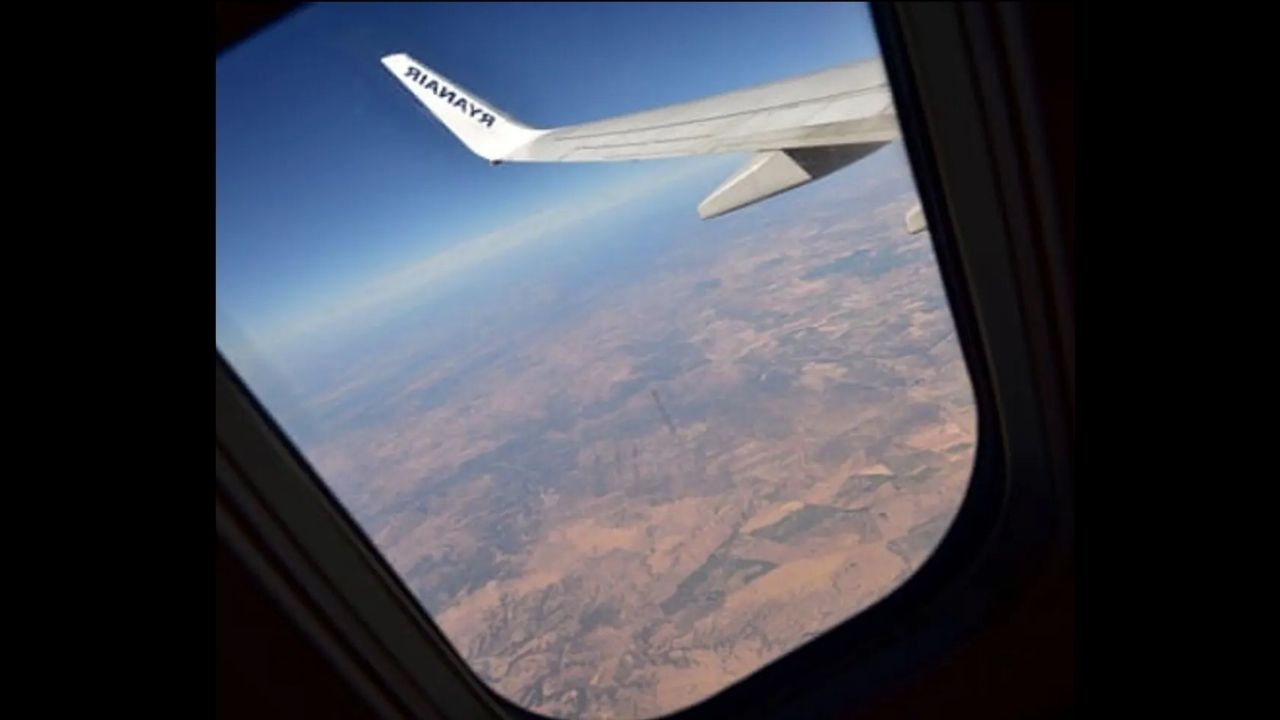
Passengers aboard a Ryanair flight from Thessaloniki, Greece, to Memmingen, Germany, experienced a frightening journey after the aircraft was forced to return shortly after departure because of a cabin window failure.
The incident occurred on Flight FR1879, operated by Malta Air using a Boeing 737. According to the airline, the aircraft safely returned to Thessaloniki after a passenger window became dislodged during flight, leading to a rapid loss of cabin pressure.
Although the emergency created moments of panic inside the cabin, the aircraft landed safely and emergency services responded immediately upon arrival.
Flight Turned Back
Flight tracking information showed the aircraft climbed to approximately 16,000 feet before the flight crew initiated an emergency return.
Pilots followed established procedures for a cabin depressurization event by descending and navigating back to the departure airport.
The aircraft completed a controlled landing without further reported operational difficulties.
Airport emergency teams were already positioned for the aircraft’s arrival, allowing passengers to leave the aircraft safely once it reached the terminal area.
Passenger Receives Medical Care
According to Greek officials, a 61-year-old Serbian passenger seated near the affected window required medical attention after landing.
Witnesses reported that the sudden pressure change pulled the passenger toward the opening created by the damaged window. Fellow travelers, including his wife, reportedly acted quickly to prevent him from being pulled farther toward the opening.
Medical personnel treated the passenger for injuries associated with the incident, including shock and friction burns.
Authorities also confirmed that another passenger, a pregnant woman, was evaluated after landing and later discharged in good condition.
No additional serious injuries have been reported.
Inside the Cabin
Passengers described hearing a loud explosive sound moments before the cabin pressure changed.
Many initially struggled to understand what had happened before oxygen masks automatically deployed from the overhead compartments.
Several travelers recalled seeing the injured passenger positioned dangerously close to the damaged window while others rushed to help.
Although the atmosphere became tense, passengers also praised the flight attendants for remaining calm and providing clear instructions throughout the emergency.
Their actions helped maintain order while the pilots safely returned the aircraft.
Cause Still Under Review
Local reports suggested that a detached engine component may have struck the cabin window before it became dislodged.
However, aviation authorities have not confirmed that explanation.
Investigators will carefully examine the aircraft to determine whether the incident resulted from engine damage, structural failure, maintenance issues or another technical factor.
Officials have emphasized that no conclusions should be drawn until the investigation is complete.
Technical inspections will determine the actual cause based on physical evidence rather than early reports.
Ryanair Responds
Ryanair confirmed that the aircraft returned to Thessaloniki after a passenger window became dislodged during flight.
The airline stated that the aircraft landed normally and passengers safely returned to the terminal.
It also confirmed that one passenger requested medical assistance after landing and received treatment from local emergency services.
To minimize disruption, Ryanair arranged a replacement aircraft that later transported passengers to Memmingen.
The airline has not released additional technical details regarding the window failure while the investigation remains active.
Airport Action
Airport operator and emergency responders activated established response procedures immediately after learning the aircraft was returning.
Fire crews, medical teams and airport operations personnel coordinated the aircraft’s arrival while preparing assistance for passengers.
The emergency response allowed travelers to disembark safely before engineers began examining the aircraft.
Operations at the airport continued with only temporary disruption as authorities managed the situation.
Investigation Begins
Aviation investigators have started a detailed review of the incident.
The investigation will likely include inspections of the aircraft’s cabin window assembly, fuselage, engine components, maintenance history and flight recorder data.
The cockpit voice recorder and flight data recorder will provide valuable information about aircraft performance and pilot actions during the emergency.
Investigators are also expected to interview flight crew members and examine operational records before preparing their findings.
Every possible contributing factor will be evaluated before an official cause is identified.
Why Decompression Matters
Commercial aircraft normally cruise at altitudes where outside air pressure is too low for comfortable breathing.
Cabin pressurization systems create a safe environment for passengers throughout the flight.
If pressure changes unexpectedly, automatic safety systems deploy oxygen masks while pilots descend to a lower altitude where breathable air is naturally available.
Although such events are uncommon, flight crews regularly train for cabin decompression scenarios to ensure they can respond quickly and safely.
The successful return of Flight FR1879 demonstrated the effectiveness of these emergency procedures.
The aircraft will remain out of service while engineers complete a thorough inspection and investigators continue gathering evidence.
Authorities will determine whether maintenance issues, structural damage, component failure or another factor contributed to the cabin window becoming dislodged.
Until that technical analysis is complete, officials have advised against speculation regarding the cause.
While the incident created understandable concern among passengers, the coordinated response by the pilots, cabin crew, airport emergency teams and fellow travelers ensured everyone reached the ground safely. The findings from the ongoing investigation are expected to provide important insights that could further strengthen maintenance practices and aviation safety procedures in the future.