
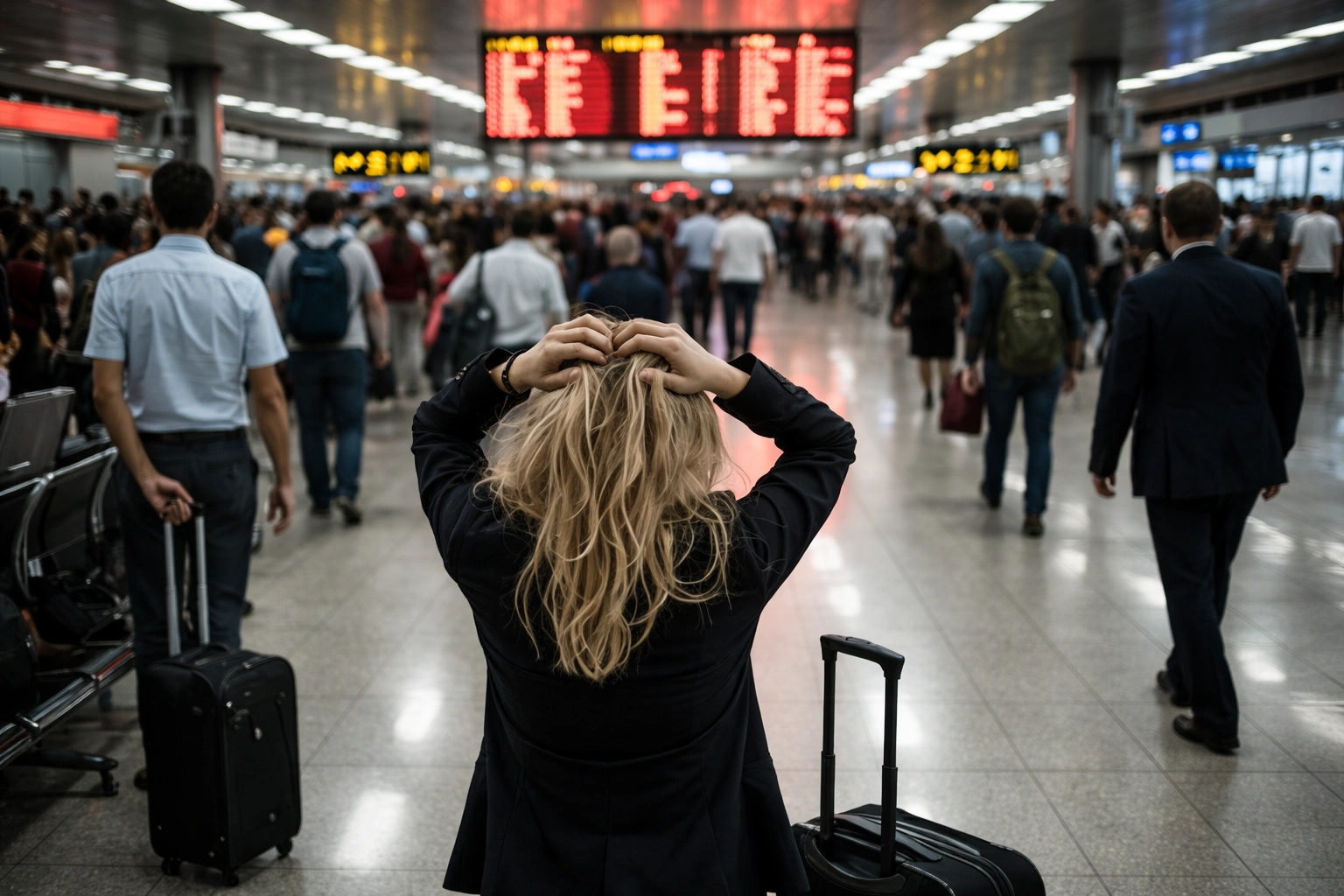
Air travel across the United States is facing significant disruption as hundreds of flights are canceled or delayed, with Chicago emerging as the epicenter of the crisis. According to the latest updates, at least 148 flights have been canceled while a staggering 1,318 flights are delayed, affecting thousands of passengers nationwide.
The disruption is impacting major airlines including American Airlines, United Airlines, Republic Airways, SkyWest, and Envoy Air. With Chicago serving as a key aviation hub, the effects are cascading across multiple cities, including New York, Toronto, Detroit, Atlanta, and beyond.
Chicago Airports at the Center of Chaos
Chicago’s major airports, particularly O’Hare International Airport, are experiencing severe operational strain. As one of the busiest aviation hubs in North America, any disruption in Chicago quickly spreads across the national network.
Passengers are encountering long queues, gate changes, and extended waiting times. The high volume of flights combined with delays has created congestion both on the ground and in the air.
Airport authorities are working to manage the situation, but the scale of disruption continues to challenge normal operations.
Airlines Hit Across the Network
Multiple airlines are grappling with the impact of the disruptions. American Airlines and United Airlines, both of which operate major hubs in Chicago, are among the hardest hit.
Regional carriers such as Republic Airways, SkyWest, and Envoy Air are also facing significant delays and cancellations. These airlines play a crucial role in connecting smaller cities to major hubs, amplifying the reach of the disruption.
The widespread involvement of both mainline and regional carriers highlights the depth of the operational challenges.
Key Routes Disrupted
The ripple effects of the disruptions are being felt across some of the busiest travel corridors in North America. Flights connecting Chicago to New York, Toronto, Detroit, and Atlanta are experiencing significant delays.
Passengers traveling on these routes are facing missed connections, extended layovers, and last-minute schedule changes. International routes are also affected, particularly those linking the US to Canada.
The interconnected nature of airline networks means that even flights not originating in Chicago may still experience delays due to aircraft and crew repositioning.
What Caused the Disruptions
While the exact cause has not been officially confirmed, disruptions of this magnitude are often linked to a combination of factors. Severe weather, air traffic congestion, and operational constraints such as crew availability can all contribute.
Chicago’s location and heavy air traffic make it particularly vulnerable to weather-related issues, which can quickly escalate into broader network disruptions.
Airlines are continuing to assess the situation and adjust schedules accordingly.
Passengers Face Delays and Frustration
For travelers, the disruption has led to widespread frustration and uncertainty. Many passengers have received last-minute notifications of delays or cancellations, leaving them scrambling to adjust plans.
Airports are seeing increased demand at customer service counters as travelers seek assistance with rebooking and accommodations. Families, business travelers, and tourists alike are navigating disrupted itineraries.
The scale of the delays has made it difficult for airlines to accommodate all affected passengers immediately.
Rebooking and Refund Options
Airlines are offering flexible rebooking policies to help passengers manage the disruption. Travelers whose flights have been canceled can typically rebook on the next available flight or request a refund.
Many airlines are also waiving change fees, allowing passengers to adjust travel dates without additional costs. However, with high demand for alternative flights, availability may be limited.
Digital tools such as airline apps and websites are proving essential for managing bookings quickly.
Ripple Effects Across North America
The disruption in Chicago is having a cascading effect across the broader North American aviation network. Flights in cities such as New York, Toronto, Detroit, and Atlanta are experiencing knock-on delays.
Aircraft and crew scheduling challenges are extending the impact beyond the initial disruption zone. This highlights the complexity of modern air travel, where disruptions in one hub can affect operations across an entire continent.
Airlines are working to minimize these effects, but recovery may take time.
What Travelers Should Do Now
Passengers are advised to check their flight status before heading to the airport. Real-time updates from airlines can help avoid unnecessary delays and confusion.
Arriving early is recommended, as longer queues and additional processing times are expected. Travelers should also keep important documents and booking details easily accessible.
Flexibility is key, as schedules may continue to change while airlines work to stabilize operations.
Airlines Work Toward Recovery
Airlines and airport authorities are actively working to restore normal operations. Additional resources are being deployed to assist passengers and clear backlogs.
Efforts include rescheduling flights, repositioning aircraft, and improving communication with travelers. While progress is being made, it may take several hours or even days for operations to fully stabilize.
The priority remains ensuring passenger safety while minimizing disruption.
Outlook for Travelers
The current situation underscores the challenges faced by the aviation industry, particularly during periods of high demand and operational complexity. While disruptions are expected to ease as conditions improve, travelers should remain prepared for ongoing delays in the short term.
For those affected, patience and proactive planning will be essential. By staying informed and utilizing available support options, passengers can better navigate the disruption and adjust their travel plans accordingly.