
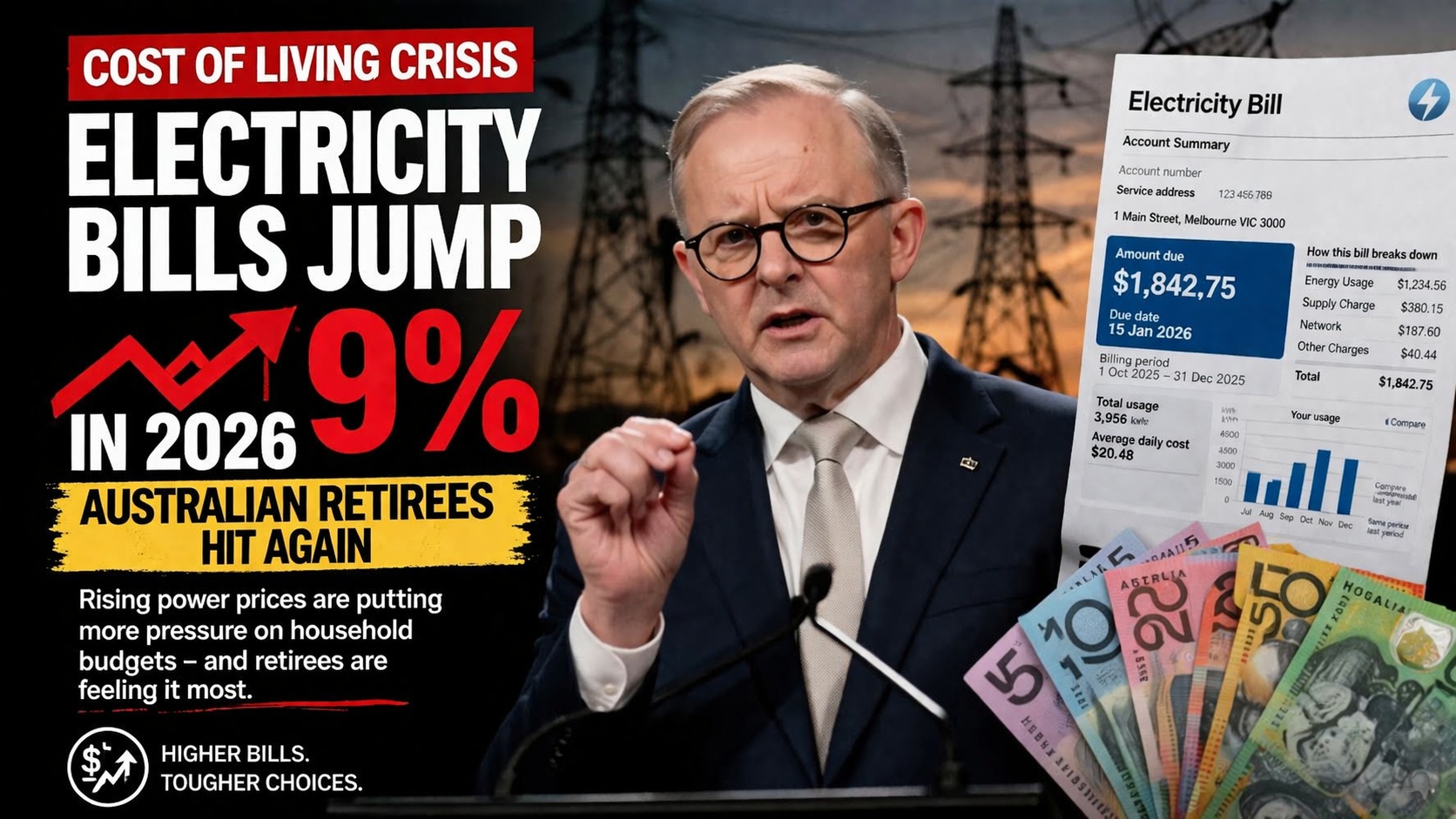
Australian households are facing another financial setback in 2026, with electricity prices rising by as much as 9% in several regions. While the increase affects all consumers, retirees are among the hardest hit, as fixed incomes struggle to keep pace with ongoing cost-of-living pressures.
For many older Australians, electricity is not a flexible expense. It is essential for daily living—powering heating, cooling, cooking, and medical equipment. As prices rise, the burden is becoming increasingly difficult to manage.
Why Electricity Prices Are Rising
The latest increase in electricity bills is driven by a combination of factors. Wholesale energy costs have remained volatile, influenced by global supply conditions and ongoing shifts toward renewable energy sources.
Infrastructure upgrades are another major contributor. As Australia invests in modernizing its energy grid and transitioning to cleaner energy, the costs of building and maintaining new systems are being passed on to consumers.
Network charges, which cover the cost of delivering electricity to homes, have also increased. These charges make up a significant portion of household bills and are rising alongside maintenance and expansion efforts.
While these changes aim to create a more reliable and sustainable energy system, they come at a time when many households are already under financial strain.
Retirees Feel the Impact Most
Older Australians are particularly vulnerable to rising electricity costs. Many rely on the Age Pension or limited retirement savings, leaving little room for unexpected expenses.
Unlike working households, retirees often cannot increase their income to offset higher bills. This makes even modest price hikes more significant.
Energy use among seniors can also be higher due to health and lifestyle needs. Heating in winter, cooling in summer, and the use of medical devices such as oxygen machines or mobility aids can all contribute to increased electricity consumption.
As a result, the 9% rise is not just a percentage—it represents a real and growing financial challenge.
Everyday Consequences for Seniors
The increase in electricity bills is already changing how many retirees manage their daily lives. Some are cutting back on heating or air conditioning to save money, even during extreme weather conditions.
Others are reducing usage in different areas, such as limiting appliance use or delaying household tasks that require electricity.
These adjustments can have unintended consequences. Inadequate heating or cooling can affect health, particularly for older individuals who are more sensitive to temperature changes.
The financial pressure also adds to stress and uncertainty, especially for those already struggling to cover basic expenses.
Support Measures Available
To help ease the burden, various government support programs are available to eligible retirees. These include energy rebates, concession schemes, and supplementary payments designed to offset rising utility costs.
Many states offer electricity discounts for pensioners, which can provide partial relief. In addition, one-off cost-of-living payments may be introduced during periods of significant price increases.
However, not all retirees are fully aware of the support they can access. Eligibility criteria can vary, and some individuals may miss out simply due to lack of information.
Ensuring that seniors understand and access available benefits is a key part of managing the impact of rising energy costs.
The Bigger Cost-of-Living Picture
Electricity price increases are just one part of a broader trend affecting Australian households in 2026. Costs across multiple areas—including groceries, healthcare, insurance, and transport—have been rising steadily.
For retirees, these combined pressures can create a compounding effect. When several essential expenses increase at the same time, the overall financial impact becomes much more difficult to manage.
Even with pension indexation and periodic increases, many seniors feel that support is not keeping pace with real-world costs.
This has led to growing calls for more targeted assistance and long-term solutions.
What Retirees Can Do Now
While structural changes may take time, there are practical steps retirees can take to manage rising electricity bills.
Reviewing energy usage is a good starting point. Simple actions such as switching off unused appliances, using energy-efficient lighting, and adjusting thermostat settings can help reduce consumption.
Comparing energy providers may also lead to savings, as different plans can offer varying rates and benefits.
In some cases, installing energy-efficient appliances or solar panels can provide long-term savings, although the upfront cost may be a barrier for some households.
Seeking advice from local councils or community organizations can also help identify available programs and resources.
Calls for Stronger Government Action
Advocacy groups and community organizations are increasingly calling for stronger government intervention to address rising energy costs.
Proposed measures include:
• Increased energy rebates for pensioners
• Price caps or tighter regulation of electricity providers
• Expanded support for energy efficiency upgrades
• Greater investment in affordable renewable energy solutions
The goal is to ensure that essential services like electricity remain accessible and affordable for all Australians, particularly vulnerable groups.
Looking Ahead
The 9% rise in electricity bills in 2026 highlights the ongoing challenges of balancing energy transition, infrastructure investment, and affordability.
For retirees, the impact is immediate and personal. Managing higher costs on a fixed income requires difficult choices and careful budgeting.
While support measures provide some relief, many seniors continue to feel the pressure of rising living expenses.
As Australia moves forward, addressing energy affordability will remain a critical issue. Ensuring that retirees can maintain comfort, safety, and independence in their homes must be a central part of the national conversation.