
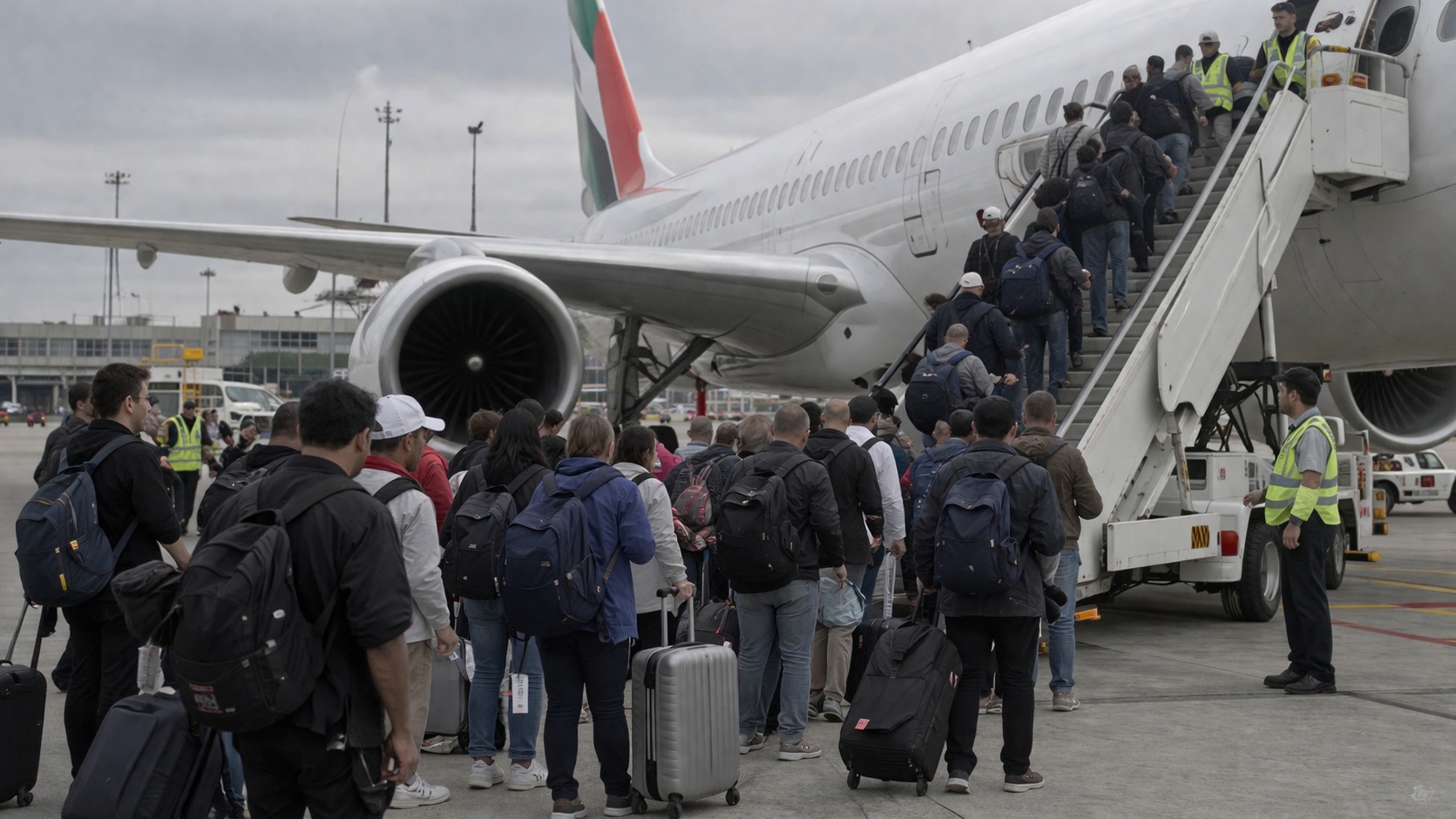
A fast-moving geopolitical crisis in the Middle East has triggered one of the largest coordinated evacuation efforts in recent years, with Russia joining countries like Germany, Canada, the United Kingdom, India, South Korea, and Italy to bring stranded travelers home. As tensions escalated across Qatar, the United Arab Emirates, Saudi Arabia, Bahrain, and neighboring regions, governments and airlines moved quickly to organize special rescue flights amid widespread airspace disruptions.
Global Crisis Forces Immediate Action
The emergency response follows a surge in regional instability marked by missile and drone attacks, which forced multiple countries to shut down or restrict their airspace. This led to the cancellation of thousands of flights and left tens of thousands of travelers stranded across major Gulf hubs.
Governments worldwide issued urgent travel advisories and evacuation orders. In some cases, non-essential diplomatic staff and citizens were instructed to leave immediately, prompting a race against time to arrange safe departures.
Russia, through its emergency and aviation authorities, joined the growing list of nations deploying evacuation flights, signaling the scale and seriousness of the unfolding situation.
Airlines Step Up with Special Evacuation Flights
With regular commercial operations largely suspended, major global airlines have pivoted to operating limited, government-approved evacuation flights. These flights are being coordinated closely with aviation regulators to ensure passenger safety in a highly volatile airspace environment.
Carriers such as Lufthansa, Emirates, Etihad Airways, ITA Airways, and IndiGo have been at the forefront of these efforts. Many of these flights are operating under strict conditions, often using designated “safe air corridors” to navigate restricted zones.
Emirates and Etihad, based in the UAE, have resumed a small number of flights primarily dedicated to repatriation, while maintaining suspension of most regular services.
India’s IndiGo has also launched multiple special flights from Saudi Arabia, particularly from Jeddah, to evacuate stranded passengers to major Indian cities including Delhi, Mumbai, and Bengaluru.
Safe Air Corridors and Limited Operations
To facilitate evacuations, regional aviation authorities have established controlled flight paths known as safe air corridors. These routes allow a limited number of aircraft to operate under strict monitoring, significantly reducing risk to passengers and crew.
These corridors have enabled the evacuation of thousands of travelers within days, despite the continued closure of much of the region’s airspace. However, capacity remains limited, and demand far exceeds available seats.
Airlines are prioritizing passengers with urgent needs, including families, medical cases, and those stranded for extended periods.
Massive International Coordination Effort
The evacuation effort has become a highly coordinated international operation involving governments, airlines, and global aviation authorities. Countries including the UK and Germany have chartered additional flights, while others are relying on partnerships with commercial airlines to scale up operations.
Italy, for example, has already evacuated groups of its citizens from the UAE, while Canada and South Korea are working through diplomatic missions to assist their nationals.
India’s civil aviation authorities have confirmed they are closely monitoring the situation and working with airlines and foreign governments to ensure safe and orderly movement of passengers.
Ongoing Challenges and Uncertainty
Despite the progress, significant challenges remain. Airspace closures continue across several countries, and security risks persist due to ongoing military activity in the region. Flights are often delayed, rerouted, or canceled at short notice, adding to the uncertainty faced by travelers.
More than 10,000 flights have been canceled globally, affecting over a million passengers and disrupting international travel networks.
In addition, airlines are dealing with logistical constraints, including limited aircraft availability, congested air corridors, and rapidly changing safety conditions.
Travelers Urged to Stay Alert
Authorities are urging travelers in affected regions to remain in close contact with their embassies and airlines. Many evacuation flights require prior registration, and passengers are advised not to proceed to airports without confirmed bookings.
Travelers are also being encouraged to consider alternative routes where possible, including overland travel to neighboring countries with operational airports.
A Defining Moment for Global Aviation Response
The ongoing evacuation operation highlights the resilience and adaptability of the global aviation sector in times of crisis. It also underscores the importance of international cooperation in ensuring the safety of civilians during geopolitical emergencies.
As Russia joins other nations in this coordinated effort, the focus remains on bringing thousands of stranded travelers home safely while navigating one of the most complex aviation disruptions in recent history.
While the situation continues to evolve, the swift mobilization of airlines and governments offers a critical lifeline to those caught in the crisis, demonstrating how global collaboration can respond effectively to unprecedented challenges.