
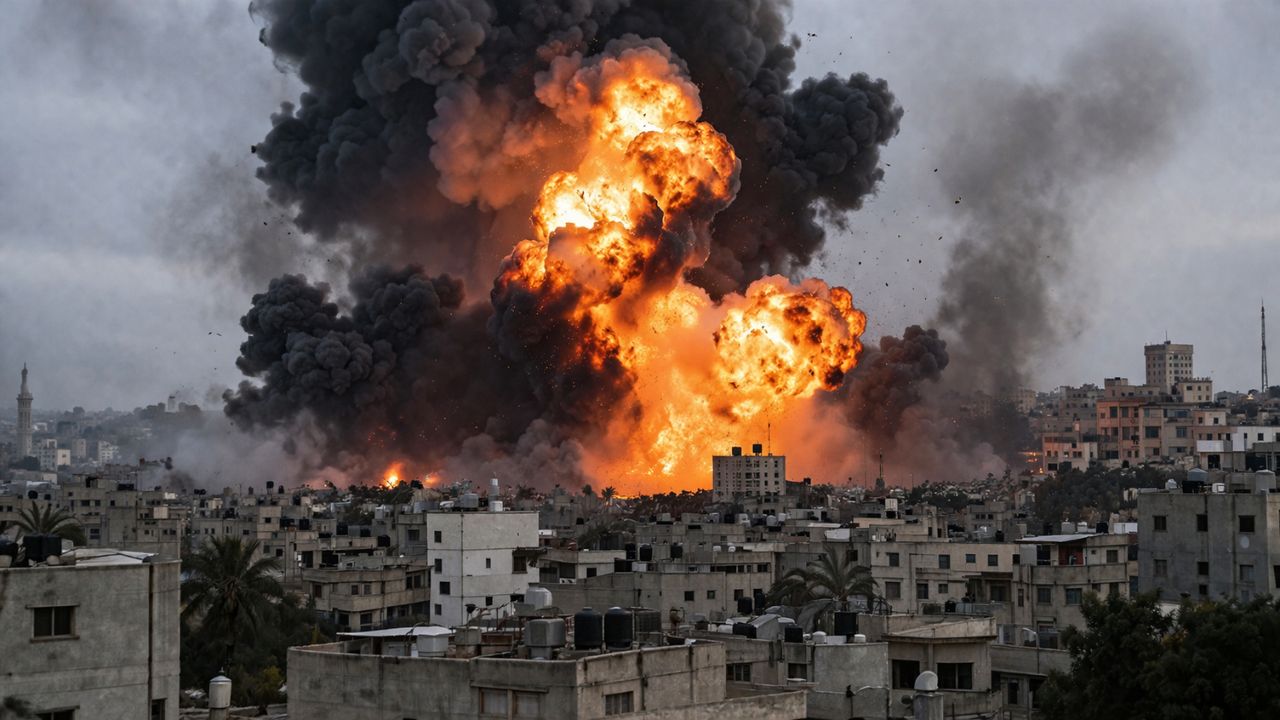
A sweeping aviation crisis has unfolded across the Middle East as Saudi Arabia joins Iraq, the United Arab Emirates, Qatar, Kuwait, Bahrain, and Oman in implementing widespread airspace restrictions. The sudden shutdown has disrupted global travel on an unprecedented scale, leaving more than one million passengers stranded, including large numbers from India, the United Kingdom, Canada, and Germany.
The coordinated closures come amid escalating regional tensions and security threats, forcing governments and aviation authorities to take immediate precautionary measures to protect civilian aircraft.
Sudden Airspace Closures Spark Global Travel Disruption
The decision to restrict or completely shut down airspace across multiple Middle Eastern countries has created a ripple effect across international aviation networks. The region serves as a critical transit corridor connecting Europe, Asia, Africa, and Oceania, making any disruption particularly severe.
Major flight routes that typically pass through Gulf airspace have been suspended or rerouted, causing delays, cancellations, and logistical chaos. Airlines have had to quickly adjust flight paths, often opting for longer routes over Central Asia or the Mediterranean, significantly increasing travel time and operational costs.
Passengers traveling between continents have been among the hardest hit, with many flights grounded mid-journey or diverted to alternate airports.
Over One Million Travelers Affected Worldwide
The scale of the disruption is staggering. Airports across the UAE, Saudi Arabia, and Qatar—usually among the busiest in the world—have seen thousands of flights canceled within a short period.
Travelers from India, the UK, Canada, and Germany make up a significant portion of those stranded, as these countries rely heavily on Middle Eastern hubs for connecting flights. Many passengers have found themselves stuck in transit zones, facing uncertain wait times and limited information.
Families, business travelers, and migrant workers have all been affected, with some forced to extend their stays unexpectedly due to a lack of available flights.
Major Airlines Suspend and Reroute Operations
Global carriers have responded by suspending services to affected destinations or rerouting flights to avoid restricted airspace. Airlines based in the Gulf, including those operating from Dubai, Abu Dhabi, and Doha, have significantly reduced their schedules.
International airlines from Europe and Asia have also adjusted operations, prioritizing passenger safety over maintaining regular schedules.
In many cases, flights that would normally take a few hours are now significantly longer due to detours. This has led to increased fuel consumption, higher ticket prices, and additional strain on airline resources.
Airlines are working to rebook passengers, but limited capacity and ongoing uncertainty have made the process challenging.
Airports Struggle to Manage Passenger Overflow
Airports across the region have been overwhelmed by the sudden influx of stranded travelers. Terminals are crowded, and services such as accommodation, food, and customer support are under pressure.
Authorities and airport operators are attempting to manage the situation by:
- Providing temporary accommodation options
- Offering meal vouchers and basic assistance
- Setting up information desks for affected passengers
Despite these efforts, many travelers report long waiting times and difficulty accessing timely updates about their flights.
Governments Issue Advisories and Support Measures
Governments from affected countries have issued urgent travel advisories, urging citizens to delay non-essential travel to the Middle East. Embassies and consulates are actively assisting stranded nationals by providing guidance, emergency documentation, and information on available flights.
India, the UK, Canada, and Germany have all activated crisis response mechanisms, coordinating with airlines and local authorities to facilitate safe travel for their citizens.
In some cases, governments are exploring the possibility of arranging special evacuation flights if the situation does not improve quickly.
Economic Impact on Aviation and Tourism
The widespread airspace shutdown is expected to have a significant economic impact on the aviation and tourism industries. The Middle East plays a central role in global air travel, and prolonged disruptions could lead to substantial financial losses for airlines, airports, and related businesses.
Tourism-dependent economies in the region may also face setbacks, as cancellations and travel advisories discourage visitors. Major events and business activities are already being affected, with companies reconsidering travel plans and postponing engagements.
Uncertainty Remains as Situation Evolves
One of the most challenging aspects of the current crisis is the lack of clarity on how long the restrictions will remain in place. Airspace decisions are being reviewed continuously, based on evolving security assessments.
This uncertainty makes it difficult for airlines to plan schedules and for travelers to make informed decisions. Many passengers are choosing to delay travel altogether until stability returns.
What Travelers Should Do Now
For those affected by the disruption, staying informed and flexible is essential.
Travelers are advised to:
- Regularly check flight status with airlines
- Stay in contact with their embassy for updates
- Avoid traveling to affected regions unless absolutely necessary
- Keep essential documents and supplies easily accessible
Patience is also crucial, as airlines and authorities work to manage an extremely complex situation.
A Defining Moment for Global Aviation
The Middle East airspace shutdown highlights the vulnerability of global travel networks to geopolitical events. With multiple countries acting simultaneously, the scale of disruption has reached levels rarely seen in modern aviation.
As Saudi Arabia and its regional partners prioritize safety, the focus now shifts to restoring normal operations while ensuring the protection of passengers and crew.
For the millions affected, the hope is for a swift resolution. Until then, the crisis serves as a stark reminder of how quickly global travel can be brought to a standstill by events beyond anyone’s control.