
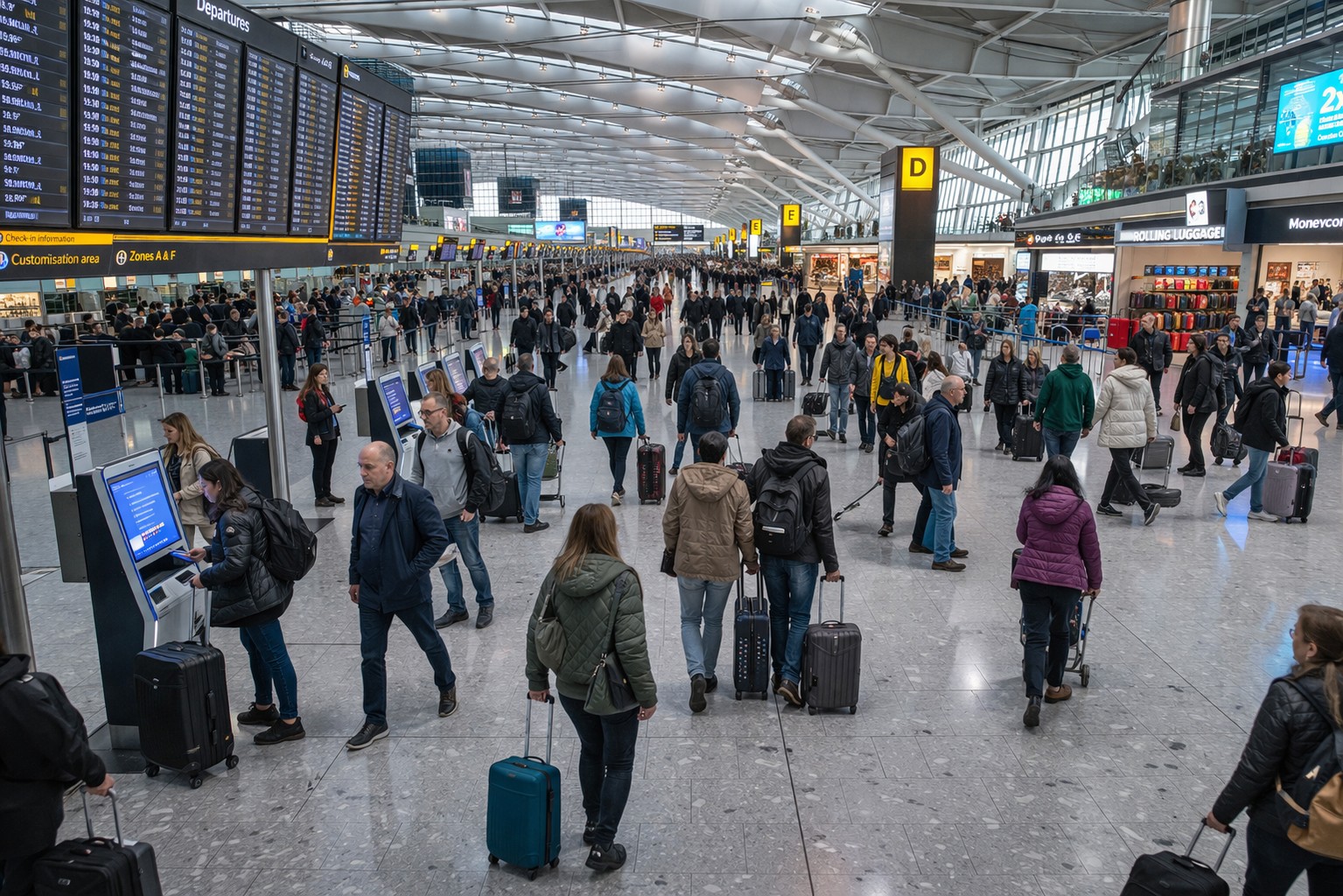
Thousands of travelers across Europe are facing major disruptions as multiple countries—including the United Kingdom, the Netherlands, Italy, Portugal, and Turkey—experience a wave of flight cancellations and delays. In total, at least 53 flights have been canceled and more than 1,086 delayed, creating widespread travel chaos across key aviation hubs.
The disruption has impacted major airlines such as SAS, easyJet, Delta Air Lines, KLM, and British Airways, with ripple effects spreading across both short-haul and long-haul routes. Airports in London, Amsterdam, Venice, Porto, and Dalaman have been among the hardest hit, leaving passengers stranded, delayed, or forced to rearrange their travel plans.
Major Airports Face Operational Strain
Europe’s busiest airports are currently under significant operational pressure as delays continue to accumulate. London’s major airports, including Heathrow and Gatwick, have seen long queues, extended waiting times, and frequent schedule changes.
Amsterdam’s Schiphol Airport is also experiencing congestion, with delayed departures and arrivals disrupting connecting flights. In southern Europe, Venice and Porto are facing similar challenges, while Dalaman in Turkey is dealing with heavy seasonal traffic combined with operational constraints.
These disruptions are not isolated incidents but part of a broader pattern affecting multiple regions simultaneously, making recovery more complex for airport authorities.
Airlines Struggle to Maintain Schedules
Airlines are working to manage the situation, but the scale of the disruption has made it difficult to maintain normal schedules. Carriers such as KLM and British Airways are adjusting flight timings, reassigning aircraft, and offering alternative routes to minimize passenger inconvenience.
Low-cost airlines like easyJet are also heavily impacted, particularly on short-haul routes where tight turnaround times leave little room for delays. Meanwhile, long-haul carriers such as Delta are facing cascading effects as delays in Europe disrupt onward international connections.
Airlines are deploying additional staff and resources, but ongoing operational challenges continue to limit their ability to quickly restore normal service.
Key Causes Behind the Disruptions
Several factors are contributing to the widespread flight delays and cancellations. Adverse weather conditions in parts of Europe have affected visibility and runway operations, forcing airlines to delay or cancel flights for safety reasons.
In addition, air traffic congestion remains a persistent issue, particularly in busy corridors such as Western Europe. Staffing shortages at airports and air traffic control centers are further compounding the problem, reducing overall operational capacity.
Technical issues and aircraft rotation delays are also playing a role, as disruptions in one location quickly cascade across airline networks.
Travelers Left Stranded and Frustrated
For passengers, the impact has been significant. Thousands of travelers have found themselves stranded at airports, facing long waits for rebooking, limited accommodation options, and uncertainty about when they will reach their destinations.
Families, business travelers, and tourists alike are experiencing disruptions to their plans, with missed connections and delayed itineraries becoming increasingly common. Social media platforms are filled with reports of overcrowded terminals and limited assistance during peak disruption periods.
The situation highlights the vulnerability of modern travel systems, where even minor disruptions can quickly escalate into widespread chaos.
Economic Impact on the Travel Sector
The ongoing disruptions are also having economic consequences for the travel industry. Airlines face increased operational costs due to delays, including fuel consumption, crew overtime, and passenger compensation.
Airports and ground service providers are dealing with logistical challenges, while hotels and local businesses are experiencing both positive and negative effects. Some benefit from unexpected overnight stays, while others face cancellations from travelers unable to reach their destinations.
Tourism-dependent regions may see short-term declines in visitor numbers if disruptions persist, particularly during peak travel periods.
Passenger Rights and Compensation
Travelers affected by cancellations and delays in Europe are protected under regulations such as EU261, which outline passenger rights in cases of significant disruption. Depending on the circumstances, passengers may be entitled to compensation, refunds, or rebooking options.
Airlines are required to provide assistance, including meals, accommodation, and communication, during extended delays. However, the level of support can vary depending on the cause of the disruption, with weather-related issues often classified as extraordinary circumstances.
Passengers are advised to keep documentation, including boarding passes and receipts, to support any compensation claims.
Recovery Efforts Underway
Authorities and airlines are actively working to stabilize operations and reduce the backlog of delayed flights. Additional flights are being scheduled where possible, and airlines are prioritizing the movement of stranded passengers.
Air traffic control agencies are coordinating efforts to manage congestion and improve traffic flow, while airports are increasing staffing levels to handle the surge in passenger volume.
Despite these efforts, a full recovery may take time, particularly if underlying issues such as staffing shortages and weather disruptions continue.
Tips for Travelers Navigating Disruptions
Travelers planning to fly within or through Europe in the coming days should remain vigilant and prepared for potential changes. Checking flight status regularly, arriving early at the airport, and allowing extra time for connections can help mitigate the impact of disruptions.
It is also advisable to have contingency plans, including alternative routes or flexible accommodation arrangements. Travel insurance can provide additional protection, covering unexpected expenses caused by delays or cancellations.
Staying informed through airline notifications and official airport updates can make a significant difference in navigating the situation effectively.
Outlook for European Aviation
While the current disruptions are causing significant inconvenience, they also highlight the resilience of Europe’s aviation network. Airlines, airports, and authorities are working collaboratively to restore normal operations and improve system reliability.
In the longer term, investments in infrastructure, staffing, and technology are expected to enhance the industry’s ability to handle peak demand and unexpected challenges.
For now, travelers are advised to remain patient and adaptable as Europe works through one of its latest travel disruptions, with the expectation that stability will gradually return in the days ahead.