
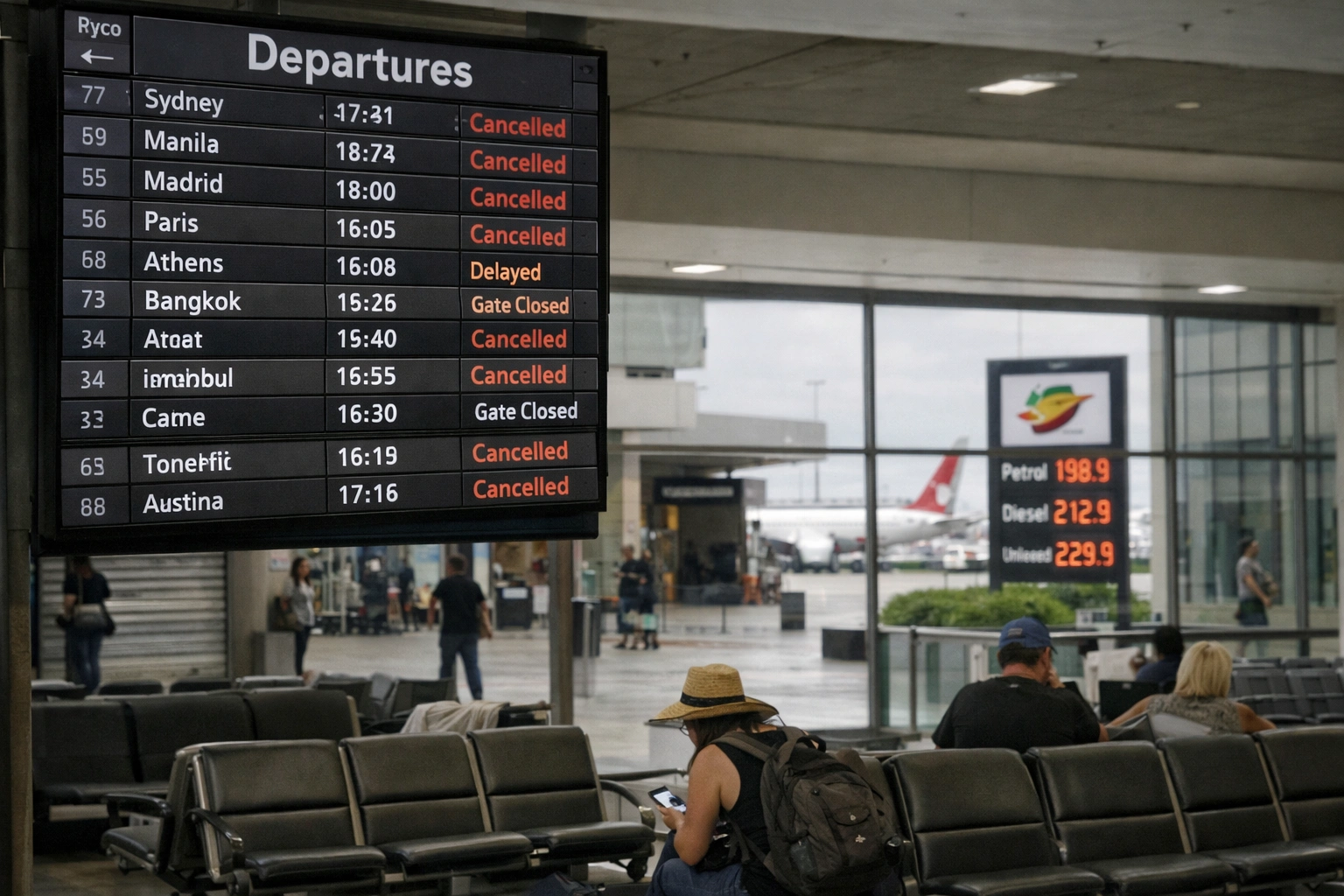
A noticeable shift is unfolding across global tourism as Australia joins the Philippines, Spain, France, Greece, and several other destinations in experiencing reduced travel demand during the Easter holiday period. Traditionally one of the busiest seasons for international tourism, Easter in 2026 is instead marked by hesitation, changing travel priorities, and a clear pullback from long-haul trips.
At the center of this trend is a sharp rise in fuel prices, which is reshaping how, where, and whether people choose to travel.
A Seasonal Slowdown With Global Impact
Easter has long been a peak travel window, particularly across Europe and popular international destinations. However, this year’s data suggests a different story.
Instead of the usual surge in bookings, many destinations are reporting softer demand, especially from long-haul travelers. Airlines, tour operators, and hospitality providers are seeing a shift toward shorter, more affordable trips rather than extended international vacations.
This is not a collapse of tourism—but a recalibration driven by cost pressures.
Fuel Prices Reshape Travel Decisions
The surge in global fuel prices is playing a decisive role in this slowdown. Airfare costs have risen significantly, particularly for long-haul routes connecting continents.
For travelers, this translates into higher ticket prices, increased travel expenses, and reduced overall affordability. As a result, many are opting out of expensive international journeys altogether.
Instead, travelers are prioritizing regional travel, domestic trips, or postponing vacations entirely.
Australia Feels the Pressure of Distance
Australia, known for attracting international visitors despite its geographic distance, is particularly affected. Long-haul travel to and from the country has become increasingly expensive, making it less accessible for budget-conscious tourists.
At the same time, Australians themselves are reconsidering outbound travel plans. Many are choosing closer destinations within Asia or exploring domestic options rather than flying to Europe or North America.
This dual impact is contributing to a noticeable dip in travel activity during the Easter period.
Europe’s Key Destinations See Softer Demand
Across Europe, countries like Spain, France, and Greece—typically hotspots during Easter—are witnessing slower booking trends compared to previous years.
While these destinations still attract visitors, the volume of long-haul travelers has declined. Hotels and airlines are reporting shorter stays and more last-minute bookings, reflecting traveler uncertainty.
The shift suggests that even iconic destinations are not immune to global cost pressures.
Asia-Pacific Travel Patterns Shift
In the Asia-Pacific region, the Philippines and neighboring destinations are experiencing similar trends. While regional travel remains active, long-haul arrivals are not meeting expectations.
Travelers from Europe and North America are scaling back plans, while regional tourists are opting for shorter, more affordable trips.
This shift is redefining tourism flows across the region, with a stronger focus on proximity and value.
The Rise of Short-Haul and Domestic Travel
One of the most significant outcomes of the current situation is the rise of short-haul travel. Travelers are increasingly choosing destinations closer to home to avoid high airfare costs.
Domestic tourism is benefiting as a result. National parks, coastal getaways, and secondary cities are seeing increased interest, as they offer accessible alternatives to international travel.
This trend reflects a broader shift toward convenience and cost-efficiency.
Changing Traveler Mindset in 2026
The modern traveler is becoming more strategic. Budget considerations are now central to decision-making, even during traditionally high-demand periods like Easter.
Flexibility is also playing a key role. Travelers are waiting longer to book, comparing prices across platforms, and adjusting plans based on affordability.
Luxury travel is no longer immune to these changes, as even high-spending tourists are becoming more value-conscious.
Airlines and Tourism Industry Adjust Strategies
The travel industry is responding to these changes with adjustments in pricing, routes, and marketing strategies.
Airlines are exploring ways to optimize routes and manage fuel costs, while tourism boards are promoting local and regional travel options. Hotels are offering flexible deals and discounts to attract hesitant travelers.
These efforts aim to maintain momentum despite challenging conditions.
Economic Ripple Effects Across Regions
The Easter slowdown is having ripple effects across multiple sectors. Tourism-dependent economies are feeling the impact, particularly in destinations heavily reliant on international visitors.
Restaurants, transportation services, and local businesses are experiencing reduced footfall compared to typical holiday seasons.
However, regions benefiting from increased domestic travel are seeing partial offsets, highlighting the uneven nature of the current tourism landscape.
Not a Collapse, But a Selective Shift
It is important to understand that global tourism is not collapsing—it is evolving. The decline is concentrated in long-haul travel, while other segments remain resilient.
Short-haul, regional, and domestic tourism continue to perform relatively well, demonstrating that people are still traveling, just differently.
This selective shift underscores the importance of adaptability in the travel industry.
What This Means for Future Travel Trends
Looking ahead, the current pattern may influence long-term travel behavior. If fuel prices remain elevated, travelers could continue favoring closer destinations and shorter trips.
Destinations that rely heavily on long-haul tourism may need to diversify their visitor base and rethink their strategies.
Meanwhile, countries that cater to regional travelers may see sustained growth.
A Turning Point for Global Tourism
The Easter 2026 slowdown may serve as a turning point. It highlights how external factors like fuel prices can rapidly reshape global travel patterns.
For destinations like Australia, Spain, France, Greece, and the Philippines, the challenge lies in adapting to these new realities while maintaining their appeal.
A New Travel Landscape Emerges
As Australia joins a growing list of destinations witnessing reduced Easter travel, one thing is clear: the global tourism map is being redrawn.
Travelers are not disappearing—they are becoming more selective, more cautious, and more focused on value.