
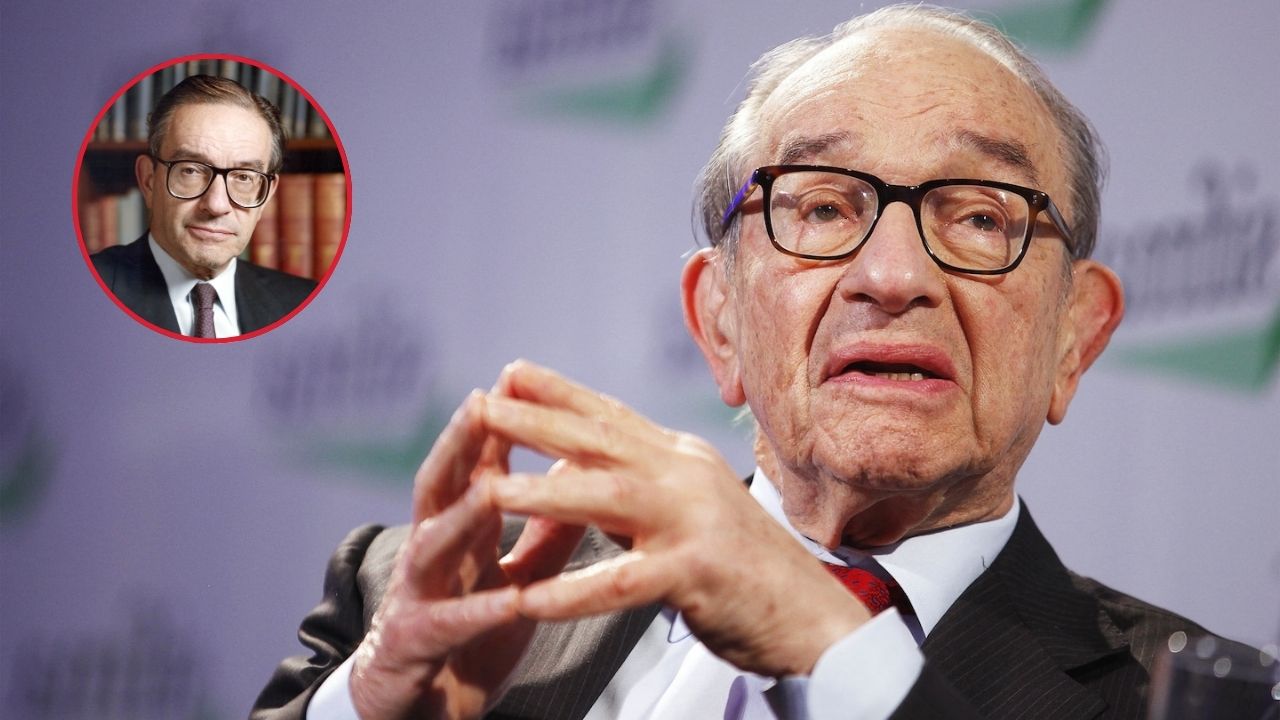
Alan Greenspan, one of the most influential figures in modern economic history, has died at the age of 100. The longtime chairman of the U.S. Federal Reserve passed away on June 22, 2026, at his home in Washington, D.C., bringing an end to a remarkable career that shaped American monetary policy for nearly two decades.
Known around the world for his economic expertise and measured approach to financial crises, Greenspan played a central role in guiding the U.S. economy through some of its most important moments. News of his death has prompted tributes from political leaders, economists, financial institutions, and former colleagues who credit him with helping define an era of economic policymaking.
Alan Greenspan’s Cause of Death
According to official statements released by his family, Alan Greenspan died from complications related to Parkinson’s disease. His wife, veteran journalist Andrea Mitchell, confirmed that he passed away peacefully at their Washington home on Monday morning.
Greenspan had reportedly been dealing with health challenges linked to the progressive neurological disorder in recent years. Despite those difficulties, he remained a respected voice on economic issues and continued to contribute to public discussions about fiscal and monetary policy.
His passing closes an extraordinary chapter in American economic history.
A Life Dedicated to Economics
Born on March 6, 1926, in New York City, Greenspan developed an early interest in mathematics, statistics, and financial analysis. Before entering public service, he built a successful career as an economic consultant and advisor.
His analytical skills earned him a reputation as one of the country’s leading economists long before he joined the Federal Reserve. Throughout the decades, business leaders, government officials, and investors frequently sought his views on economic trends and policy decisions.
By the time he became chairman of the Federal Reserve in 1987, Greenspan was already regarded as one of the most knowledgeable experts in the field.
Leading the Federal Reserve
Greenspan’s appointment as chairman of the Federal Reserve marked the beginning of one of the longest and most influential leadership periods in the institution’s history.
Serving from 1987 until 2006, he worked under four U.S. presidents and oversaw monetary policy during periods of both economic growth and financial uncertainty.
His tenure included major events such as the 1987 stock market crash, the rapid expansion of the technology sector during the 1990s, the dot-com bubble, and the economic challenges that followed the September 11 attacks.
His decisions often moved global markets, making him one of the most closely watched public officials in the world.
Why He Was Called “The Maestro”
Throughout the 1990s, Greenspan earned the nickname “The Maestro” because of his perceived ability to steer the economy through changing conditions while maintaining stability.
Investors closely followed every speech, testimony, and policy announcement. Even subtle comments from Greenspan could trigger significant reactions in financial markets.
Many economists credited him with helping create an extended period of low inflation, strong employment growth, and economic expansion that became known as the “Great Moderation.”
His influence extended far beyond the United States, affecting financial markets and central banking practices across the globe.
Praise and Criticism
Like many influential public figures, Greenspan’s legacy remains the subject of debate.
Supporters point to his role in managing financial shocks and maintaining economic stability over nearly two decades. They argue that his leadership helped sustain growth during a transformative period for the American economy.
Critics, however, have suggested that some policies pursued during his tenure may have contributed to excessive risk-taking within financial markets. Following the global financial crisis of 2008, some economists questioned whether regulatory oversight during earlier years had been sufficient.
Despite differing views, few dispute the enormous impact Greenspan had on economic policy and financial thinking.
Tributes From Across the World
Following the announcement of his death, tributes poured in from financial institutions, policymakers, and economic experts.
The Federal Reserve expressed deep condolences, highlighting Greenspan’s decades of public service and his lasting influence on monetary policy. Economists around the world described him as a defining figure whose ideas shaped generations of central bankers.
Political leaders from different ideological backgrounds also acknowledged his contributions, noting that his work influenced economic decisions under administrations from both major U.S. political parties.
Many remembered not only his expertise but also his dedication to public service throughout a career spanning more than half a century.
Beyond Economics
While most people knew Greenspan for his work in finance and government, fewer were aware of his early passion for music.
As a young man, he played the saxophone and briefly considered pursuing a professional music career. Although he ultimately chose economics, that artistic background remained an interesting part of his personal story.
Friends and colleagues often described him as intellectually curious, disciplined, and deeply committed to understanding complex problems.
A Lasting Legacy
Alan Greenspan leaves behind a legacy that will continue to influence economic discussions for years to come. His leadership at the Federal Reserve helped shape policy during a period of enormous technological, financial, and global change.
Whether praised for his achievements or debated for his decisions, his impact on modern economics is undeniable. Few public officials have exercised such lasting influence over financial markets and monetary policy.
Alan Greenspan Cause of Death
Alan Greenspan died on June 22, 2026, at the age of 100. According to family statements, the former Federal Reserve chairman passed away peacefully at his Washington, D.C., home due to complications associated with Parkinson’s disease. His death marks the end of a historic career that left a permanent imprint on American and global economic policy.