
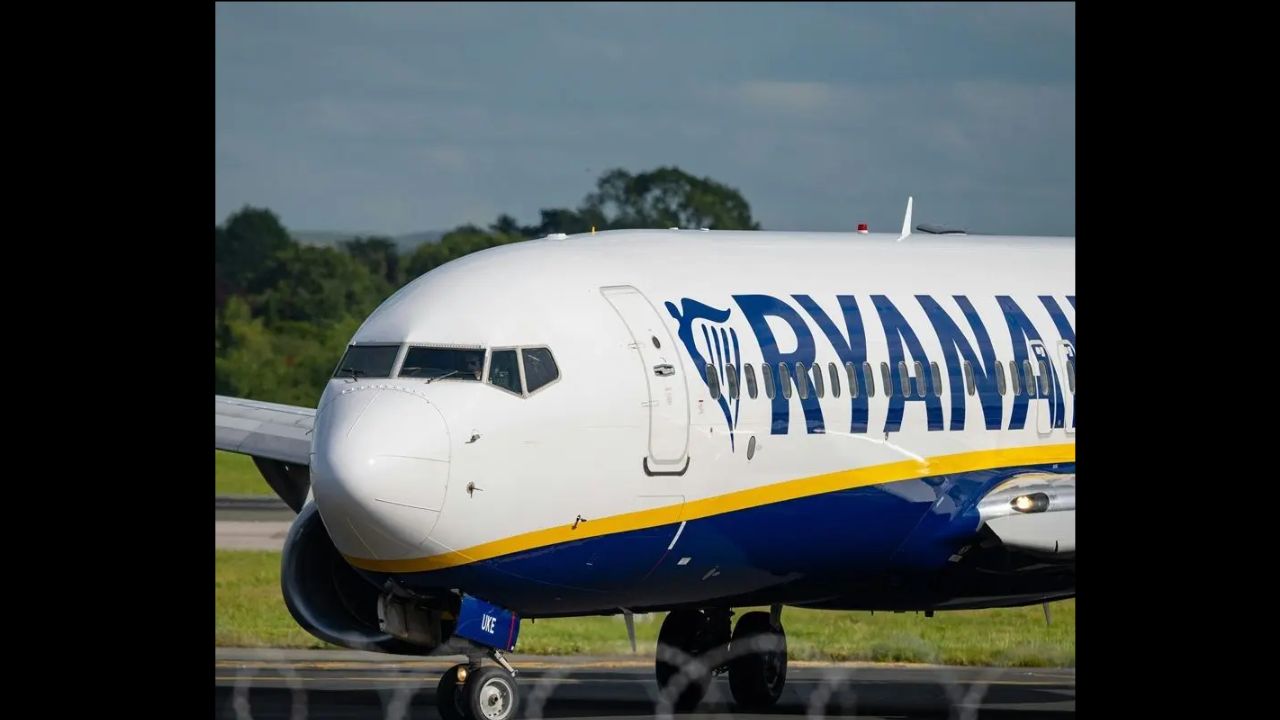
A Ryanair flight traveling from Thessaloniki, Greece, to Memmingen, Germany, made an emergency return after experiencing a cabin decompression shortly after departure. The incident has prompted an official investigation by the Hellenic Air and Rail Safety Investigation Authority (HARSIA), which is now examining the circumstances surrounding the event.
The flight, operating as FR1879, landed safely back at Thessaloniki Airport after the crew declared an emergency and discontinued the journey. Passengers later continued their trip to Germany on a replacement aircraft arranged by the airline.
Although the aircraft landed safely, the unusual incident has raised questions that investigators now aim to answer through a detailed technical review.
What Happened
According to available flight data, the Boeing 737-8AS departed Thessaloniki at approximately 5:57 a.m. local time on July 10, 2026.
Shortly after takeoff, while climbing to around 16,000 feet, the aircraft experienced a cabin decompression after a passenger window reportedly became dislodged.
The flight crew immediately initiated emergency procedures and turned the aircraft back toward Thessaloniki.
Flight tracking records show the aircraft landed safely on the same runway about one hour and thirteen minutes after departure.
Emergency services were waiting upon arrival to assist passengers and evaluate the situation.
Passenger Receives Treatment
Greek authorities confirmed that one passenger required medical attention following the incident.
According to local reports, the individual was seated beside the affected window during the decompression event.
Medical teams treated the passenger after landing for injuries and shock before transferring him for additional evaluation.
No other serious physical injuries were reported among passengers or crew members.
The remaining travelers were safely escorted back to the terminal while airline staff arranged alternative transportation.
Cabin Reaction
Passengers described a sudden and frightening change inside the cabin.
One traveler told local media that a loud noise echoed through the aircraft moments before oxygen masks automatically deployed from the overhead panels.
Witnesses said the injured passenger briefly lost consciousness after the incident while nearby travelers immediately assisted until cabin crew arrived.
Although the experience caused understandable concern among those onboard, passengers also noted that the crew responded quickly and professionally throughout the emergency.
Crew Response
Commercial airline crews receive regular training for rapid decompression events.
Following established emergency procedures, the pilots reduced altitude to reach an environment where passengers could breathe more comfortably while using supplemental oxygen.
Cabin crew simultaneously checked passengers, provided instructions and prepared the aircraft for its return to Thessaloniki.
Their coordinated response allowed the aircraft to complete a controlled landing without further complications.
Aviation specialists frequently point to crew training as one of the most important factors during unexpected in-flight emergencies.
Investigation Begins
HARSIA has opened a formal investigation to determine exactly why the cabin decompression occurred.
Investigators will inspect the aircraft, review maintenance records, analyze operational data and interview the flight crew.
Special attention will likely focus on the affected window assembly and surrounding aircraft structure to identify whether the incident resulted from mechanical wear, maintenance issues, manufacturing defects or another contributing factor.
Officials have emphasized that no conclusions have been reached at this stage.
Every possible explanation will be evaluated before a final report is issued.
Aircraft Information
The aircraft involved is an 18-year-old Boeing 737-8AS that has accumulated many years of commercial service.
Like all commercial airliners, it undergoes routine inspections and scheduled maintenance throughout its operational life.
Following the emergency landing, the aircraft was removed from normal service so engineers could begin a comprehensive examination.
Technical teams are expected to inspect the fuselage, cabin pressurization systems, window assembly and other critical components before the aircraft is considered for future operations.
Airline Response
Ryanair confirmed that the aircraft returned safely to Thessaloniki after the cabin window became dislodged during flight.
The airline stated that passengers returned to the terminal after landing, where assistance was provided.
To reduce travel disruption, Ryanair arranged another aircraft that departed later that morning for Memmingen.
The airline also confirmed that one passenger requested medical assistance after landing and received appropriate care.
Ryanair has pledged to cooperate fully with investigators during the review.
Why Decompression Matters
Aircraft cabins are pressurized because commercial jets normally cruise at altitudes where outside air pressure is too low for comfortable breathing.
If cabin pressure decreases unexpectedly, automatic safety systems activate, including oxygen mask deployment.
Pilots then descend to a lower altitude while following emergency checklists designed specifically for these situations.
Although decompression events receive widespread attention, aviation experts note they remain uncommon because modern aircraft are built with multiple layers of safety protection and undergo continuous inspection throughout their service life.
Next Steps
The investigation will continue as HARSIA gathers technical evidence and reviews information from the aircraft’s flight data recorder and cockpit voice recorder.
Engineers will work alongside investigators to determine exactly what caused the window assembly to fail and whether any broader safety recommendations should follow.
Until that work is completed, officials have cautioned against drawing conclusions regarding the cause of the incident.
The successful return to Thessaloniki and the safe evacuation of passengers demonstrate the effectiveness of established aviation emergency procedures. As investigators continue their analysis, the findings are expected to provide valuable insights that may further strengthen aircraft maintenance standards and operational safety across the aviation industry.