
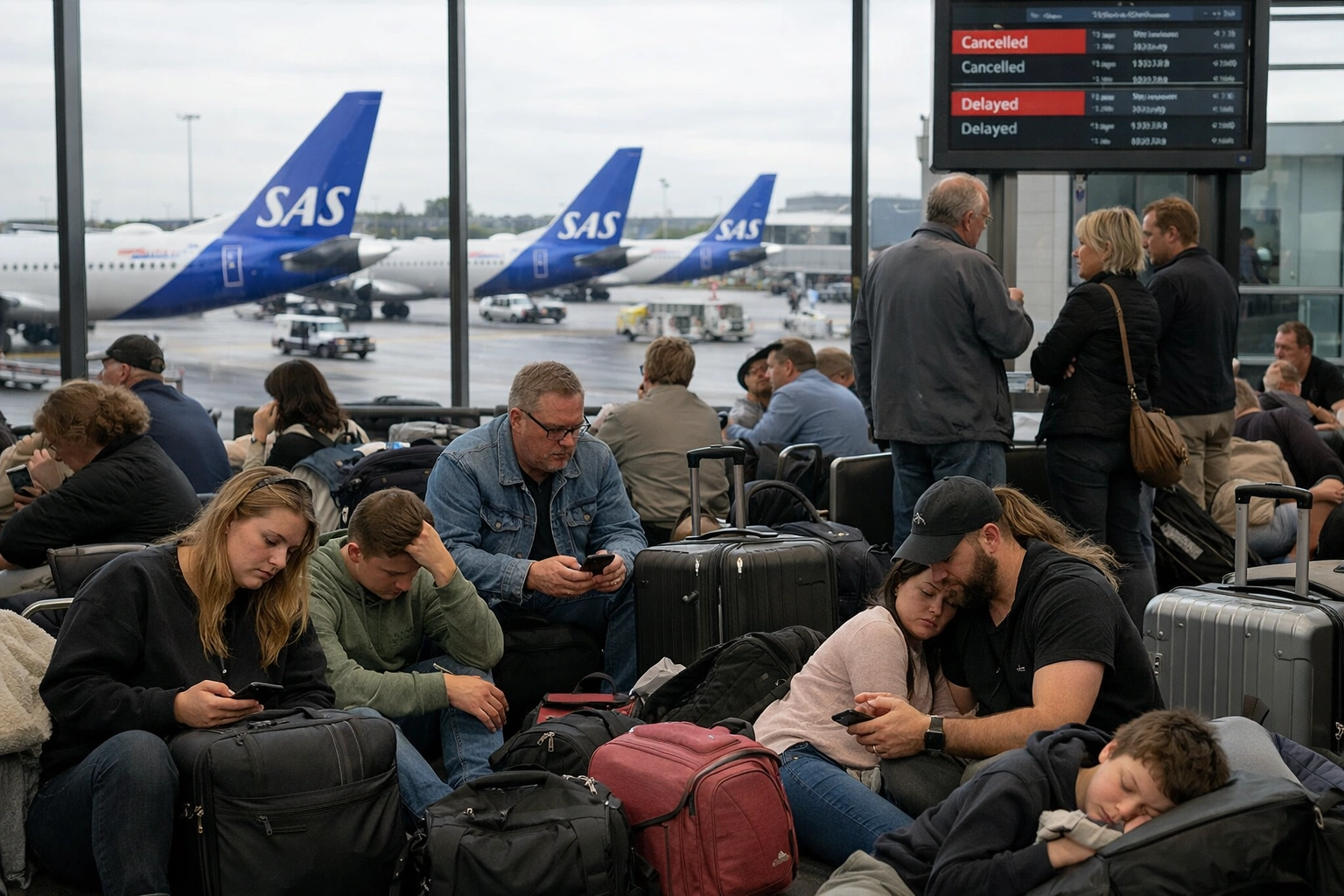
Passengers across Northern Europe are facing significant travel disruption today as SAS airline reports multiple cancellations and delays across key routes. Travelers in Denmark, Norway, and Sweden are among the most affected, with operations impacted in major hubs including Oslo, Copenhagen, and Stockholm.
According to the latest updates, at least 18 flights have been canceled, while several others are experiencing delays, creating uncertainty for both domestic and international passengers. The disruptions are also affecting connections to cities such as Zurich and other European destinations.
Major Airports Affected
The disruption is centered around some of Scandinavia’s busiest airports. Oslo Airport, Copenhagen Airport, and Stockholm Arlanda are all experiencing operational challenges as flights are canceled or rescheduled at short notice.
Passengers traveling through these hubs are encountering longer wait times, crowded terminals, and last-minute gate changes. The ripple effect is extending beyond Scandinavia, impacting connecting flights across Europe.
Zurich Airport has also reported delays linked to incoming and outgoing SAS flights, further highlighting the widespread nature of the disruption.
SAS Confirms Cancellations and Delays
SAS airline has acknowledged the situation, confirming that 18 flights have been canceled and at least three others delayed. While the airline has not detailed all underlying causes, operational constraints and scheduling challenges are believed to be key factors.
Airlines often face such disruptions due to a combination of issues including crew availability, technical checks, and air traffic congestion. When multiple factors occur simultaneously, they can lead to widespread schedule adjustments.
SAS has stated that it is working to restore normal operations as quickly as possible while prioritizing passenger safety.
Passengers Face Uncertainty
For travelers, the sudden disruptions have created confusion and frustration. Many passengers have reported receiving last-minute notifications, leaving little time to adjust travel plans.
Those with connecting flights are particularly affected, as missed connections can lead to extended delays and additional costs. Families, business travelers, and tourists alike are navigating uncertain schedules.
Airports are seeing increased demand at customer service counters as passengers seek assistance with rebooking and travel alternatives.
Rebooking and Refund Options
SAS is offering affected passengers options to rebook their flights or request refunds. Flexible policies are being implemented to accommodate travelers whose plans have been disrupted.
Passengers are encouraged to check their flight status online and use airline apps for the latest updates. In many cases, rebooking can be done digitally, reducing the need to wait in long airport queues.
However, with high demand for alternative flights, availability may be limited, particularly on popular routes.
Ripple Effects Across Europe
The impact of the disruptions is not limited to Scandinavia. Flights connecting to other European cities are also experiencing delays, as aircraft and crew schedules are affected.
This interconnected nature of air travel means that disruptions in one region can quickly spread across multiple countries. Travelers flying between major European hubs may experience knock-on delays even if their flights are not directly canceled.
Airlines and airports are working together to manage these cascading effects and minimize further disruption.
What Travelers Should Do Now
Passengers scheduled to fly with SAS today are advised to take proactive steps. Checking flight status before heading to the airport is essential, as schedules may continue to change.
Arriving early can help travelers navigate longer queues and security checks. Keeping travel documents and booking details easily accessible will also speed up the process if assistance is needed.
Travelers should also monitor notifications from the airline and consider alternative routes if necessary.
Airlines Work to Stabilize Operations
SAS and airport authorities are actively working to stabilize operations and clear backlogs. Additional staff may be deployed to assist passengers, and efforts are underway to reschedule affected flights.
Airlines typically prioritize stranded passengers when restoring schedules, but it may take time to fully return to normal operations.
The situation highlights the importance of operational resilience in the aviation industry, especially during periods of high travel demand.
Broader Challenges in Aviation
The current disruption reflects broader challenges facing the aviation sector. From staffing shortages to air traffic congestion, airlines across Europe are navigating a complex operational environment.
Seasonal travel demand, combined with ongoing logistical pressures, is increasing the likelihood of disruptions. Airlines are investing in technology and planning strategies to improve reliability, but challenges remain.
Passengers are increasingly being encouraged to plan for flexibility when traveling.
Outlook for Affected Travelers
While SAS is working to resolve the situation, disruptions may continue in the short term as schedules are adjusted and operations stabilize. Travelers should remain prepared for possible changes and stay informed through official channels.
For those affected today, patience and flexibility will be key. The airline’s recovery efforts, combined with support from airport authorities, are expected to gradually restore normal service.
In the meantime, the focus remains on assisting passengers and minimizing the impact of these unexpected disruptions on travel plans.