
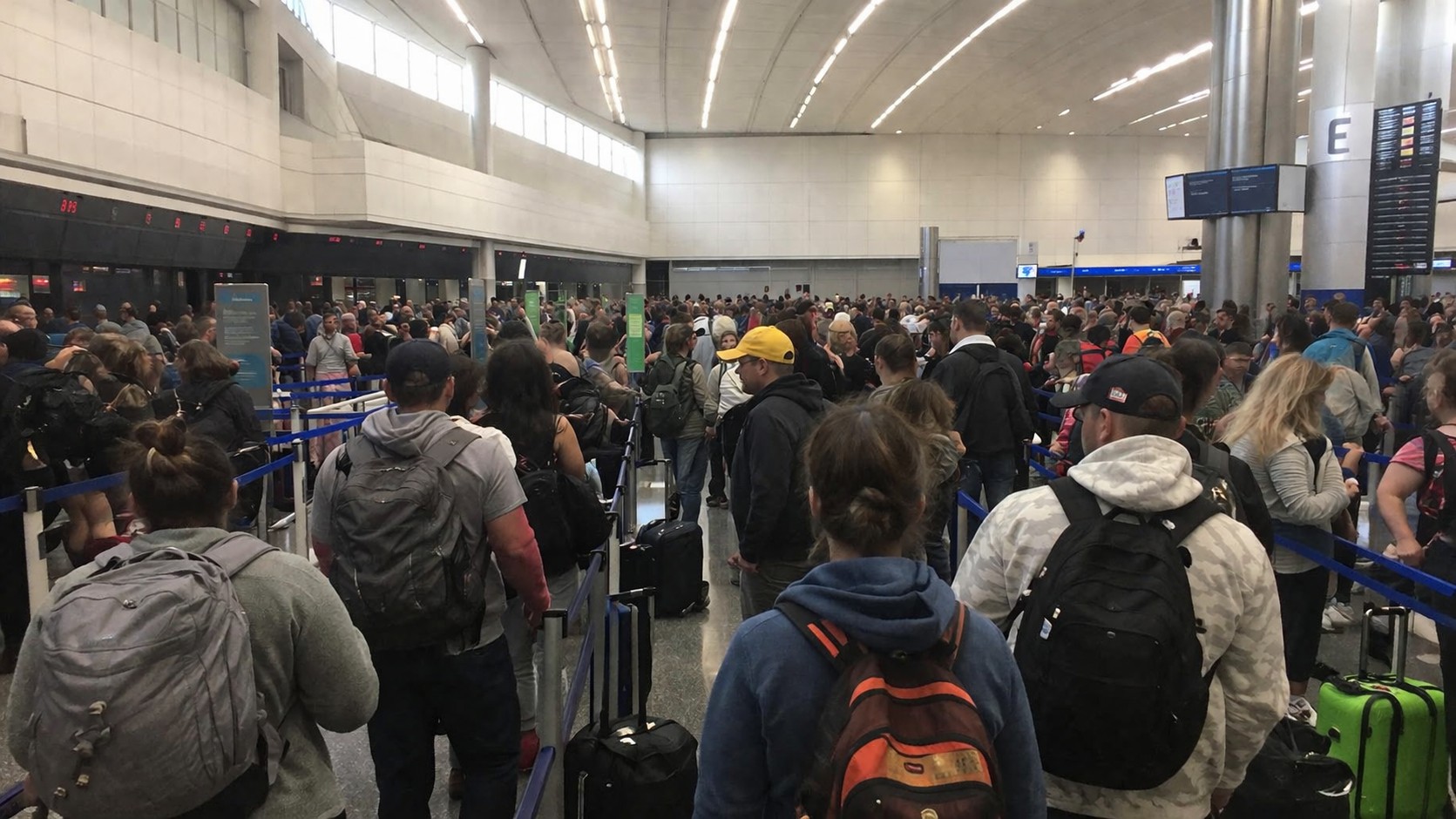
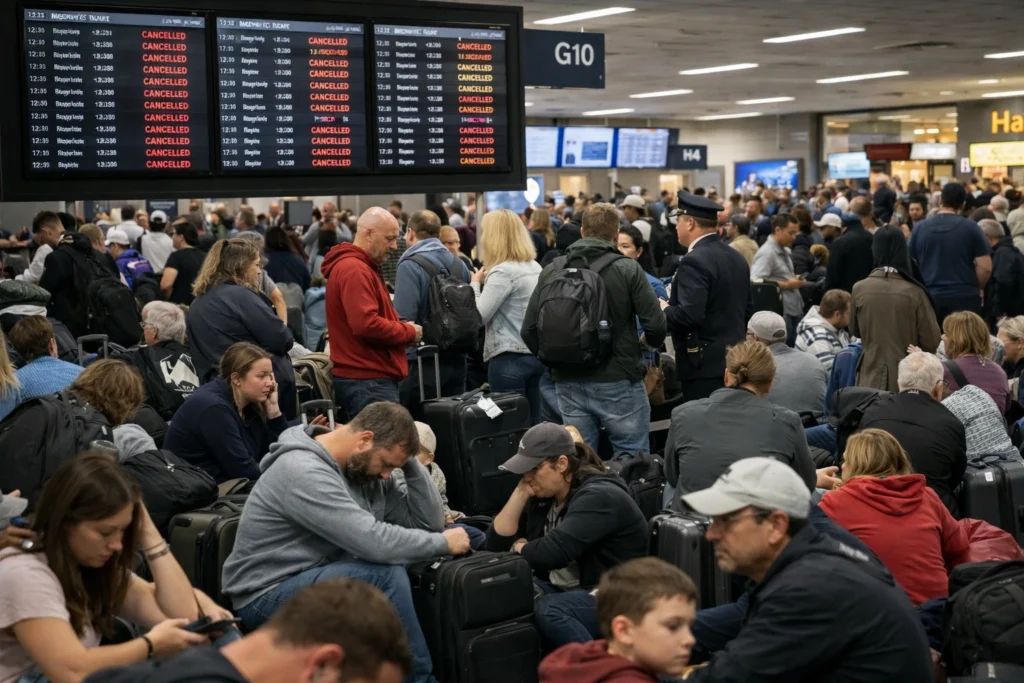
Air travel across the United States has been thrown into turmoil as thousands of passengers face unexpected delays and cancellations. A wave of operational disruptions has impacted major airports, leaving travelers stranded, frustrated, and scrambling for alternatives.
From Chicago to Miami and New York to Kansas, the scale of disruption is significant, affecting both domestic and connecting flights across multiple airline networks.
Widespread Delays and Cancellations Reported
The latest data shows a sharp spike in disruptions, with over 4,183 flight delays and at least 392 cancellations reported nationwide. These numbers reflect a widespread issue rather than isolated incidents.
Major travel hubs such as Chicago, Milwaukee, New York, Indianapolis, Miami, and Kansas City have been among the hardest hit. These cities serve as critical nodes in the U.S. aviation system, meaning delays in one location quickly ripple across the network.
Passengers traveling during peak hours have faced the worst conditions, with long wait times and limited rebooking options.
Major Airlines Under Pressure
Several leading airlines have been affected by the ongoing disruption, including SkyWest Airlines, Spirit Airlines, Republic Airways, Southwest Airlines, and Delta Air Lines.
These carriers operate extensive domestic networks, often relying on tight scheduling and high aircraft utilization. When delays occur, especially at busy hubs, the impact spreads rapidly across multiple routes.
Regional airlines, which support larger carriers through feeder routes, have also faced operational strain, adding another layer of complexity to recovery efforts.
Chicago and New York Among Worst Hit
Two of the most affected regions have been Chicago and New York, both of which handle massive daily passenger volumes.
In Chicago, delays have been particularly severe due to congestion and operational bottlenecks. Flights departing and arriving have experienced extended waiting times, creating a backlog that continues to grow.
New York’s airports have faced similar challenges, with delays cascading across domestic and international connections. Travelers passing through these hubs have reported missed connections and hours-long waits.
Other cities, including Miami and Indianapolis, have also seen significant disruptions, though on a slightly smaller scale.
What Triggered the Travel Chaos?
While the situation may appear sudden, multiple factors have contributed to the disruption:
Weather Disruptions
Changing weather patterns, including storms and visibility issues, have forced airlines to adjust schedules and delay departures.
Air Traffic Congestion
High traffic volume combined with limited airspace capacity has slowed down flight movement, especially in busy corridors.
Crew and Staffing Constraints
Airlines continue to deal with staffing shortages, particularly among pilots and ground crews, which affects scheduling flexibility.
Technical and Operational Issues
Routine maintenance delays and aircraft rotation challenges have added to the overall disruption.
Together, these issues have created a chain reaction, making it difficult for airlines to maintain normal operations.
Passengers Face Long Waits and Uncertainty
For travelers, the experience has been frustrating and unpredictable.
Many passengers have reported:
- Spending hours waiting at airport gates
- Sudden cancellations without immediate alternatives
- Difficulty contacting airline support services
- Limited availability of hotel accommodations
Families traveling with children, business passengers on tight schedules, and tourists alike have all been affected.
Social media platforms have been flooded with real-time updates from stranded passengers, highlighting the scale of inconvenience.
Airlines Issue Advisories and Support Options
Airlines have responded by issuing travel advisories and offering support measures to affected passengers.
Carriers such as Delta Air Lines and Southwest Airlines are:
- Allowing free rebooking on alternative flights
- Offering refunds for canceled tickets
- Encouraging passengers to check flight status before heading to the airport
However, due to the high volume of disruptions, response times remain slower than usual.
Ripple Effect Across the U.S. Network
One of the biggest challenges in situations like this is the interconnected nature of the aviation system.
A delay in one city can quickly affect operations elsewhere. For example:
- A delayed aircraft in Chicago may impact departures in Kansas City
- Crew shortages in New York can affect flights in Miami
- Congestion in Indianapolis may disrupt regional connections
This domino effect means recovery takes time, even after initial issues begin to resolve.
Tips for Travelers Navigating Disruptions
For those planning to travel in the coming days, preparation is key.
Here are some practical tips:
- Monitor flight updates frequently through airline apps
- Arrive early at the airport to handle potential delays
- Keep essential items in carry-on luggage
- Be flexible with travel plans and routes
Staying informed and prepared can help reduce stress during uncertain travel conditions.
Gradual Recovery Expected
Airlines and airport authorities are actively working to stabilize operations. Efforts are underway to:
- Clear backlogs of delayed flights
- Adjust crew schedules
- Improve communication with passengers
While some improvement is expected in the coming days, full recovery may take time, especially if underlying challenges persist.
The current wave of flight delays and cancellations across the United States has disrupted travel plans for thousands of passengers. With more than 4,000 delays and nearly 400 cancellations, the situation highlights the fragility of modern air travel systems.
Airlines like Spirit Airlines and SkyWest Airlines continue to navigate operational challenges, while passengers deal with the immediate impact.
With all these cancellations at O’Hare and JFK, I’m seeing a lot of people in the terminals just trying to pass the time on their phones to deal with the stress. Since the article mentions that recovery will take time, has anyone found any reliable ways to verify which service providers or entertainment platforms are actually safe to use while stuck on airport Wi-Fi? I was reading about digital compliance and safety standards for 2026 over at https://guiadevaidebetbrasil.com and it made me wonder if there’s a similar independent registry for airline service ratings or compensation claims that we can trust during these “ripple effect” delays?