
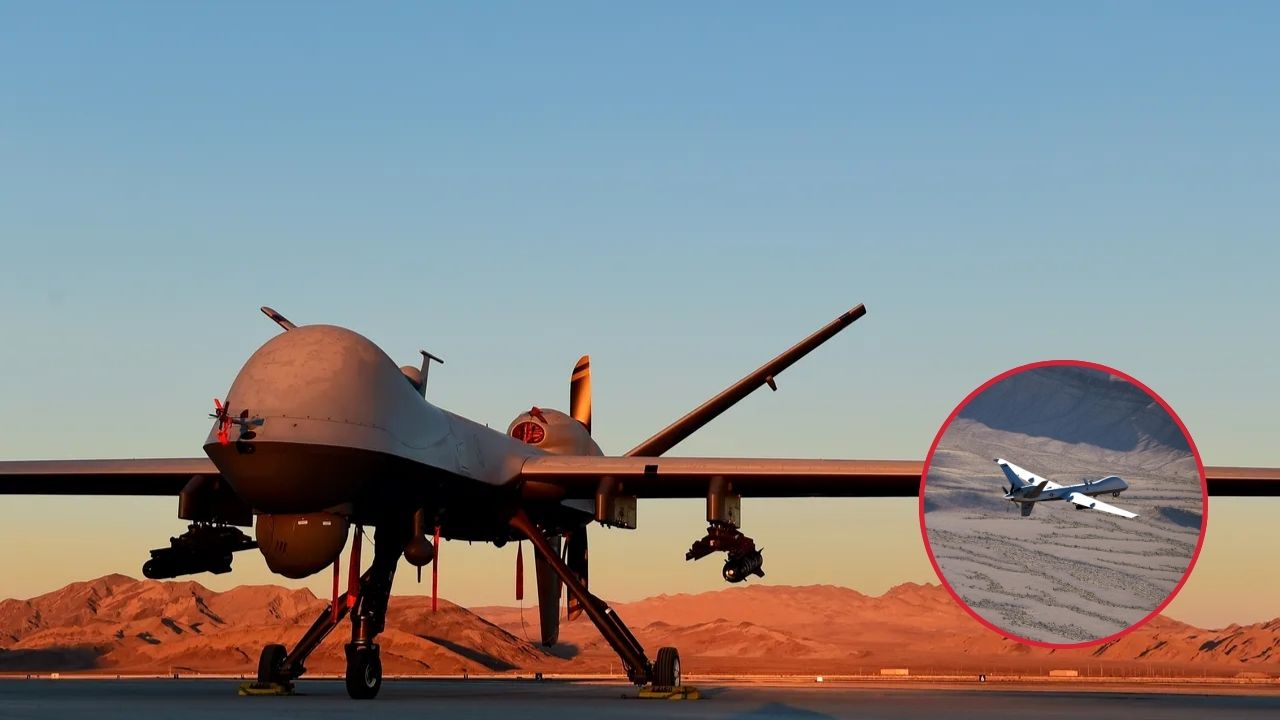
The United States military reportedly lost 24 MQ-9 Reaper drones during the ongoing conflict with Iran, highlighting the growing intensity and technological challenges of modern warfare in the region.
According to multiple reports citing Congressional Research Service findings and defense sources, the drone losses occurred during “Operation Epic Fury,” a large-scale U.S. military campaign launched earlier this year amid escalating tensions with Iran. The losses reportedly form part of a broader pattern of damaged or destroyed American aircraft during the conflict.
The MQ-9 Reaper has long been considered one of the most important unmanned aerial systems in the American military arsenal, making the reported losses both strategically and financially significant.
What Is the MQ-9 Reaper?
The MQ-9 Reaper is a high-tech unmanned aerial vehicle produced by General Atomics and widely used by the U.S. Air Force and intelligence agencies.
Designed for surveillance, reconnaissance, and precision strikes, the Reaper drone became one of America’s most recognizable military technologies during operations in Iraq, Afghanistan, and Syria.
The aircraft can remain airborne for extended periods while carrying advanced sensors, cameras, missiles, and bombs. Military planners often rely on the Reaper because it allows operations in dangerous areas without risking pilot casualties.
Each drone reportedly costs tens of millions of dollars depending on configuration and equipment.
Because of their strategic value, the loss of 24 Reaper drones represents both a major financial blow and a sign of increasingly contested airspace in the Middle East.
Conflict With Iran Intensifies
The drone losses reportedly occurred during the widening conflict between the United States and Iran in 2026.
Military analysts describe the situation as one of the most dangerous direct confrontations between the two countries in decades. U.S. operations targeted Iranian missile infrastructure, drone facilities, and military installations, while Iran responded with missile launches, drone attacks, and air defense operations.
American officials stated that Operation Epic Fury aimed to weaken Iran’s military capabilities and regional influence.
However, the conflict also exposed vulnerabilities in American air operations, especially regarding unmanned aircraft flying near heavily defended Iranian territory.
How the Drones Were Lost
Reports indicate the MQ-9 Reaper drones were lost through multiple scenarios during the conflict.
Some were reportedly shot down by Iranian surface-to-air missile systems and air defense units, while others were destroyed during strikes on forward operating locations and airfields.
Several incidents allegedly occurred near sensitive Iranian military areas, including locations around Qeshm Island and Shiraz. Iranian state-linked media circulated footage claiming to show burning drone wreckage after successful interceptions.
Although U.S. officials have not publicly confirmed every individual loss, congressional reporting and defense analysts acknowledged that the number of destroyed or damaged aircraft remains substantial.
Financial Cost of the Drone Losses
The financial impact of losing 24 MQ-9 Reapers could reach hundreds of millions of dollars.
Depending on the version and mission equipment installed, each drone may cost between $16 million and $30 million. That means the total value of the lost drones alone could exceed $700 million.
More broadly, recent congressional estimates suggested overall operational costs connected to the Iran conflict exceeded $29 billion after accounting for aircraft damage, repairs, munitions, and military deployments.
The rising costs have sparked growing debate in Washington regarding long-term military strategy in the Middle East.
Iran’s Expanding Drone and Air Defense Capabilities
The reported drone losses also reflect Iran’s growing investment in drone warfare and air defense systems.
For years, Iran developed increasingly advanced missile networks, radar systems, and unmanned aircraft technology. Military experts believe Tehran learned important lessons from previous confrontations with the United States and Israel, especially regarding asymmetric warfare.
Iran’s defense strategy focuses heavily on making the Persian Gulf and surrounding airspace dangerous for larger foreign military powers.
Analysts say low-cost drones, mobile missile launchers, and decentralized defense systems helped Iran challenge some of America’s technological advantages during the conflict.
The drone shootdowns may represent one of the clearest examples of how warfare is evolving in the modern era.
Reaper Drones Remain Critical to U.S. Operations
Despite the losses, MQ-9 Reapers continue playing a major role in U.S. military strategy.
American commanders still rely heavily on drones for intelligence gathering, surveillance, and targeted operations across multiple regions worldwide. Reapers provide constant battlefield visibility and can strike targets quickly without risking pilot lives.
However, the Iran conflict raised difficult questions about how vulnerable these systems become when operating against advanced state-level air defenses rather than insurgent groups.
Previous U.S. drone operations in places like Afghanistan often involved little aerial resistance. Iran presented a very different challenge with modern radar coverage and missile systems.
Questions About Air Superiority
The conflict also triggered broader conversations regarding American air superiority.
For decades, the U.S. military maintained overwhelming dominance in most aerial conflicts. However, experts say modern missile systems, drone warfare, and electronic disruption technologies increasingly complicate that advantage.
The reported losses of Reaper drones, fighter aircraft, and support planes during the Iran conflict suggested even advanced militaries face serious risks in heavily defended environments.
Military analysts now debate whether future conflicts will rely more heavily on cheaper autonomous systems instead of extremely expensive aircraft vulnerable to missile attacks.
Political Debate Intensifies in Washington
News surrounding the drone losses intensified political debate inside the United States.
Critics questioned the financial cost and strategic value of prolonged military involvement against Iran. Others argued the losses highlighted the need for more investment in next-generation defense technologies and counter-drone systems.
Meanwhile, military leaders defended the broader operation by claiming the campaign severely weakened Iran’s missile production and defense infrastructure.
Still, public concern continues growing over the scale of losses and the possibility of further escalation in the region.
Modern Warfare Is Changing Rapidly
The reported loss of 24 MQ-9 Reaper drones underscores how rapidly military conflict is changing.
Unmanned systems once viewed as nearly untouchable in counterterrorism operations are now facing advanced electronic warfare, missiles, and coordinated air defense strategies from rival states.
The Iran conflict demonstrated that drone warfare is no longer limited to one-sided surveillance missions. Instead, unmanned aircraft increasingly operate in dangerous, contested environments where sophisticated opponents can shoot them down or disrupt operations.
For military planners around the world, the lessons from these losses may shape future combat strategies for years.
A Major Turning Point in Drone Warfare
The destruction of 24 MQ-9 Reaper drones represents one of the largest publicly discussed drone losses in modern American military history.
Beyond the financial damage, the losses symbolize a broader transformation in global warfare where advanced drones, missile systems, cyber capabilities, and electronic defenses now interact on increasingly complex battlefields.