
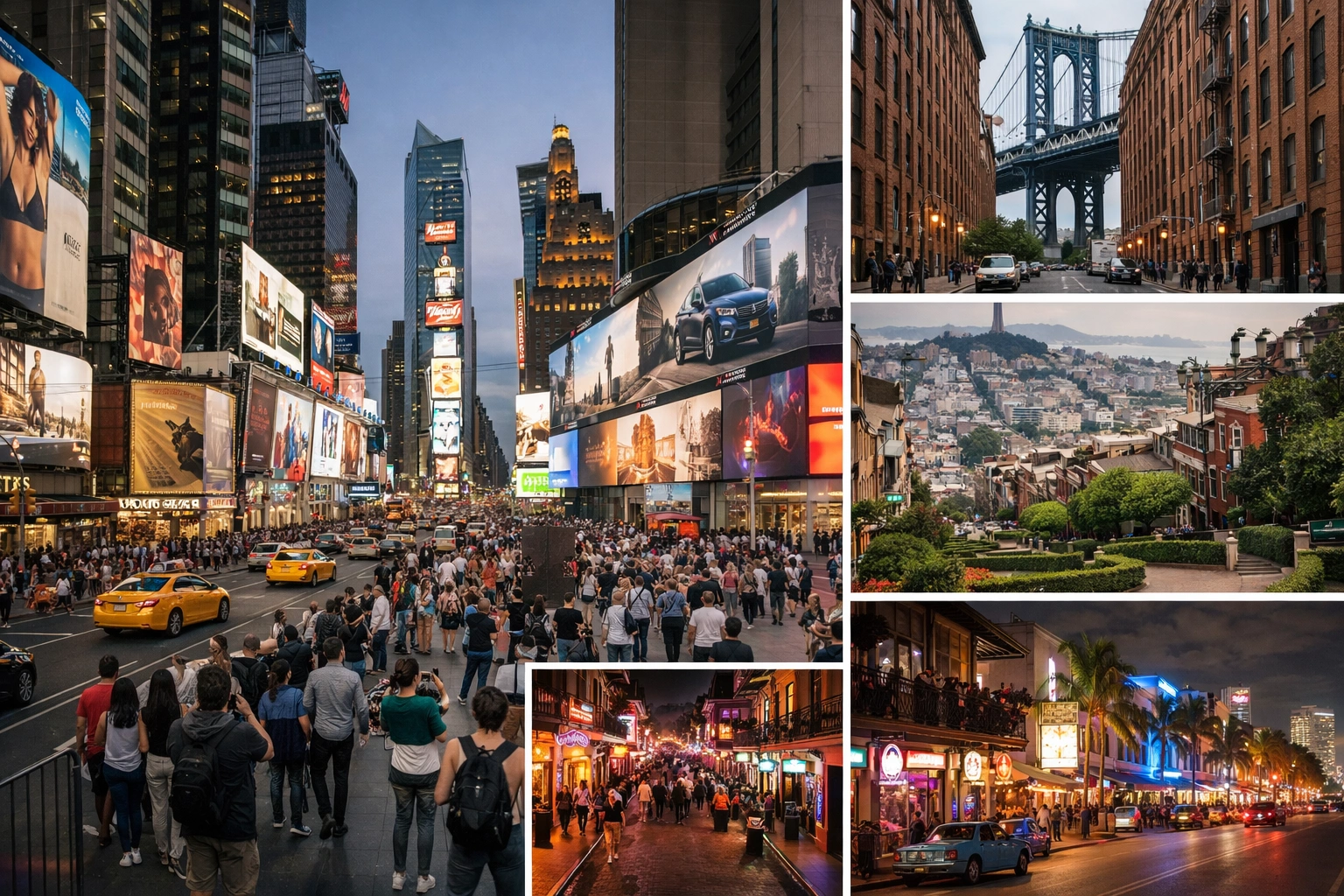
A new travel trend is reshaping how destinations compete in the United States, and it is not entire cities that are leading the charge—it is individual streets. From the electric glow of Times Square to the historic charm of Washington Street and the vibrant nightlife of Bourbon Street, these iconic stretches are outperforming entire urban destinations in the battle for Instagram dominance.
In the latest update driven by social media analytics, streets are emerging as standalone travel brands. Travelers are no longer just visiting cities; they are targeting specific, highly photogenic locations that offer instant visual appeal and viral potential.
Times Square Leads the Instagram Race
At the forefront of this shift is Times Square, a global symbol of energy, light, and nonstop activity. Its massive digital billboards, constant motion, and cinematic atmosphere make it one of the most photographed places in the world.
What sets Times Square apart is its ability to deliver visually striking content at any time of day. Whether it is daytime crowds or neon-lit nights, every moment offers a new angle for creators. This consistency keeps it trending across platforms like Instagram, TikTok, and YouTube.
For Gen Z travelers, Times Square is more than a landmark. It is a content hub where every visit translates into shareable moments that resonate globally.
Washington Street and the Power of Aesthetic Views
While Times Square thrives on energy, Washington Street in Brooklyn captures attention through its iconic framing of the Manhattan Bridge. This single viewpoint has become one of the most recognizable backdrops on Instagram.
The appeal lies in its simplicity. Clean lines, architectural symmetry, and a clear focal point make it ideal for photography. Travelers line up to capture the perfect shot, often recreating viral images that have already gained millions of views.
This demonstrates a key trend: a single visually compelling angle can elevate an entire street into global fame, proving that aesthetics are just as powerful as scale.
Lombard Street and the Charm of Uniqueness
San Francisco’s Lombard Street continues to captivate audiences with its distinctive design. Known as one of the most crooked streets in the world, its winding curves and lush landscaping create a visual experience that is both unique and memorable.
Unlike traditional nightlife or urban hotspots, Lombard Street thrives on curiosity and novelty. Visitors are drawn to its unusual layout, and the resulting photos stand out in crowded social feeds.
This highlights another important factor in the Instagram race: uniqueness. Locations that offer something different are more likely to capture attention and drive engagement.
Bourbon Street and the Energy of Nightlife
In New Orleans, Bourbon Street remains a powerhouse of nightlife content. Its vibrant atmosphere, live music, and colorful crowds make it a favorite for those seeking high-energy experiences.
The street’s appeal goes beyond visuals. It offers an immersive environment where sound, movement, and culture come together. This creates dynamic content that feels alive, making it highly engaging for social media audiences.
Nighttime footage, in particular, performs exceptionally well, as it captures the essence of celebration and spontaneity that defines the street.
Ocean Drive and Coastal Glamour
Miami’s Ocean Drive brings a different kind of appeal to the table. With its pastel-colored Art Deco buildings, palm-lined streets, and oceanfront views, it delivers a blend of relaxation and glamour.
This combination makes it highly versatile for content creation. From daytime beach aesthetics to evening nightlife scenes, Ocean Drive offers multiple moods within a single location.
Travelers are drawn to its cinematic quality, where every frame feels like a scene from a movie. This visual storytelling potential is a major reason for its continued popularity online.
Social Media Is Redefining Travel Choices
The rise of these streets reflects a broader shift in how people choose travel destinations. Social media platforms are now the primary source of inspiration, especially for younger audiences.
Instead of researching entire cities, travelers are searching for specific spots that have proven viral appeal. Hashtags, geotags, and influencer posts guide decisions, turning certain streets into global attractions almost overnight.
This change is forcing cities to rethink their marketing strategies. Highlighting micro-destinations—like streets, neighborhoods, and viewpoints—is becoming more effective than promoting cities as a whole.
Why Gen Z Prefers Street-Level Experiences
Gen Z travelers are driving this trend with their preference for authentic, visually engaging, and easily shareable experiences. Streets offer exactly that.
They are accessible, free or low-cost, and packed with personality. Unlike large attractions that may require tickets or long planning, streets provide instant gratification. Travelers can explore, capture content, and move on, all within a short time frame.
This aligns perfectly with the fast-paced nature of social media, where quick, impactful visuals often perform better than long-form experiences.
Smaller Spaces, Bigger Impact
One of the most surprising aspects of this trend is how smaller spaces are outperforming larger destinations. A single street, if visually compelling, can generate more engagement than an entire city.
This is because social media thrives on clarity and focus. A well-defined location with a strong visual identity is easier to recognize, remember, and share.
As a result, streets like Times Square and Lombard Street are becoming symbols not just of their cities, but of the broader travel experience itself.
The Future of Urban Travel Trends
The growing dominance of streets in the Instagram race signals a major shift in the tourism landscape. Cities that embrace this trend and invest in enhancing their most photogenic locations are likely to gain a competitive edge.
For travelers, this means more curated and visually driven experiences. For destinations, it means adapting to a world where digital presence is just as important as physical infrastructure.