
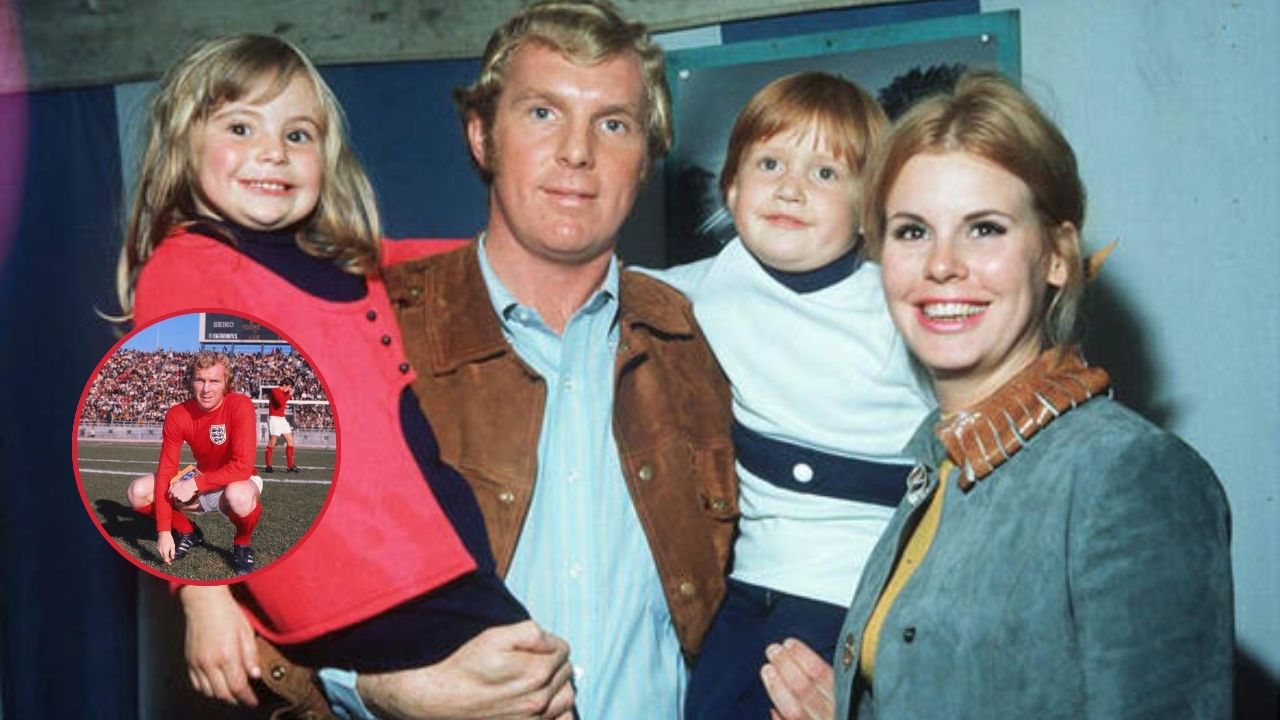
Few figures in football history command as much respect as Bobby Moore. Widely regarded as one of the greatest defenders the game has ever produced, Moore remains an enduring symbol of English football excellence. His leadership during England’s historic 1966 FIFA World Cup triumph secured his place among the sport’s immortals.
Yet behind the trophies, accolades, and iconic moments was a man who faced significant health battles throughout his life. The legendary footballer’s death in 1993 shocked the sporting world and left millions mourning the loss of one of England’s most beloved sporting heroes.
More than three decades later, interest remains high regarding Bobby Moore’s cause of death and the legacy he left behind both on and off the pitch.
Bobby Moore’s Cause of Death
Bobby Moore died from bowel cancer, also known medically as colorectal cancer.
The England captain passed away peacefully on February 24, 1993, at the age of 51. His death came less than two years after he underwent surgery related to the disease.
At the time, the news generated widespread sadness throughout the football community. Tributes arrived from former teammates, opponents, clubs, and supporters across the world who recognized Moore’s immense contribution to the sport.
His passing represented the loss of not only a football legend but also one of England’s most respected sporting ambassadors.
An Earlier Battle With Cancer
Many people are unaware that Moore faced a major cancer diagnosis long before his final illness.
In 1964, just two years before leading England to World Cup glory, he was diagnosed with testicular cancer.
The diagnosis came at a critical point in his playing career. Fortunately, doctors detected the disease before it spread further.
Moore underwent surgery to remove one testicle, and the treatment proved successful.
The recovery allowed him to return to professional football and continue competing at the highest level.
His ability to overcome that challenge demonstrated the determination and resilience that later became hallmarks of his legendary career.
Leading England to History
Following his successful recovery, Moore entered the most famous chapter of his football journey.
As captain of the England national team, he led the squad during the 1966 FIFA World Cup on home soil.
England’s victory remains one of the most celebrated achievements in the nation’s sporting history.
Moore’s calm leadership, tactical intelligence, and exceptional defensive ability played a central role throughout the tournament.
The image of him lifting the World Cup trophy at Wembley Stadium remains one of the most iconic moments in football history.
For many supporters, Moore became the embodiment of professionalism, sportsmanship, and leadership.
His influence extended far beyond England and earned admiration from football fans around the globe.
The Diagnosis That Changed Everything
Years after his playing career ended, Moore faced another serious health challenge.
In April 1991, he underwent emergency surgery after doctors suspected colorectal cancer.
Initially, reports described the procedure as emergency stomach surgery, and the full details of his condition were not immediately disclosed publicly.
However, the operation marked the beginning of a difficult battle against a disease that would eventually claim his life.
Despite undergoing treatment, Moore continued to remain active in football and broadcasting whenever possible.
His determination to maintain a public presence reflected the same courage he had shown throughout his sporting career.
Final Public Appearance
As his condition worsened, Moore eventually chose to speak openly about his illness.
On February 14, 1993, he publicly revealed that he was battling cancer.
The announcement came just ten days before his death.
Even during that challenging period, he remained connected to the sport he loved.
His final public appearance occurred on February 17, 1993, when he worked as a commentator during an England match at Wembley Stadium.
Many football fans watching that evening were unaware they were witnessing Moore’s last public contribution to the game.
Just one week later, the legendary defender passed away.
A West Ham United Legend
Although Moore is most famous for captaining England, his club career was equally remarkable.
He spent 16 years with West Ham United, becoming one of the most important figures in the club’s history.
During his time at the East London club, Moore made 647 appearances and helped the team achieve significant success.
Among his accomplishments were victories in the FA Cup and the European Cup Winners’ Cup.
His loyalty, consistency, and leadership transformed him into a lasting symbol of West Ham United.
Generations of supporters continue to regard him as one of the greatest players ever to represent the club.
Legacy Beyond Football
Bobby Moore’s influence did not end with his passing.
In the years following his death, his family became involved in efforts to raise awareness about bowel cancer and improve medical research.
His widow, Stephanie Moore OBE, worked alongside Cancer Research UK to establish the Bobby Moore Fund.
The initiative was created to support scientific research, improve public understanding of bowel cancer, and encourage earlier detection.
The organization has gone on to raise more than £31 million to support groundbreaking research projects and awareness campaigns.
Its work has helped advance understanding of the disease and contributed to improvements in patient outcomes.
Lasting Impact on Cancer Awareness
The Bobby Moore Fund remains one of the most significant aspects of his legacy away from football.
Medical experts and researchers credit increased awareness campaigns with helping encourage earlier diagnosis and treatment of bowel cancer.
Over the years, improvements in screening, education, and research have contributed to substantial reductions in mortality rates associated with the disease.
Through the fund bearing his name, Moore’s influence continues to save lives long after his playing career ended.
His story serves as a reminder of the importance of cancer awareness, early detection, and ongoing medical research.
Remembering a Sporting Icon
Bobby Moore’s life was defined by achievement, resilience, and leadership.
From overcoming testicular cancer to captaining England to World Cup glory and later fighting bowel cancer with dignity, he consistently displayed remarkable courage.
His accomplishments on the football field established him as one of the greatest defenders in history, while his legacy off the pitch continues through the work of the Bobby Moore Fund.
More than thirty years after his death, Moore remains a symbol of excellence in English sport. His influence continues to inspire football fans, players, researchers, and cancer advocates around the world, ensuring that his legacy endures far beyond the game he helped define.