
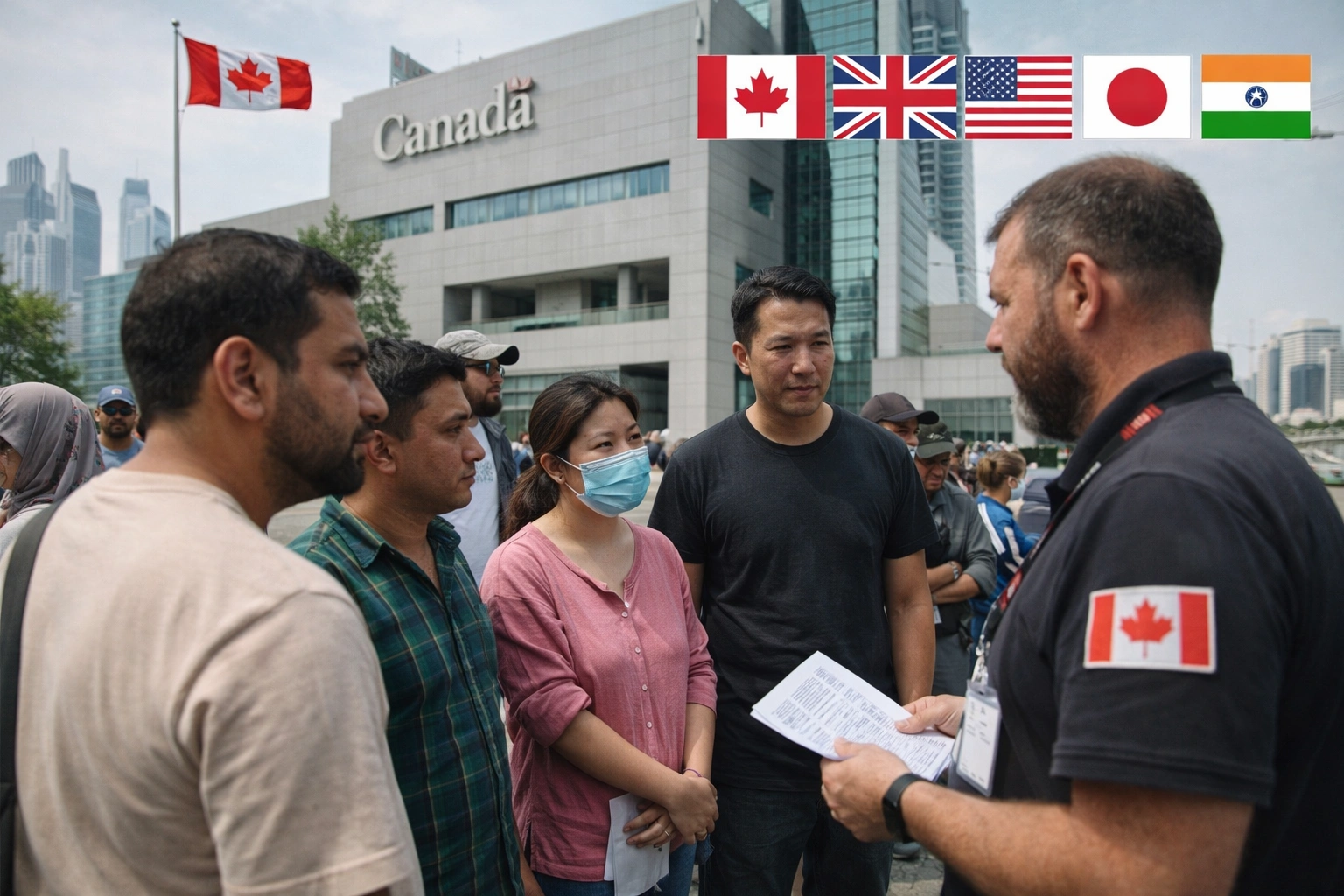
As the Middle East faces escalating tensions, countries across the world are stepping in to ease the burden on stranded travelers. Canada has now joined nations such as the UK, US, Japan, Germany, China, India, and Sri Lanka in offering relief measures for citizens affected by the ongoing crisis.
At the same time, several Middle Eastern countries including Israel, Qatar, Bahrain, the UAE, and Saudi Arabia have introduced emergency support policies. These include no-penalty overstays, free visa extensions, and assistance with accommodation and food, providing critical relief to thousands of international travelers caught in uncertainty.
Canada Expands Support for Citizens Abroad
Canada’s move comes as part of a broader international response aimed at protecting citizens during rapidly evolving geopolitical disruptions. Canadian authorities are closely monitoring the situation and coordinating with embassies and airlines to ensure safe passage for travelers.
Emergency advisories have been issued, urging Canadians in affected regions to remain in contact with local embassies and register their presence. The government is also facilitating evacuation planning and offering guidance on available commercial flight options where possible.
This aligns Canada with other major economies that have activated contingency frameworks to support citizens facing unexpected travel complications.
No Fine Overstay Policies Introduced
One of the most significant relief measures introduced by Middle Eastern nations is the suspension of overstay fines. Countries such as the UAE, Qatar, and Saudi Arabia have announced that travelers unable to leave due to flight disruptions will not face penalties.
This policy is particularly crucial for tourists and short-term visa holders who may otherwise incur heavy fines for overstaying their permitted duration. By removing this financial burden, authorities are offering immediate reassurance to those stranded.
The decision reflects a humanitarian approach, acknowledging that the disruptions are beyond travelers’ control and require flexible solutions.
Free Visa Extensions for Stranded Travelers
In addition to waiving overstay fines, several countries are granting free visa extensions. This ensures that travelers can legally remain in the country until normal travel operations resume.
Immigration authorities in the UAE and Qatar have streamlined extension processes, in many cases applying them automatically. This eliminates the need for complex paperwork or in-person visits, which can be challenging during crisis conditions.
Such measures not only reduce stress for travelers but also help maintain order by preventing overcrowding at immigration offices and airports.
Food and Hotel Assistance Programs
Beyond visa and legal support, governments and local authorities are also addressing the immediate needs of stranded passengers. Assistance programs providing food, temporary accommodation, and basic necessities have been rolled out in key transit hubs.
Airlines and airport authorities are working together to support affected passengers, with some offering hotel stays and meal vouchers during extended delays. In cities with high numbers of stranded travelers, dedicated help desks and emergency shelters have been established.
These initiatives are particularly beneficial for families, elderly travelers, and those without immediate financial resources.
Airlines Adjust Operations Amid Disruptions
Airlines operating in and around the Middle East are continuing to adjust flight schedules in response to airspace restrictions and safety concerns. Many carriers have rerouted flights, delayed departures, or temporarily suspended certain routes.
Passengers flying with major international airlines are being advised to check flight status regularly and stay updated through official airline communication channels. Flexible rebooking options and travel waivers are widely available, allowing travelers to change plans without significant penalties.
The coordination between airlines and governments is playing a key role in managing the situation and minimizing disruption.
Global Coordination Gains Momentum
The response from countries including Canada, the UK, US, India, Japan, Germany, China, and Sri Lanka highlights an increasing level of global coordination during crises. Governments are sharing information, aligning travel advisories, and working together to support citizens abroad.
Diplomatic missions are also collaborating to assist travelers who may not have direct representation in certain regions. This cooperative approach is helping to fill gaps and ensure that no group of travelers is left unsupported.
Such international coordination is becoming a critical component of crisis management in an interconnected world.
What Travelers Should Do Now
For those currently in or traveling through the Middle East, staying informed is essential. Travelers should maintain regular contact with their embassy, monitor official advisories, and keep all travel documents readily accessible.
Checking flight status before heading to the airport remains a key recommendation. Additionally, travelers should explore alternative routes and remain flexible with travel plans as the situation evolves.
It is also advisable to retain receipts and documentation for any additional expenses, as some governments and airlines may offer reimbursement or support at a later stage.
Short-Term Outlook Remains Uncertain
While relief measures are providing immediate support, uncertainty continues to surround the duration of disruptions. Much will depend on how the geopolitical situation develops in the coming days and weeks.
Aviation experts suggest that while operations may gradually stabilize, intermittent disruptions are likely to persist in the short term. Travelers should be prepared for sudden changes and remain adaptable.
A Humanitarian Approach to Travel Disruptions
The collective response from both Middle Eastern nations and global governments reflects a strong humanitarian focus. By prioritizing traveler welfare through visa flexibility, financial relief, and essential support services, authorities are helping to ease the impact of an otherwise challenging situation.
For now, the message to travelers is clear: stay informed, remain patient, and take advantage of the support systems in place. As countries continue to work together, these coordinated efforts are making a meaningful difference for thousands navigating uncertainty far from home.