
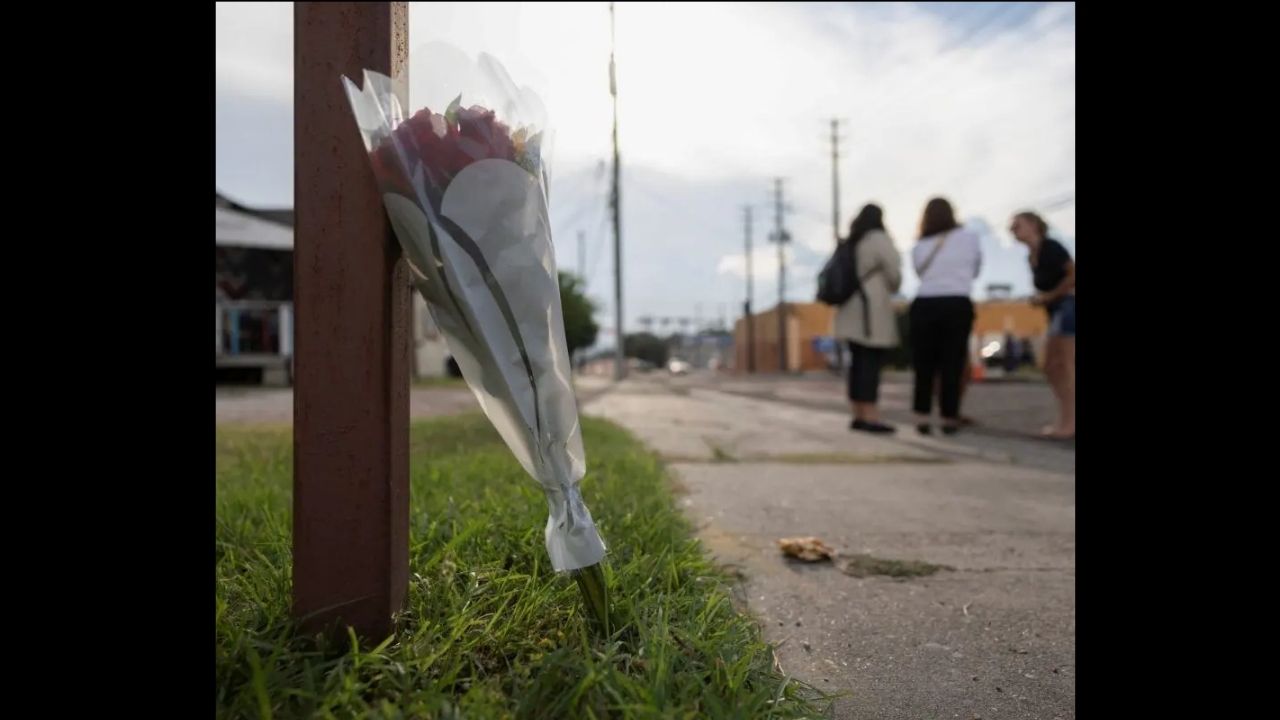
Questions continue to grow following the Houston immigration enforcement operation that resulted in the fatal shooting of 52-year-old Lorenzo Salgado Araujo. As multiple investigations move forward, the U.S. Department of Homeland Security (DHS) has declined to identify the Immigration and Customs Enforcement (ICE) officer involved, citing security concerns for the employee and the officer’s family.
The incident, which occurred during a traffic stop on July 7, 2026, has become the focus of national attention because of conflicting accounts, the absence of body camera footage, and claims that the individual involved was not the intended target of the federal operation.
Federal officials, local leaders, attorneys and community organizations are now closely watching the case as investigators continue reviewing the available evidence.
DHS Explains Decision
The Department of Homeland Security has defended its decision to keep the officer’s identity confidential.
According to the agency, revealing personal information could expose the officer and family members to potential threats. Officials have also declined to confirm how long the officer has served with ICE or whether the employee has been placed on administrative leave while investigations remain active.
Federal agencies often limit the release of personnel information during ongoing investigations, particularly when security concerns are raised. However, critics argue that transparency is equally important in cases involving the use of deadly force.
The department has not indicated when additional information might become public.
Questions Over Target
Another major issue surrounding the case involves whether Lorenzo Salgado Araujo was the person immigration officers intended to locate.
U.S. Representative Sylvia Garcia stated that Salgado Araujo, a homebuilder with no known criminal history, was not the individual federal agents had been searching for during the enforcement operation.
If confirmed, that detail could become a significant part of the ongoing investigations, particularly as authorities examine how the operation unfolded and whether the correct vehicle or individual had been identified before officers initiated the stop.
Federal officials have not publicly addressed those specific claims beyond defending the overall operation.
Conflicting Accounts
The Department of Homeland Security maintains that officers encountered a vehicle matching one connected to an address under investigation.
According to the agency, the driver allegedly struck an ICE vehicle, creating an immediate threat that prompted an officer to respond in self-defense.
That account has been strongly disputed by three passengers who were inside the vehicle.
Represented by attorney Hugo Balderas-Ibarra, the witnesses say the vehicle never rammed officers or placed federal agents in immediate danger.
The attorney has stated that all three passengers independently described similar events and rejected the federal version of what occurred.
As investigators continue collecting evidence, these differing accounts remain central to the case.
Witnesses Remain Detained
The three passengers who were inside the vehicle during the incident remain in federal immigration custody.
Among them is Salgado Araujo’s brother, along with Daniel Tirado Pantoja, who reportedly does not have legal immigration status but also has no prior criminal record.
Family members have expressed concern that federal authorities are encouraging the detained witnesses to agree to voluntary self-deportation before investigations are completed.
According to relatives, attorneys have advised the witnesses not to sign any documents while legal proceedings continue.
Those allegations have added another layer of public interest because the passengers are considered important eyewitnesses whose testimony may help investigators establish exactly what happened.
DHS Rejects Claims
The Department of Homeland Security has firmly rejected allegations made by the passengers and their legal representatives.
Agency officials described the witnesses’ version of events as inaccurate and continue to stand by the original account provided after the incident.
At this stage, no independent investigation has publicly confirmed either version of events.
Both federal and local investigators are expected to compare witness interviews with forensic evidence and other available records before reaching any conclusions.
Missing Video Evidence
One of the biggest challenges facing investigators is the absence of body camera footage.
The ICE officers involved in the operation were not wearing body cameras, leaving investigators without one of the most valuable sources of evidence typically available in modern law enforcement investigations.
Authorities have also indicated that nearby surveillance cameras were unable to capture the encounter because the vehicles blocked their view.
Without video recordings, investigators must rely heavily on physical evidence, witness statements, radio communications and forensic analysis.
Legal experts say this makes the investigation considerably more complex.
Reward Offered
Community organizations are also attempting to locate additional evidence.
The League of United Latin American Citizens (LULAC) has announced a $5,000 reward for information leading to photographs or video recordings that may have captured any portion of the incident.
Investigators hope that footage from passing motorists, nearby businesses or personal mobile devices could help establish a more complete timeline.
So far, no publicly available recordings of the encounter have surfaced.
Multiple Reviews Continue
Several investigations are now underway.
Federal agencies continue examining the actions of the officers involved, while local authorities are independently reviewing whether any violations of Texas law may have occurred.
Officials have emphasized that no final conclusions have been reached and that all available evidence will be evaluated before decisions are made.
As the reviews continue, the Houston case has sparked wider discussions about immigration enforcement procedures, officer accountability, transparency and the use of body cameras during federal operations.
Until investigators complete their work, many of the key questions surrounding the incident remain unanswered, ensuring the case will continue to receive close public and legal attention in the weeks ahead.