
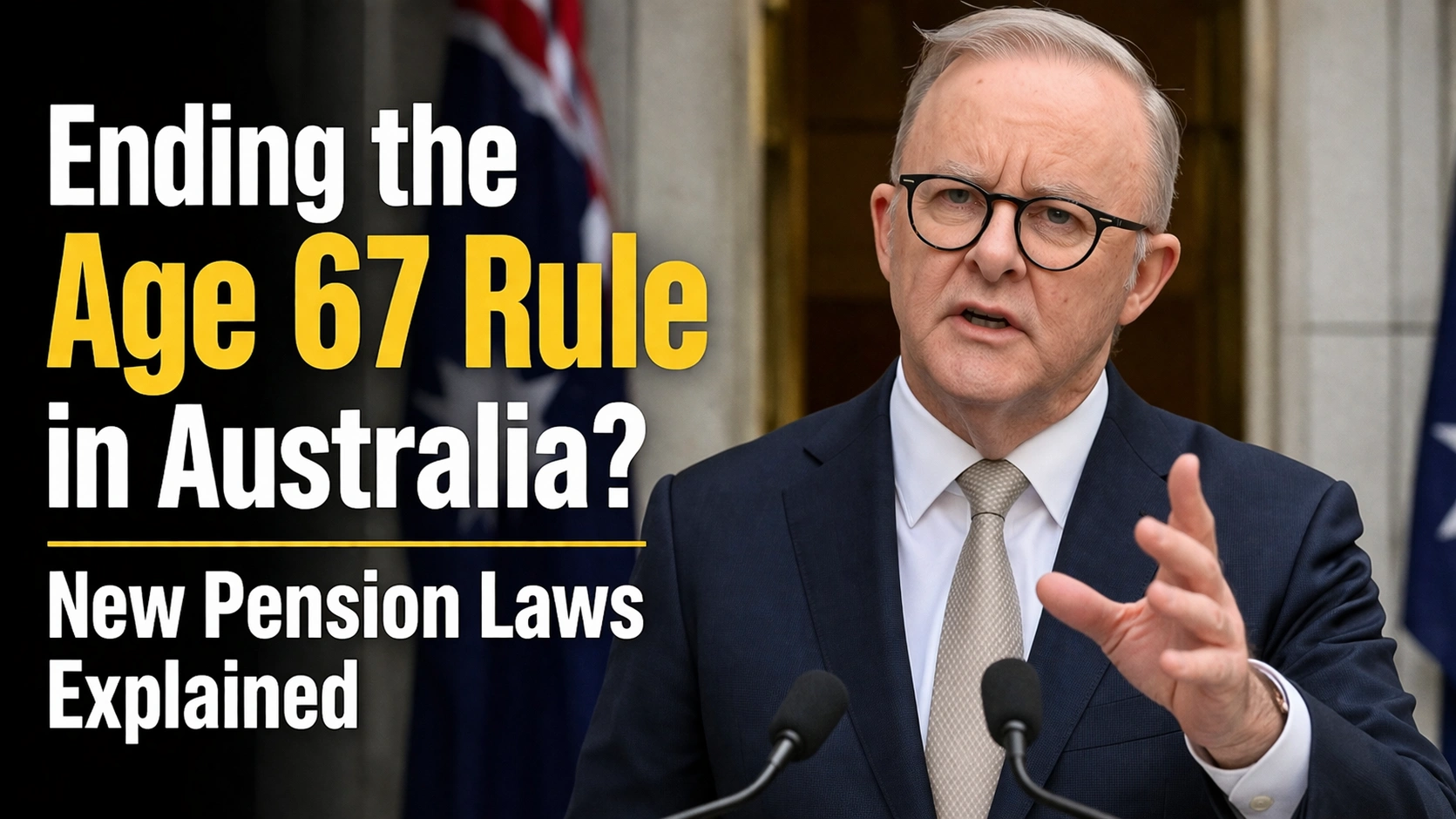
Ending the Age 67 Rule in Australia? New Pension Laws Explained
Australia’s retirement system is once again in the spotlight as discussions intensify around the future of the Age Pension eligibility age. The current rule, which sets the qualifying age at 67, has sparked renewed debate among policymakers, economists, and seniors, with growing speculation about whether changes could be introduced in the coming years.
While no official confirmation has been made about ending the age 67 rule, ongoing conversations about pension sustainability, cost of living pressures, and workforce participation are driving attention to potential reforms.
Understanding the Current Age 67 Rule
At present, Australians must reach the age of 67 to qualify for the Age Pension, provided they meet income and asset tests. This threshold was gradually increased from 65 as part of earlier reforms aimed at aligning retirement age with longer life expectancy.
The policy was designed to ensure the long-term sustainability of the pension system while encouraging older Australians to remain in the workforce for longer.
For many retirees, the age requirement plays a crucial role in financial planning, influencing decisions about savings, superannuation, and retirement timing.
Why Changes Are Being Discussed
Several factors are fueling discussions about potential changes to the pension age. One of the biggest drivers is the rising cost of living, which is placing increasing financial pressure on older Australians.
Many seniors are finding it difficult to bridge the gap between retirement and pension eligibility, particularly those who are unable to continue working due to health or job availability.
At the same time, Australia’s aging population is increasing demand on the pension system, prompting policymakers to explore ways to balance financial support with long-term sustainability.
Could the Pension Age Be Lowered?
One of the key questions being asked is whether the pension age could be reduced from 67. Advocates argue that lowering the eligibility age would provide much-needed relief for seniors struggling to maintain financial stability before qualifying for support.
Supporters of this idea point to physically demanding jobs and limited employment opportunities for older workers as reasons to reconsider the current threshold.
However, reducing the pension age would also increase government spending, raising concerns about fiscal sustainability and the long-term viability of the system.
Alternative Reform Options
Rather than fully ending the age 67 rule, policymakers may consider alternative approaches. These could include more flexible eligibility criteria, targeted support for vulnerable groups, or partial pension access before the official age.
Another option is adjusting income and asset test thresholds to allow more seniors to qualify for assistance earlier. Expanding employment support programs for older workers is also being discussed as a way to bridge the gap.
These potential reforms aim to strike a balance between providing support and maintaining economic stability.
Impact on Current and Future Retirees
For current retirees, any changes to pension laws could affect payment eligibility, benefit amounts, and overall financial planning. Those approaching retirement age are particularly concerned about how reforms might impact their timelines.
Future retirees may need to adapt their strategies, placing greater emphasis on superannuation savings and alternative income sources.
Uncertainty around potential changes highlights the importance of staying informed and planning for multiple scenarios.
Government Position and Policy Direction
So far, the government has not announced any immediate plans to reverse or significantly alter the age 67 requirement. However, ongoing reviews of the pension system suggest that adjustments could be considered as part of broader economic and social policy reforms.
Officials are likely to weigh multiple factors, including budget constraints, demographic trends, and public opinion, before making any decisions.
The focus remains on ensuring that the pension system remains fair, sustainable, and responsive to the needs of Australians.
What Seniors Should Do Now
Given the uncertainty, seniors are encouraged to stay updated on official announcements and policy developments. Regularly checking government resources and financial planning tools can help individuals understand how potential changes might affect them.
It is also advisable to review personal finances, including superannuation, savings, and expected retirement expenses. Seeking professional financial advice can provide additional clarity and guidance.
Being proactive can help seniors navigate potential changes with greater confidence.
Broader Implications for Australia
The debate around the age 67 rule is part of a larger conversation about retirement, aging, and economic security in Australia. As life expectancy increases and workforce dynamics evolve, the pension system must adapt to meet changing needs.
Balancing support for seniors with fiscal responsibility will remain a key challenge for policymakers. Any changes to the pension age will have far-reaching implications for individuals, families, and the broader economy.
What Lies Ahead
While the age 67 rule remains in place for now, the growing debate suggests that Australia’s pension system could see adjustments in the future. Whether through age changes, eligibility tweaks, or additional support measures, reforms are likely to focus on improving fairness and sustainability.
For now, the best approach for seniors is to stay informed, plan ahead, and remain flexible as the situation evolves.