
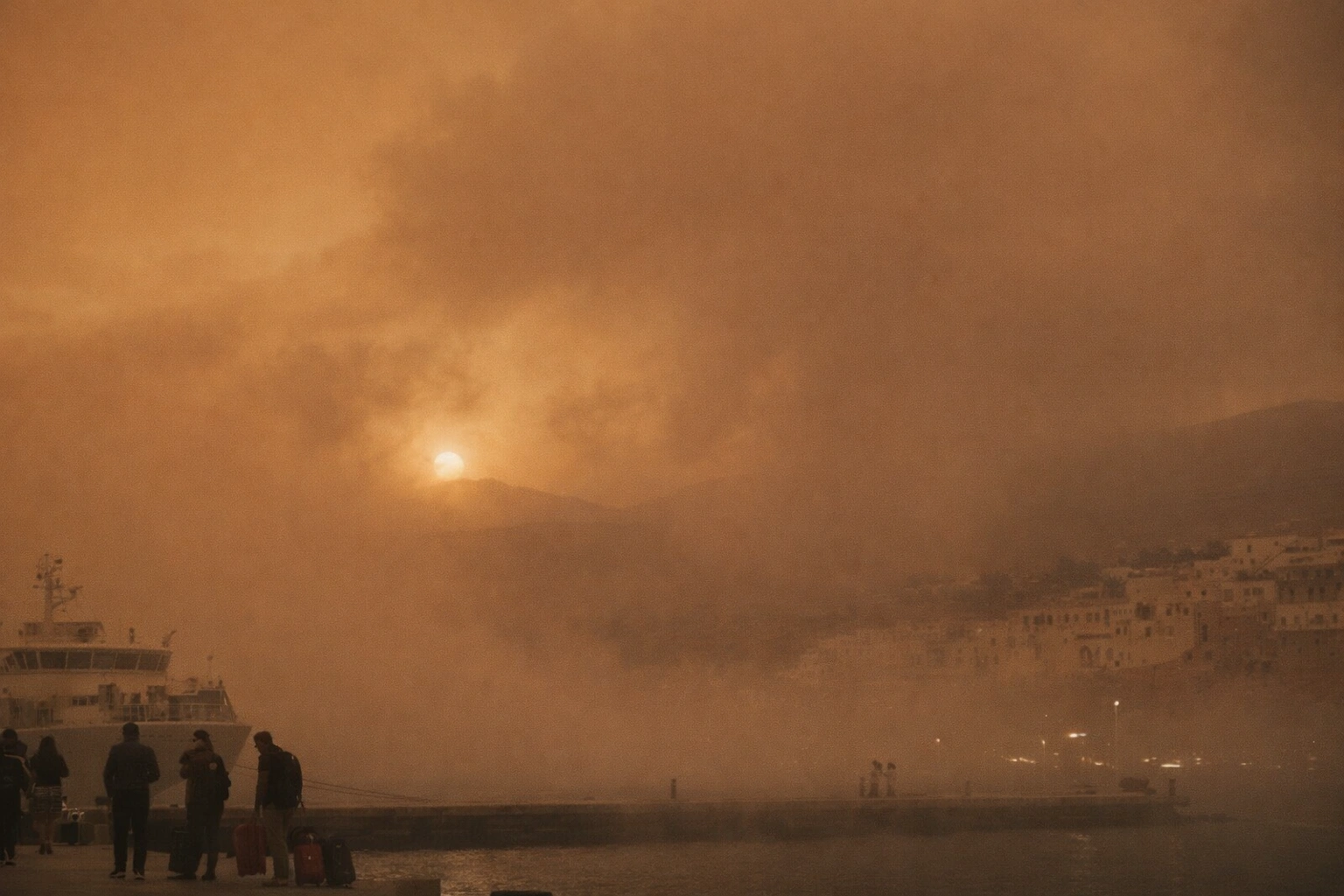
A dramatic environmental event is unfolding across Greece as thick clouds of African dust sweep over Crete, turning skies a deep orange and significantly reducing visibility. The phenomenon, while not entirely uncommon in the Mediterranean, has reached unusual intensity, causing widespread disruption to flights, tourism activity, and daily life.
Travelers and residents alike are witnessing surreal landscapes, but behind the striking visuals lies a serious impact on mobility, safety, and the regional tourism economy.
A Sudden Shift in the Skies
The arrival of African dust over Crete has transformed the island’s atmosphere almost overnight. Winds carrying fine particles from the Sahara Desert have blanketed the region, creating dense haze and giving the sky its distinctive orange hue.
Visibility levels have dropped sharply, affecting both ground and air travel. Roads appear foggy despite clear weather conditions, and landmarks are barely visible in some areas.
While such dust events occur periodically, the current intensity has raised concerns among authorities and travelers.
Crete at the Center of Disruption
Crete, one of Greece’s most popular tourist destinations, is at the heart of the situation. Airports across the island are experiencing delays and operational challenges due to reduced visibility.
Flights are being rescheduled, diverted, or delayed as pilots and air traffic controllers navigate the difficult conditions. Travelers planning arrivals and departures are facing uncertainty, with schedules changing rapidly.
For an island heavily dependent on smooth connectivity, even short-term disruptions can have significant consequences.
Impact on Air Travel and Airports
Air travel is particularly sensitive to visibility conditions, and the dust cloud is creating complications for aviation operations.
Pilots rely on clear visual references during takeoff and landing, and when visibility drops, safety protocols require adjustments. This can lead to delays, holding patterns, or even cancellations in extreme cases.
Airlines are closely monitoring conditions, and passengers are being advised to check flight status regularly.
Tourism Activity Slows Down
Beyond airports, the tourism sector is also feeling the effects. Outdoor activities, sightseeing tours, and beach visits are being disrupted as the dust reduces air quality and visibility.
Visitors who expected clear Mediterranean skies are instead encountering hazy conditions and muted landscapes. Some tourists are choosing to stay indoors, while others are adjusting their itineraries.
Local businesses, particularly those dependent on outdoor tourism, are experiencing a temporary slowdown.
Health Concerns Rise With Dust Levels
The presence of fine dust particles in the air is not just a visibility issue—it also raises health concerns. Authorities are advising residents and visitors to limit outdoor exposure, especially for individuals with respiratory conditions.
The dust can cause irritation to the eyes, throat, and lungs, making it uncomfortable for prolonged outdoor activity.
Health advisories are being issued, and precautionary measures are being encouraged across affected regions.
A Familiar but Intensifying Phenomenon
African dust transport into the Mediterranean is a known natural occurrence. Strong winds carry particles from the Sahara Desert across North Africa and into southern Europe.
However, experts note that the frequency and intensity of such events appear to be increasing. Climate patterns, changing wind systems, and environmental factors may be contributing to more pronounced dust episodes.
This raises questions about how often such disruptions could occur in the future.
Regional Effects Beyond Crete
While Crete is the most visibly affected, other parts of Greece are also experiencing the impact. The dust cloud is spreading across the mainland and neighboring islands, creating hazy conditions in multiple regions.
Cities are reporting reduced air quality, and the characteristic orange tint is visible in several areas.
The widespread nature of the event highlights its scale and the challenges it poses for travel and daily life.
Airline and Travel Industry Response
Airlines, tour operators, and local authorities are working to manage the situation. Real-time updates, flexible booking policies, and customer support are being emphasized to assist affected travelers.
Tour operators are adjusting schedules and offering alternatives where possible, while hotels are providing guidance to guests on safety measures.
The industry’s response is focused on minimizing disruption while ensuring traveler safety.
Economic Ripple Effects
Short-term disruptions in tourism can have broader economic implications, particularly in destinations like Crete where tourism plays a central role.
Reduced activity, delayed arrivals, and cautious traveler behavior can impact revenue across multiple sectors, including hospitality, transportation, and retail.
While the effects may be temporary, repeated events could influence long-term travel patterns.
Travelers Adapting to Unpredictable Conditions
Modern travelers are increasingly encountering unexpected environmental conditions, from extreme weather to air quality events.
The situation in Greece underscores the importance of flexibility in travel planning. Travelers are being encouraged to stay informed, monitor updates, and be prepared to adjust plans when necessary.
Travel insurance, flexible bookings, and real-time information are becoming essential tools.
When Will Conditions Improve?
Forecasts suggest that the dust cloud will gradually dissipate as wind patterns shift. However, the timeline remains uncertain, and conditions can change quickly.
Authorities continue to monitor the situation and provide updates as new information becomes available.
Travelers planning trips to Greece in the coming days are advised to stay alert and follow official guidance.
A Reminder of Nature’s Influence on Travel
The orange skies over Crete serve as a powerful reminder of how natural phenomena can disrupt even the most well-established travel destinations.
Despite advanced technology and infrastructure, travel remains vulnerable to environmental forces.
A Changing Travel Landscape
As Greece navigates this घटना, it highlights a broader reality facing global tourism—unpredictability is becoming part of the experience.
Destinations, travelers, and the industry must adapt to a world where environmental events can quickly reshape plans.