
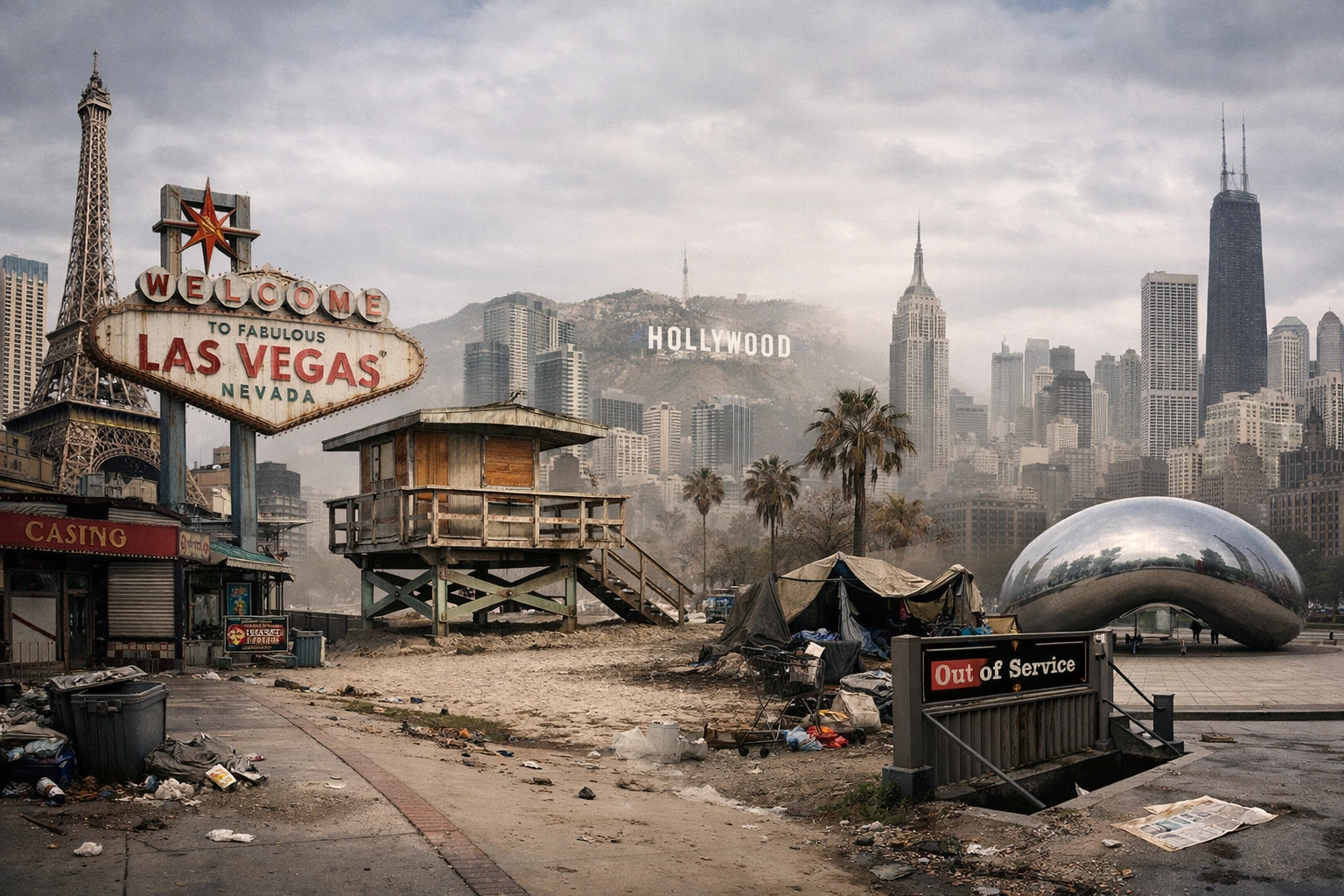
A surprising shift is reshaping the American tourism landscape in 2026. Cities long considered unstoppable magnets for visitors—Las Vegas, Miami, Los Angeles, New York City, Chicago, and Honolulu—are now experiencing noticeable declines in traveler interest. But this is not a nationwide tourism collapse. Instead, it is a selective downturn, revealing deeper changes in how and where people choose to travel across the United States.
A Selective Tourism Decline, Not a Nationwide Crisis
Despite alarming headlines, American tourism is not collapsing across the board. Instead, the decline is concentrated in specific high-cost, high-density urban destinations. Travelers are not abandoning the United States—they are simply becoming more selective.
The shift is driven by rising travel costs, overcrowding concerns, and changing lifestyle preferences. Visitors are increasingly prioritizing affordability, authenticity, and flexibility over iconic city experiences.
Las Vegas Losing Its Edge
Las Vegas, once synonymous with nonstop entertainment and luxury escapes, is now feeling the pressure. Hotel prices have surged, resort fees have become unavoidable, and visitors are reporting diminished value for money.
Tourists who once flocked to the Strip are now exploring alternatives that offer similar entertainment without the premium pricing. Regional casino destinations, smaller entertainment hubs, and even international options are quietly drawing away demand.
Miami and Los Angeles Facing Similar Trends
Miami and Los Angeles are also experiencing a shift in traveler sentiment. Both cities have seen rising accommodation costs, increasing congestion, and concerns around affordability.
Miami’s appeal as a beach destination is now being challenged by emerging coastal alternatives offering quieter, less crowded experiences. Meanwhile, Los Angeles is grappling with traffic, high daily expenses, and evolving traveler expectations that prioritize ease and accessibility.
New York City and Chicago Struggle With Cost Pressures
New York City and Chicago remain cultural powerhouses, but the cost of visiting these cities has become a significant deterrent.
From expensive hotels to high dining and transportation costs, travelers are beginning to question whether the experience justifies the price. Budget-conscious tourists, especially younger travelers, are opting for destinations where their money stretches further.
Honolulu and Island Destinations See Changing Demand
Honolulu, once a dream destination for many, is also facing a shift. High airfare, accommodation costs, and environmental concerns are influencing traveler decisions.
Tourists are increasingly looking for alternative island experiences, both within and outside the United States, that offer similar natural beauty at a more accessible price point.
Where Tourism Is Growing Instead
While major cities face challenges, other regions are seeing a surge in demand. Smaller cities, national parks, and lesser-known destinations are becoming the new hotspots.
Travelers are embracing places that offer unique experiences, lower costs, and fewer crowds. Destinations across the Midwest, Mountain West, and parts of the Southeast are benefiting from this redistribution of tourism.
Road trips, nature-based travel, and slower itineraries are becoming more popular, signaling a fundamental shift in travel behavior.
The Rise of Value-Driven Travel
The modern traveler in 2026 is more informed and more selective than ever before. Price transparency, online reviews, and social media influence are shaping decisions in real time.
Value is no longer defined by luxury alone. Instead, travelers are seeking meaningful experiences, better pricing, and less crowded environments. This shift is forcing traditional tourism giants to rethink their strategies.
Social Media’s Role in Shaping Travel Choices
Social media continues to play a powerful role in influencing where people travel. However, the trend is shifting away from heavily photographed urban landmarks toward hidden gems and off-the-beaten-path destinations.
Travelers are increasingly chasing unique, less-commercialized experiences rather than repeating the same iconic city visits seen across platforms.
Economic and Industry Implications
The selective downturn is sending ripple effects across the tourism industry. Hotels, airlines, and local businesses in affected cities are beginning to adjust pricing strategies, marketing campaigns, and service offerings.
Cities heavily dependent on tourism revenue are also reevaluating their approach, focusing on sustainability, affordability, and visitor experience improvements.
A Wake-Up Call for Major Destinations
The current trend serves as a wake-up call for major US cities. The assumption that iconic status alone guarantees steady tourism is no longer valid.
To remain competitive, these destinations must address cost concerns, improve visitor value, and adapt to changing traveler expectations.
The Future of American Tourism
Looking ahead, the US tourism sector is expected to stabilize—but in a very different form. Growth will likely continue in emerging destinations, while traditional hotspots will need to reinvent themselves.
This is not the end of tourism in cities like Las Vegas or New York. Instead, it marks the beginning of a new era where adaptability, affordability, and authenticity will define success.
A New Travel Era Is Taking Shape
The evolving travel landscape highlights a broader shift in consumer behavior. Travelers are no longer driven solely by reputation—they are driven by experience, value, and individuality.
As Las Vegas joins Miami, Los Angeles, New York City, Chicago, and Honolulu in facing these changes, one thing is clear: American tourism is not disappearing—it is transforming.