
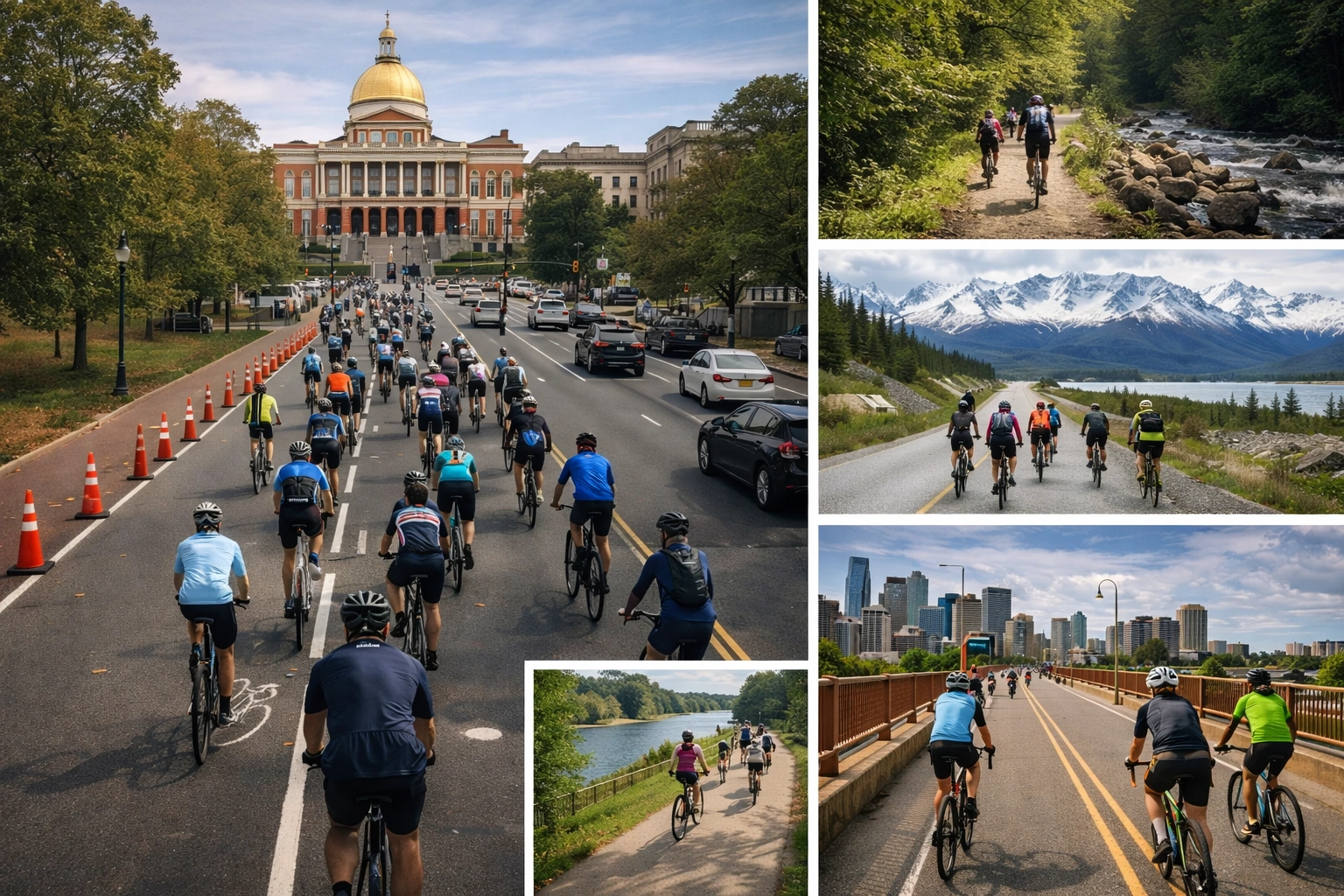
A new wave of cycling-focused research in 2026 is reshaping how Americans view bike-friendly states, and Massachusetts has emerged as a clear leader. Surpassing states like New Hampshire, Minnesota, Rhode Island, Iowa, Alaska, and West Virginia, it now stands at the forefront of a growing movement that prioritizes safety, infrastructure, and accessibility for cyclists.
This latest ranking highlights a widening divide across the United States, where some states are rapidly improving conditions for cyclists while others continue to lag behind. Massachusetts’ rise reflects years of investment, policy changes, and a strong cultural shift toward sustainable transportation.
Safety Becomes the Defining Factor
At the core of the 2026 rankings is one critical element: safety. States were evaluated based on accident rates, protected bike lanes, traffic laws, and overall rider confidence. Massachusetts excelled across these metrics, offering a safer and more structured environment for cyclists.
Protected bike lanes in major cities, improved road signage, and stricter enforcement of traffic rules have significantly reduced risks. These efforts are not only protecting experienced cyclists but also encouraging beginners to take up biking.
In contrast, several lower-ranked states continue to struggle with higher accident rates and limited infrastructure, creating a noticeable safety gap that is shaping national rankings.
Infrastructure Investment Drives Success
Massachusetts’ dominance is largely driven by its long-term commitment to cycling infrastructure. Expanding networks of bike lanes, well-maintained paths, and integration with public transportation systems have made cycling a practical and attractive option.
Urban areas like Boston have become models for bike-friendly planning, with dedicated lanes that separate cyclists from vehicle traffic. Suburban and rural areas are also seeing improvements, ensuring that cycling is not limited to city centers.
Other states, including Minnesota and New Hampshire, still maintain strong cycling communities but are facing challenges in scaling infrastructure at the same pace. This has allowed Massachusetts to pull ahead in the rankings.
The Growing Gap Across States
One of the most striking findings of the research is the widening divide between top-performing and lower-performing states. While leaders like Massachusetts continue to innovate and invest, others are falling behind due to limited funding, outdated policies, or lack of prioritization.
States such as West Virginia and Alaska face unique challenges, including geography and lower population density, which can make large-scale infrastructure projects more difficult. However, the gap is not solely due to natural factors—it also reflects differences in policy focus and public investment.
This divide is becoming more visible as cycling gains popularity nationwide, putting pressure on lower-ranked states to adapt.
Cycling Culture Is Rapidly Evolving
Beyond infrastructure, cultural attitudes toward cycling are playing a significant role in shaping rankings. Massachusetts has embraced cycling not just as a recreational activity but as a viable mode of transportation.
Commuters, students, and even tourists are increasingly choosing bikes over cars, driven by convenience, cost savings, and environmental awareness. This cultural shift is supported by community programs, awareness campaigns, and local initiatives that promote safe riding practices.
In many lower-ranked states, cycling is still viewed primarily as a leisure activity, limiting its integration into daily life. This difference in perception is contributing to the overall ranking disparities.
Environmental and Economic Benefits
The rise of cycling-friendly states is also tied to broader environmental and economic trends. Massachusetts’ investment in biking infrastructure aligns with its sustainability goals, helping to reduce carbon emissions and traffic congestion.
At the same time, cycling is proving to be an economic asset. Local businesses benefit from increased foot and bike traffic, while cities save on infrastructure costs associated with heavy vehicle use.
These benefits are encouraging more states to reconsider their approach, although progress remains uneven across the country.
Technology and Data Shape the Rankings
Modern technology is playing a key role in evaluating and improving cycling conditions. Data collected from traffic patterns, accident reports, and rider feedback provides a comprehensive picture of each state’s performance.
Massachusetts has effectively leveraged this data to identify problem areas and implement targeted improvements. Smart traffic systems, real-time monitoring, and digital mapping tools are helping to create safer and more efficient cycling environments.
States that are slower to adopt data-driven strategies are finding it harder to keep up, further widening the gap in rankings.
Challenges Facing Lower-Ranked States
Despite growing awareness, many states still face significant obstacles in improving their cycling infrastructure. Budget constraints, political priorities, and resistance to change can slow progress.
In some regions, the lack of dedicated bike lanes and poor road conditions continue to deter potential cyclists. Safety concerns remain a major barrier, particularly in areas with high vehicle traffic and limited enforcement of cycling laws.
Addressing these challenges will require a combination of investment, policy reform, and public engagement to create meaningful change.
What This Means for the Future of Cycling
The 2026 cycling rankings signal a turning point in how states approach transportation and urban planning. Massachusetts’ success demonstrates that with the right strategies, it is possible to create a safe and thriving cycling environment.
For travelers and residents alike, this shift offers new opportunities to explore cities and communities in a more sustainable and engaging way. Cycling is no longer just an alternative—it is becoming a central part of modern mobility.
As the safety divide continues to widen, the pressure is on for lower-ranked states to catch up. The future of cycling in the United States will depend on how quickly and effectively they can respond to this growing demand for safer, smarter, and more inclusive infrastructure.