
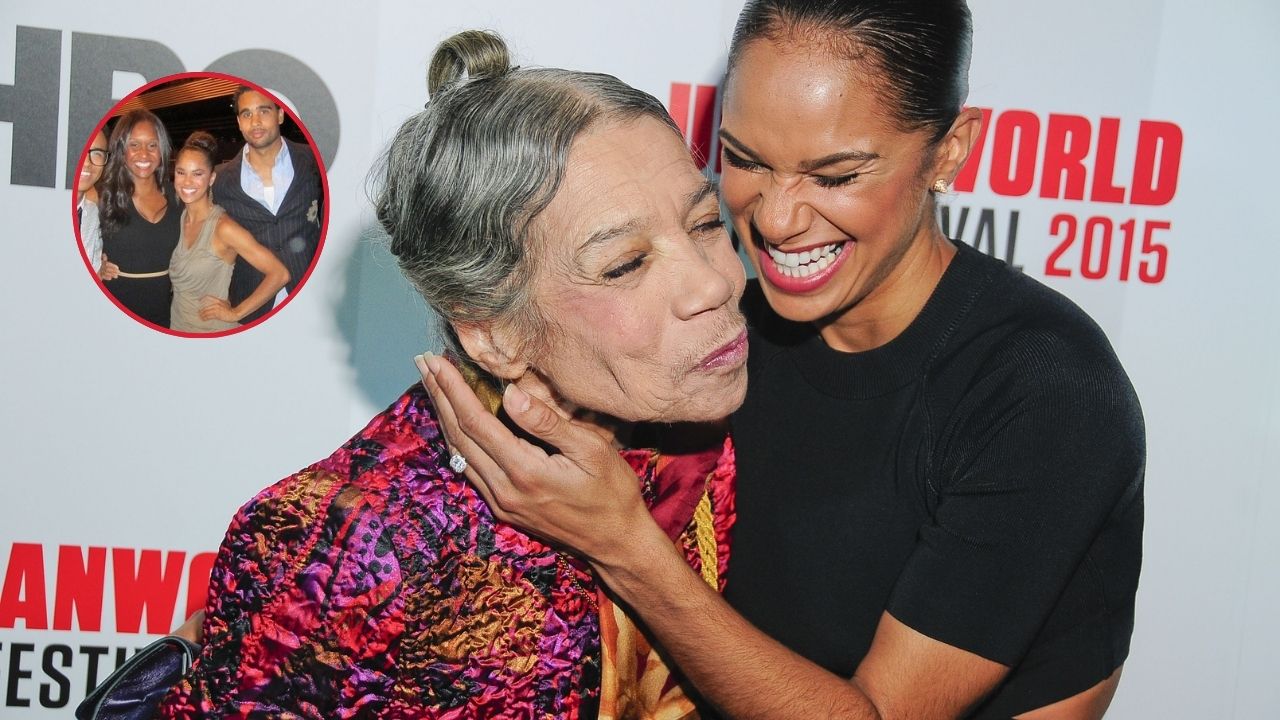
Misty Copeland’s rise to ballet history is often told through her groundbreaking career at American Ballet Theatre, but her family story is just as important. Long before she became the first African American woman promoted to principal dancer at ABT, Copeland grew up in a complicated household shaped by separation, financial struggle, movement, and resilience.
Her parents are Sylvia DelaCerna and Doug Copeland. They separated when Misty was very young, and their split deeply influenced her childhood. Misty was raised mainly by her mother, while her relationship with her father was absent for many years before they later reconnected in adulthood.
Who Are Misty Copeland’s Parents?
Misty Copeland was born to Sylvia DelaCerna and Doug Copeland.
Her mother, Sylvia, raised Misty and her siblings through difficult financial circumstances. Her father, Doug, was largely absent from Misty’s life after her parents separated when she was about two years old.
After the split, Sylvia moved the family from Kansas City, Missouri, to Southern California. That move began a new chapter for Misty, eventually placing her near the community where her ballet talent would be discovered.
Her Mother, Sylvia DelaCerna
Sylvia DelaCerna played the central parental role in Misty’s childhood.
She is of Italian and African American heritage and was adopted as a child by African American parents. Before becoming a mother of six, Sylvia had her own connection to performance. She trained in dance and once worked as a cheerleader for the Kansas City Chiefs.
That early connection to movement and performance would later become meaningful in Misty’s story, even though ballet did not enter Misty’s life until she was 13.
A Childhood of Instability
Misty has often spoken about the instability she experienced as a child.
Her mother went through several relationships and marriages while raising six children. The family moved frequently and sometimes struggled to meet basic needs.
At one point, Misty and her siblings lived with their mother in two small motel rooms in Gardena, California. The conditions were crowded and difficult, but Misty has also described her mother as someone trying to survive under enormous pressure.
Those early experiences gave Misty a deep understanding of hardship, discipline, and perseverance.
Moving to California
After separating from Doug Copeland, Sylvia took Misty and her older siblings by bus to California.
They eventually settled in the San Pedro area of Los Angeles. That move proved life-changing.
It was in Southern California that Misty first encountered ballet through a Boys & Girls Club program. Her extraordinary natural ability was noticed almost immediately, despite her late start compared with most elite dancers.
The discovery opened a path that would eventually take her to the highest level of American ballet.
The Ballet Teacher Dispute
Misty’s early ballet training led to one of the most difficult chapters in her family life.
Because her talent developed quickly, she spent time living with her ballet teacher to focus more intensely on training. The arrangement was meant to give Misty access to the structure and resources needed for a possible professional career.
However, tensions grew between Misty’s mother and those involved in her training. The conflict eventually became public when Misty filed for emancipation as a teenager.
The legal dispute drew national attention and placed the young dancer at the center of a painful family struggle.
Reconciliation With Her Mother
Misty later dropped the emancipation effort and returned to her family.
As an adult, she has spoken with more understanding about her mother’s position. While the conflict was painful, Misty has acknowledged the burden Sylvia carried as a single mother raising six children with limited resources.
Their relationship has evolved over time, and Misty has shown empathy for the impossible choices her mother faced.
Rather than presenting her childhood in simple terms, Copeland has described it as complicated, emotional, and formative.
Her Father, Doug Copeland
Misty’s father, Doug Copeland, is of German and African American descent.
After he and Sylvia separated, Misty had little to no contact with him for most of her childhood. She has said that she did not see or communicate with him between the ages of two and 22.
That absence left a major gap in her early life.
Still, Misty later made the decision to search for him and reconnect.
Reuniting After 20 Years
When Misty was 22, she tracked down her biological father.
The reunion marked a significant personal moment after two decades of separation. While much of Misty’s public life has centered on ballet, this reconnection added another layer to her understanding of family, identity, and personal history.
Rebuilding a relationship after so many years is never simple, but Misty’s decision to find her father showed her desire to understand where she came from.
How Her Parents Shaped Her
Both of Misty Copeland’s parents shaped her story in different ways.
Her mother’s resilience, movement, and sacrifices formed much of Misty’s childhood experience. Her father’s absence, and later reconnection, became part of Misty’s search for identity.
The challenges she faced did not prevent her success. Instead, they became part of the strength behind her rise.
Misty’s story is not only about ballet talent. It is also about overcoming instability, navigating family conflict, and transforming pain into purpose.
Final Thoughts
Misty Copeland’s parents, Sylvia DelaCerna and Doug Copeland, were central figures in the early chapters of her life, even in very different ways. Her mother raised her through financial hardship and constant change, while her father was absent for most of her childhood before reconnecting with her in adulthood.
Their family story was complex, but it helped shape the determination that carried Misty to the top of American ballet. Behind her historic achievements is a childhood marked by struggle, resilience, and the search for belonging.