
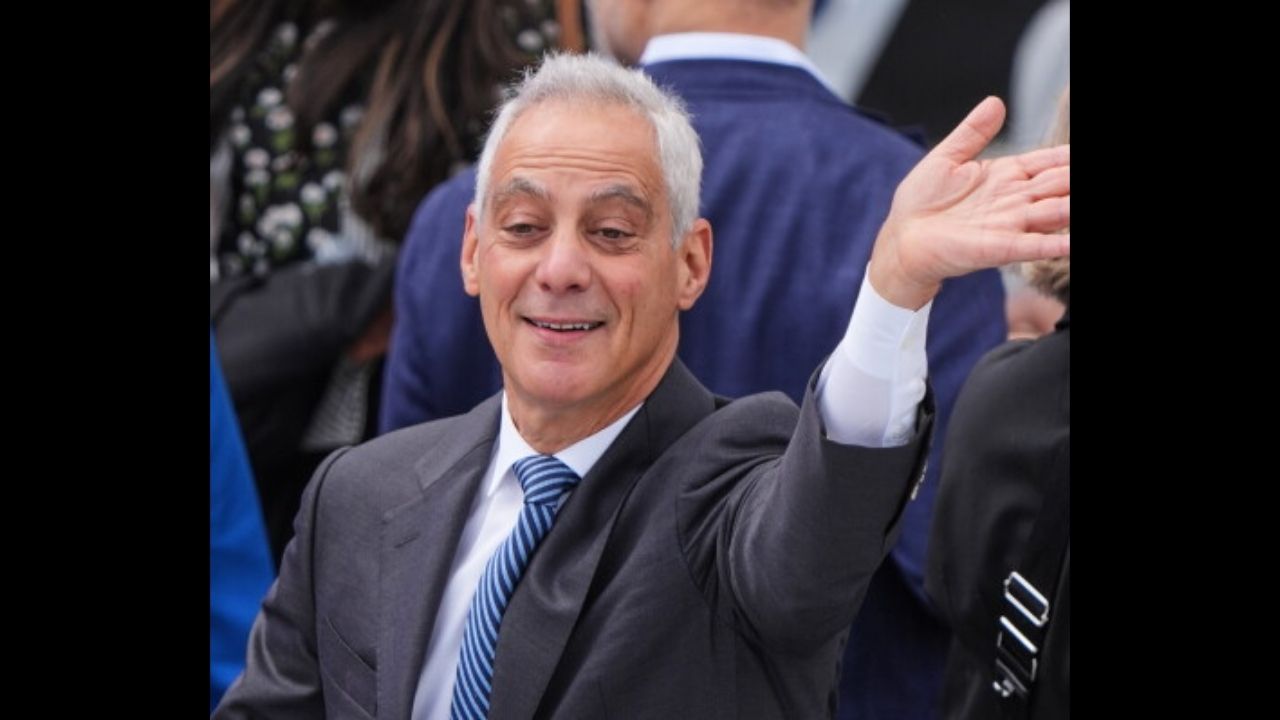
Former Rahm Emanuel is set to deliver one of his strongest foreign policy speeches in recent years, arguing that the relationship between the United States and Israel requires a significant reset.
Speaking at Tel Aviv University, Emanuel is expected to describe the long-standing alliance as being at a critical turning point. According to advance excerpts of his prepared remarks, he believes the traditional framework guiding relations between Washington and Jerusalem can no longer continue without meaningful reforms.
The speech comes as Emanuel is increasingly mentioned as a potential Democratic presidential contender, making his comments particularly significant within the broader debate over American foreign policy.
Changing Politics
For decades, support for Israel has enjoyed strong backing across both major American political parties. However, recent years have seen growing debate within the Democratic Party over how the United States should approach its closest Middle Eastern ally.
Emanuel’s address reflects that broader discussion. Rather than questioning the alliance itself, he argues that maintaining a strong partnership requires updated policies and greater accountability.
He plans to say that unconditional political backing has not always encouraged constructive decision-making and that future cooperation should include clearer expectations between the two governments.
His remarks illustrate how foreign policy discussions within the Democratic Party continue to evolve as public opinion changes and regional challenges become more complex.
Criticism of Netanyahu
A central focus of Emanuel’s speech is expected to be Israeli Prime Minister Benjamin Netanyahu.
According to the prepared remarks, Emanuel argues that Netanyahu’s leadership has placed Israel in an increasingly difficult diplomatic position. He contends that international support for the country has weakened in recent years and warns that growing isolation could carry long-term consequences.
Among the concerns he plans to raise are declining relationships with several international partners and increasing challenges faced by Israeli researchers, artists and academic institutions participating in global collaborations.
Emanuel’s criticism targets the policies of the current Israeli government rather than Israel’s long-term security partnership with the United States.
Democratic Opinion
Recent polling suggests that Democratic voters are reassessing America’s approach toward Israel.
Data from the Associated Press-NORC Center for Public Affairs Research indicates that 58 percent of Democrats now believe the United States is too supportive of Israel. That figure represents a noticeable increase compared with polling conducted in early 2024.
While public opinion remains divided across the broader American electorate, the survey highlights a growing debate among Democratic voters over military assistance, diplomacy and the conditions attached to U.S. support.
Emanuel’s speech appears designed to address those changing political attitudes while presenting what he views as a balanced alternative that maintains the alliance but introduces greater oversight.
Policy Proposals
Beyond criticism, Emanuel is expected to outline several policy recommendations.
One proposal calls for sanctions against individuals involved in attacks targeting Palestinian civilians. He also plans to advocate restrictions on financial organizations supporting settlements considered illegal under international law.
Another key recommendation involves future American military assistance.
Rather than ending security cooperation, Emanuel argues that Israel should continue purchasing American defense equipment under the same financial arrangements, legal standards and oversight requirements applied to other trusted U.S. allies.
Supporters of this approach argue that equal standards strengthen alliances by encouraging transparency and accountability. Critics, however, may contend that Israel faces unique regional security challenges requiring different considerations.
Alliance at a Crossroads
Despite his criticism, Emanuel emphasizes that he continues to view the U.S.-Israel partnership as strategically important.
His central argument is that preserving the alliance requires adaptation rather than maintaining existing policies without change.
He argues that previous American administrations often assumed the strongest form of support involved avoiding public disagreements with Israeli leaders. According to Emanuel, that approach has not always produced the desired diplomatic outcomes.
Instead, he believes both countries would benefit from more direct conversations, clearer expectations and greater willingness to address policy differences openly while preserving security cooperation.
This perspective reflects an effort to distinguish support for Israel as a nation from support for the policies of any particular government.
Political Impact
The timing of Emanuel’s remarks has fueled speculation about his future political ambitions.
Although he has not formally announced a presidential campaign, he continues to be mentioned among Democrats who could seek national office in the coming election cycle.
Foreign policy often becomes a defining issue for candidates seeking to demonstrate leadership beyond domestic politics. By choosing Israel as the subject of a major international speech, Emanuel is positioning himself within one of the Democratic Party’s most closely watched policy debates.
His comments are also likely to generate responses from supporters of Netanyahu as well as lawmakers who favor maintaining the current framework of U.S.-Israel relations.
Looking Ahead
Relations between the United States and Israel have long been shaped by shared security interests, military cooperation and diplomatic coordination. At the same time, debates over how that partnership should evolve continue to intensify as political landscapes shift in both countries.
Rahm Emanuel’s upcoming address adds another prominent voice to that discussion. His message does not call for ending the alliance but instead argues for redefining how it operates in the years ahead.
Whether his proposals influence future Democratic policy remains to be seen. However, the speech highlights the growing conversation over balancing America’s longstanding commitment to Israel with calls for greater accountability, updated diplomatic strategies and a foreign policy that reflects changing political realities at home and abroad.