
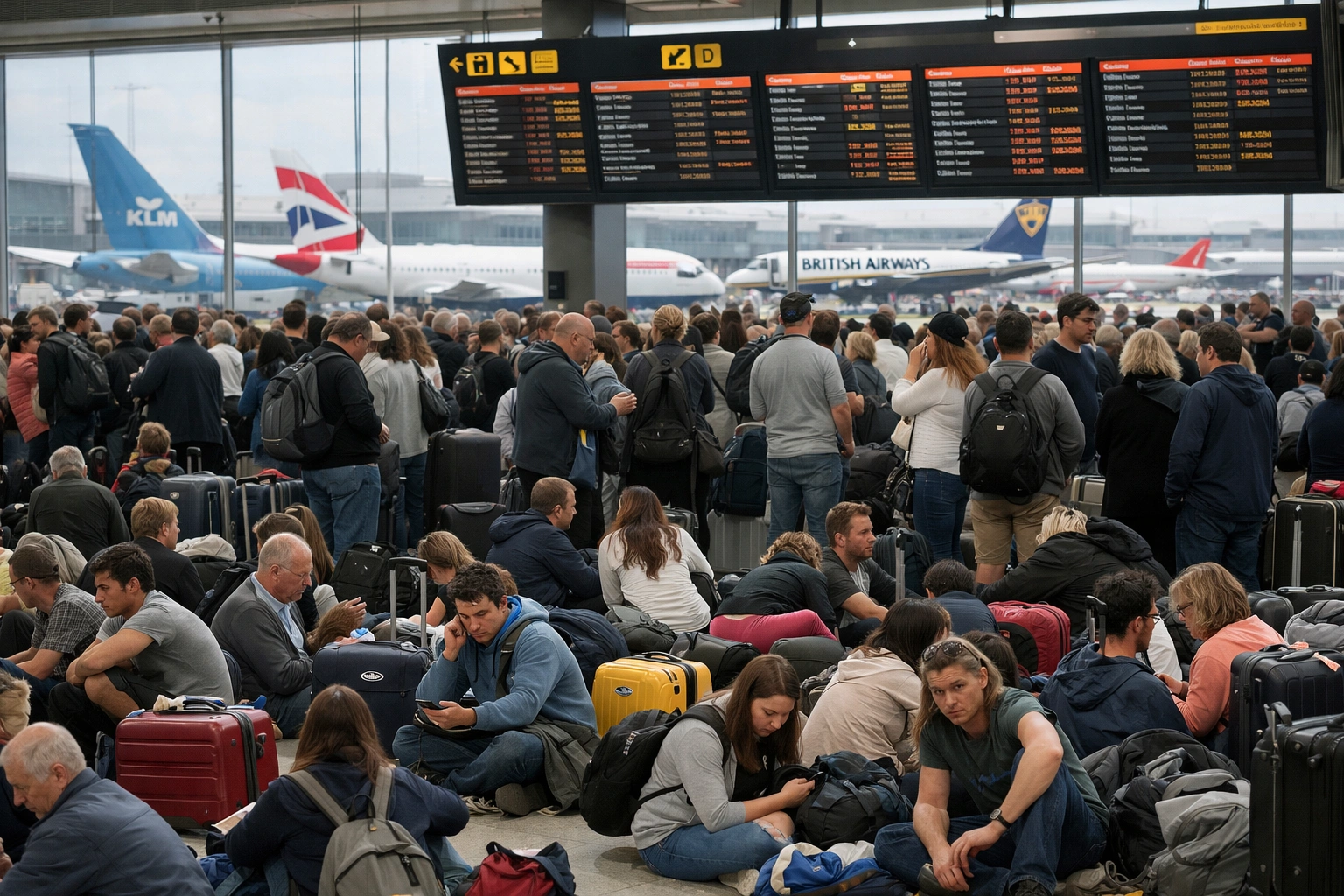
Air travel across Europe has been thrown into major disruption as thousands of passengers find themselves stranded at airports. A combination of delays and cancellations affecting nearly 2,000 flights has created a ripple effect across key travel hubs, leaving travelers frustrated and uncertain about their plans.
From London to Madrid, and Paris to Rome, the scale of the disruption has impacted some of the busiest air corridors in Europe, with major airlines struggling to maintain schedules.
Massive Flight Disruptions Across Key Countries
The travel chaos spans multiple countries including Spain, England, France, Italy, Ireland, and the Netherlands. Reports indicate that around 1,899 flights have been delayed, while at least 50 flights have been canceled, affecting both domestic and international routes.
Major airports in cities like London, Paris, Rome, and Madrid have been among the worst hit. These hubs typically handle high passenger volumes, meaning even small disruptions can quickly escalate into widespread delays.
Travelers have reported long queues, missed connections, and extended waiting times, especially during peak travel hours.
Airlines Facing Operational Pressure
Several major airlines have been directly impacted by the disruptions. Among them are KLM, British Airways, ITA Airways, and Ryanair.
These carriers operate extensive networks across Europe, so delays in one region often cascade into other routes. Aircraft rotation issues, crew scheduling conflicts, and airport congestion have further complicated operations.
Low-cost carriers and full-service airlines alike have struggled to keep up, highlighting how interconnected Europe’s aviation system has become.
Major Airports Under Strain
Airports in several major cities have experienced significant congestion due to the disruptions.
- London airports saw heavy delays affecting both departures and arrivals
- Paris faced backlog issues, particularly on short-haul European routes
- Rome and Madrid reported operational slowdowns due to scheduling bottlenecks
Passengers traveling through connecting flights have been particularly affected, as missed layovers continue to create further complications.
Airport authorities have been working to manage crowds, but the sheer volume of delayed flights has made recovery slow.
What Caused the Disruptions?
While no single factor is responsible, several issues appear to have contributed to the widespread disruption:
Air Traffic Control Constraints
Increased traffic combined with limited airspace capacity has caused delays in flight sequencing and routing.
Weather Variability
Changing weather conditions across parts of Europe have led to operational adjustments, including delayed departures and rerouted flights.
Staffing Challenges
Airlines and airports continue to face staffing shortages, particularly in ground handling and air traffic management roles.
High Travel Demand
With travel demand rising sharply, especially during peak seasons, systems are under pressure to handle the volume efficiently.
These combined factors have created a perfect storm, leading to delays spreading across multiple countries simultaneously.
Passengers Left Frustrated
For travelers, the experience has been far from smooth.
Many passengers have reported:
- Spending hours waiting at departure gates
- Missing connecting flights due to delays
- Difficulty getting timely updates from airlines
- Limited availability of alternative flights
Families, business travelers, and tourists alike have faced unexpected disruptions, with some forced to rearrange entire itineraries.
Social media has been flooded with complaints, highlighting the scale of inconvenience faced by travelers.
Airlines Respond to the Crisis
Airlines have begun issuing advisories and support measures to assist affected passengers.
Most carriers, including KLM and British Airways, are:
- Offering rebooking options on the next available flights
- Providing refunds for canceled services
- Advising passengers to check flight status before heading to airports
However, due to the volume of disruptions, response times have been slower than usual.
Impact on European Travel Network
The current situation highlights the vulnerability of Europe’s interconnected air travel system.
Because many routes rely on tight scheduling and quick aircraft turnaround, delays in one location can quickly spread across the network. For example:
- A delayed aircraft in Amsterdam can impact departures in London
- A crew delay in Paris may affect flights in Rome
- Congestion in Madrid can ripple into other Spanish cities
This interconnected structure means recovery often takes time, even after initial issues are resolved.
What Travelers Should Do Now
Passengers planning to travel across Europe in the coming days are advised to stay cautious and prepared.
Here are a few practical steps:
- Check flight status regularly through airline apps or websites
- Arrive early at airports to allow extra time for delays
- Keep essential items in carry-on luggage
- Stay updated on airline notifications and announcements
Being proactive can help reduce stress and avoid further complications.
Signs of Gradual Recovery
While disruptions remain ongoing, there are early signs that operations are gradually stabilizing.
Airlines and airport authorities are working to:
- Clear backlog of delayed flights
- Optimize crew and aircraft scheduling
- Improve passenger communication
However, full normalization may take time, especially if underlying issues like staffing and airspace congestion persist.
The widespread delays and cancellations across Europe have once again exposed the fragile balance of modern air travel. With nearly 2,000 flights affected, thousands of passengers have experienced significant disruption across major cities.
Airlines such as ITA Airways and Ryanair continue to navigate operational challenges, while passengers remain at the center of the crisis.
As travel demand continues to rise, the need for stronger coordination, better infrastructure, and improved communication becomes more critical than ever.
For now, travelers are advised to remain flexible, stay informed, and prepare for possible delays as Europe’s aviation system works to regain stability.