
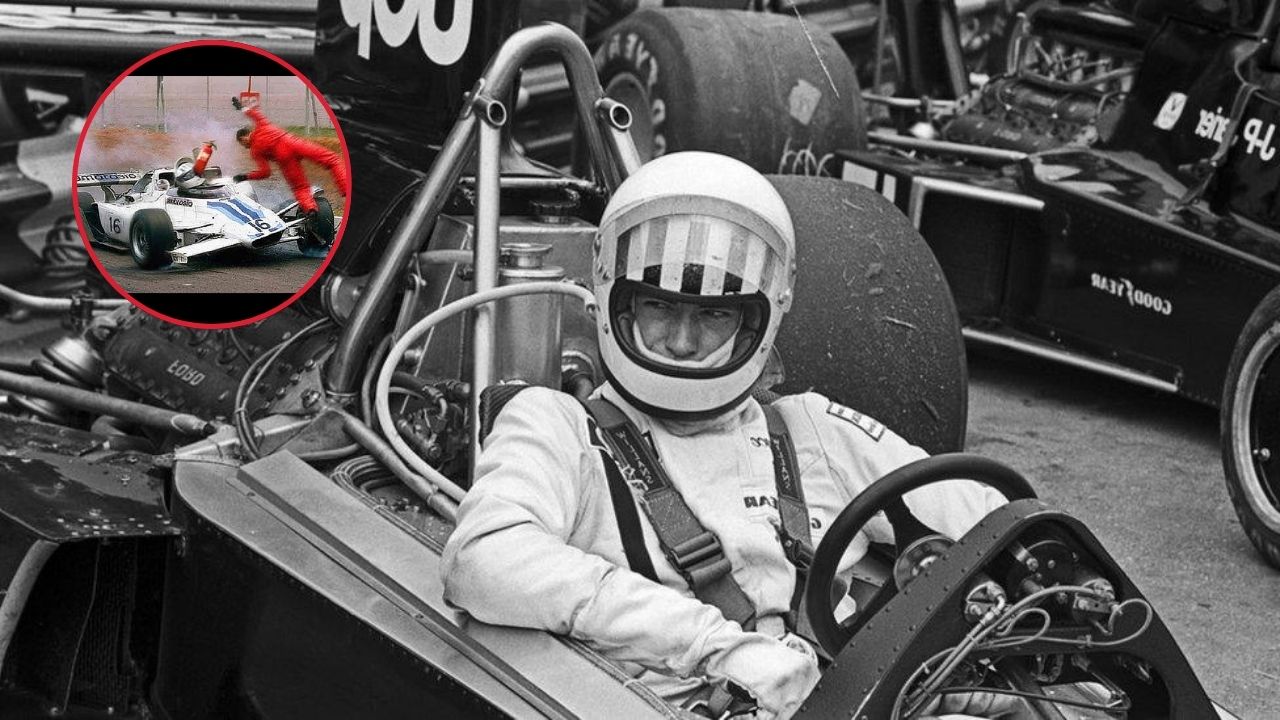
The Tom Pryce accident remains one of the most devastating and unforgettable tragedies in Formula 1 history. The incident occurred during the 1977 South African Grand Prix at Kyalami Circuit and resulted in the deaths of rising Formula 1 star Tom Pryce and young track marshal Jansen Van Vuuren.
More than four decades later, the accident is still discussed by racing historians, safety experts, and Formula 1 fans because of the extraordinary chain of events that led to the disaster. The crash not only ended two lives but also forced motorsport authorities to introduce stricter track safety procedures that continue to influence racing today.
A Rising Star in Formula 1
Before the tragedy, Tom Pryce was considered one of the brightest talents in international motorsport.
Born in Wales, Pryce quickly gained a reputation for his natural speed, determination, and impressive driving skills. By the mid-1970s, he had established himself as a promising Formula 1 competitor driving for the Shadow Racing Team.
Many experts believed Pryce had the potential to become one of the sport’s future champions. His victory at the 1975 Race of Champions and several strong Formula 1 performances had earned him respect throughout the paddock.
At just 25 years old, his career appeared to be heading toward greater success when tragedy struck at Kyalami.
Trouble on the Main Straight
The events that led to the accident began during lap 21 of the South African Grand Prix on March 5, 1977.
Pryce’s teammate, Renzo Zorzi, experienced mechanical problems with his Shadow car. A fuel-related issue caused a small fire near the engine, forcing him to stop alongside the pit straight.
Although the fire was relatively minor, it immediately attracted the attention of nearby track marshals who were responsible for responding to emergencies around the circuit.
What happened next would trigger one of the darkest moments in Formula 1 history.
A Critical Decision
Two track marshals positioned on the opposite side of the circuit decided to run across the racing surface carrying fire extinguishers in an attempt to help extinguish the fire.
At the time, Formula 1 cars were still racing at full speed down the straight.
One of the marshals successfully crossed the track. However, the second marshal, 19-year-old Jansen Van Vuuren, was carrying a heavy fire extinguisher weighing approximately 18 kilograms.
Without authorization from race control and with race traffic approaching, the decision to cross the active circuit placed both marshals in extreme danger.
The Blind Crest Problem
The layout of Kyalami’s main straight contributed significantly to the disaster.
A crest on the circuit limited visibility for drivers approaching the area where the marshals were crossing. Cars traveling at very high speeds could not clearly see hazards beyond the rise until they were almost upon them.
As Van Vuuren ran across the track, a group of Formula 1 cars approached the crest.
Among them was German driver Hans-Joachim Stuck, followed closely by Tom Pryce.
Stuck spotted the marshals at the last possible moment and managed to change direction. Because Pryce was directly behind him, his view of the danger was blocked until it was too late.
The Fatal Impact
Traveling at approximately 270 km/h (170 mph), Pryce had virtually no opportunity to avoid the marshal.
His Shadow car struck Van Vuuren head-on with tremendous force.
The impact killed the young marshal instantly. At the same moment, the fire extinguisher he was carrying was launched directly toward Pryce’s cockpit.
The heavy metal cylinder struck Pryce’s helmet with devastating force. The impact caused catastrophic head injuries that killed the driver instantly.
The violence of the collision shocked everyone who witnessed the accident and remains one of the most severe incidents ever recorded in Formula 1 competition.
The Runaway Shadow
One of the most extraordinary aspects of the accident occurred after the collision.
Because Pryce had died instantly, his foot remained pressed on the accelerator pedal. As a result, the Shadow continued racing down the circuit at extremely high speed without driver control.
The car traveled hundreds of meters before brushing against the pit wall and continuing toward the first corner.
Eventually, it collided with another competitor, Jacques Laffite, before finally coming to a stop in the safety fencing.
The sight of an uncontrolled Formula 1 car continuing around the track added to the chaos and confusion following the accident.
Shock Across Motorsport
News of the double fatality spread quickly throughout the racing world.
Drivers, teams, officials, and fans were deeply affected by the circumstances surrounding the incident. Unlike many racing accidents caused by driver error or mechanical failure, this tragedy resulted from a combination of human decisions, poor visibility, and inadequate safety procedures.
The deaths of both Pryce and Van Vuuren highlighted serious weaknesses in how trackside incidents were handled during that era of Formula 1.
Many observers viewed the accident as entirely preventable.
Safety Changes After the Disaster
The Tom Pryce accident became a major turning point for motorsport safety.
Following investigations and discussions within the governing bodies of racing, stricter regulations were introduced regarding track marshal conduct and emergency response procedures.
Officials reinforced rules preventing marshals from entering active racing surfaces without direct authorization from race control. Greater emphasis was placed on communication systems, flag warnings, and coordinated incident management.
Over time, Formula 1 continued to develop additional safety measures that reduced risks for drivers, officials, and track workers alike.
These reforms helped create the highly structured safety environment seen in modern motorsport.
Remembering Tom Pryce
Today, Tom Pryce is remembered not for the tragic circumstances of his death but for the immense talent he displayed during his brief racing career.
Many motorsport historians believe he had the ability to compete for world championships had he been given more time. His legacy remains strong in Wales and throughout the Formula 1 community.
The 1977 Kyalami tragedy serves as a lasting reminder of the dangers once faced in motorsport and the importance of continuous safety improvements. While the accident remains one of Formula 1’s darkest chapters, the lessons learned from it helped make racing safer for future generations.