
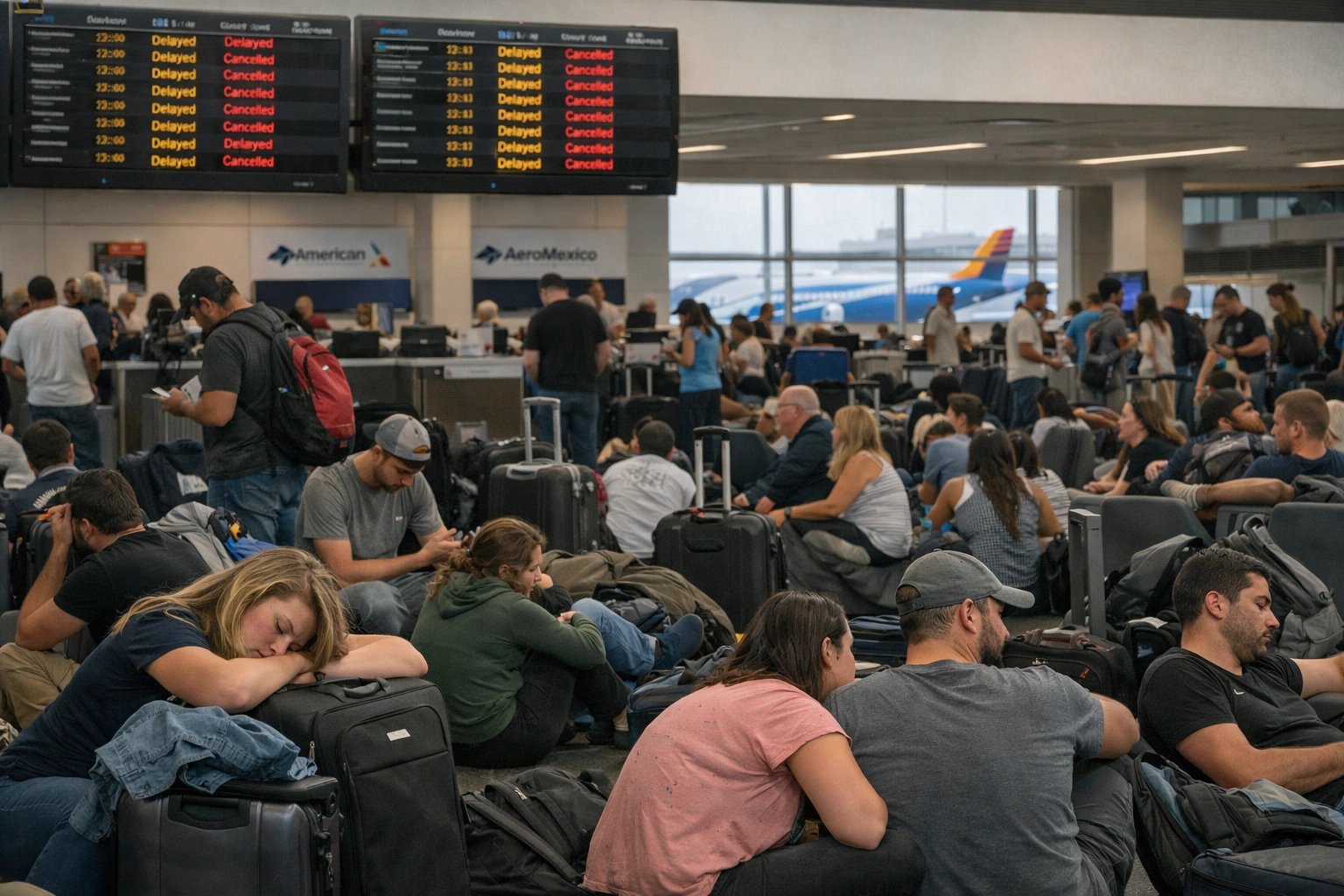
Travelers across Mexico are facing widespread disruption as operations at Cancún and Monterrey airports have been significantly affected. A total of 141 flights have been delayed and at least eight flights canceled, creating chaos for both domestic and international passengers.
The disruption is impacting major airlines including American Airlines, Aeromexico, and Southwest Airlines, with ripple effects felt across key routes connecting Mexico to cities such as Mexico City, New York, Houston, Los Angeles, and Cancún itself.
Cancún and Monterrey Airports Under Pressure
Cancún International Airport, one of Mexico’s busiest tourist gateways, is experiencing heavy congestion as delays continue to build throughout the day. Similarly, Monterrey International Airport is facing operational strain, with multiple flights running behind schedule.
Passengers at both airports are dealing with extended wait times, crowded terminals, and uncertainty around departure schedules. The high volume of flights combined with operational challenges has created a bottleneck affecting hundreds of travelers.
Airport authorities are working to manage the situation, but delays continue to impact normal operations.
Airlines Affected Across Multiple Routes
Several major carriers are facing disruptions due to the ongoing situation. American Airlines, Aeromexico, and Southwest Airlines are among the most affected, with delays spreading across both domestic and international networks.
Flights connecting major cities such as Mexico City, New York, Houston, and Los Angeles are experiencing schedule changes. For many passengers, missed connections are adding to the complexity of travel plans.
The interconnected nature of airline networks means that disruptions in one region can quickly extend to other parts of the system.
What Caused the Disruptions
While the exact cause of the disruption has not been fully detailed, such large-scale delays are typically linked to a combination of operational and environmental factors. Weather conditions, air traffic congestion, and staffing constraints are among the most common contributors.
In high-traffic airports like Cancún, even minor disruptions can escalate quickly due to the sheer volume of flights. When combined with logistical challenges, this can result in widespread delays and cancellations.
Authorities and airlines are continuing to assess the situation and implement measures to restore normal operations.
Passengers Face Delays and Uncertainty
For travelers, the impact has been immediate and frustrating. Many passengers have reported last-minute notifications about delays, while others have arrived at the airport only to find their flights postponed.
Families, tourists, and business travelers are all affected, with some facing long waits or the need to make alternative travel arrangements. International travelers are particularly impacted due to the complexity of connecting flights.
Customer service counters at both airports are seeing high demand as passengers seek assistance.
Rebooking and Travel Flexibility
Airlines are offering flexible rebooking options to affected passengers. Many travelers are being allowed to change flights without additional fees or request refunds for canceled services.
Digital tools such as airline apps and websites are playing a crucial role in helping passengers manage their bookings. However, high demand for alternative flights may limit availability on certain routes.
Travelers are advised to act quickly when rebooking to secure the best possible options.
Ripple Effects Beyond Mexico
The disruption is not confined to Mexico alone. Flights connecting to major US cities such as New York, Houston, and Los Angeles are experiencing knock-on delays due to aircraft and crew scheduling issues.
Passengers traveling internationally may face extended travel times or missed connections as a result. Airlines are working to minimize these effects, but the interconnected nature of global aviation makes complete isolation difficult.
This highlights how disruptions at key airports can have far-reaching consequences.
What Travelers Should Do Now
Passengers scheduled to travel through Cancún or Monterrey are advised to check their flight status before heading to the airport. Real-time updates from airlines can help avoid unnecessary waiting.
Arriving early is recommended, as longer queues and additional processing time are expected. Keeping important travel documents accessible can also speed up assistance if needed.
Travelers should remain flexible and consider alternative routes if their original plans are disrupted.
Airlines and Airports Respond
Airlines and airport authorities are actively working to stabilize operations. Additional staff and resources are being deployed to assist passengers and manage delays.
Efforts are also being made to improve communication, with airlines providing updates through multiple channels. These measures are aimed at reducing confusion and helping passengers navigate the situation more effectively.
However, it may take time for operations to fully return to normal.
Outlook for Travel Recovery
While the situation remains fluid, gradual improvement is expected as airlines adjust schedules and clear backlogs. Travelers should be prepared for ongoing delays in the short term.
The disruption serves as a reminder of the challenges faced by the aviation industry, particularly during periods of high demand. Flexibility and preparedness are key for travelers navigating such परिस्थितations.
For now, passengers are encouraged to stay informed, remain patient, and utilize available support services as the situation continues to evolve.