
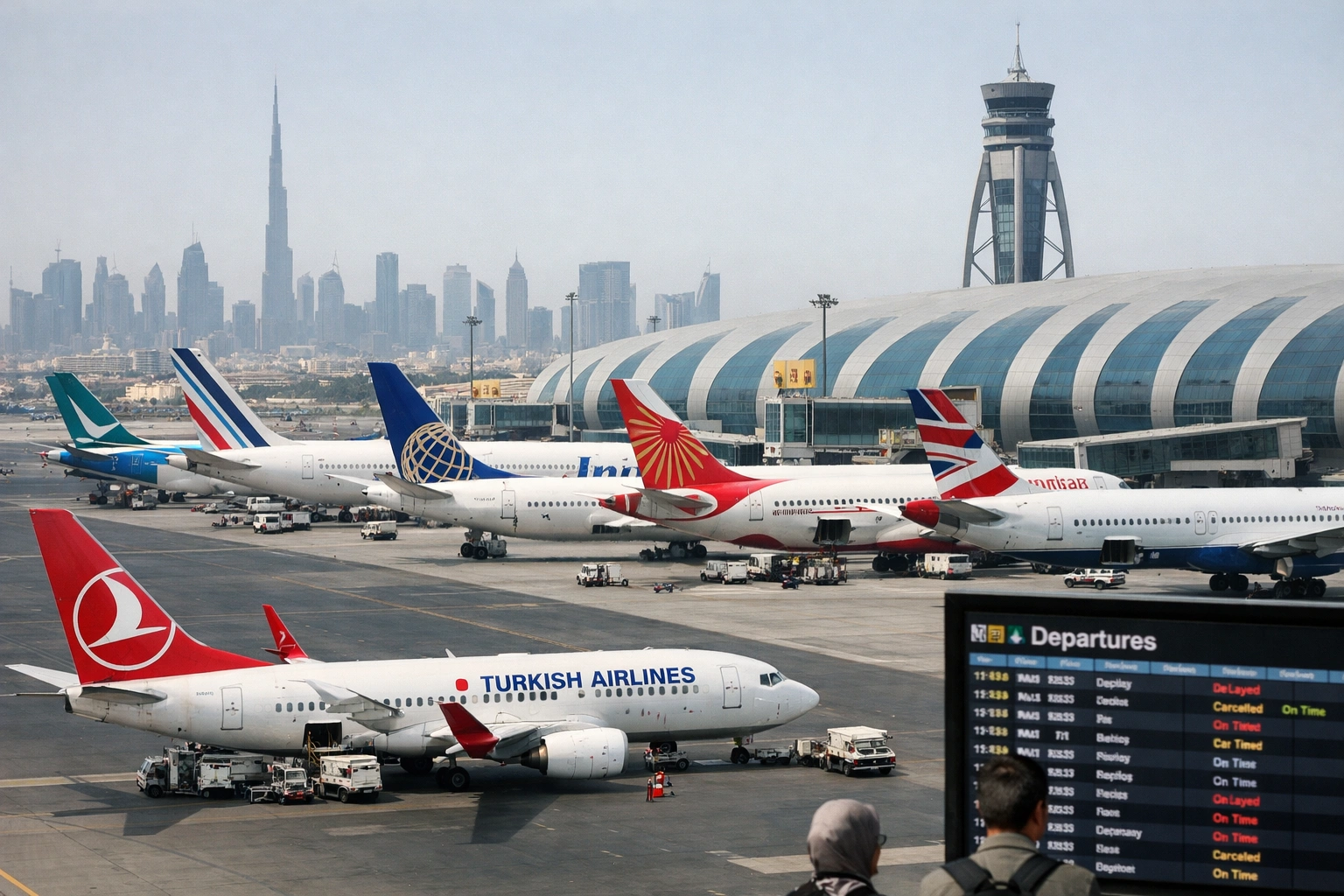
Dubai’s aviation hub is once again at the center of global attention as authorities issue an urgent travel advisory for passengers flying through or departing from Dubai International Airport. Travelers have been strongly advised to check their flight status before heading to the airport due to ongoing regional instability and operational disruptions affecting multiple airlines.
The advisory comes at a time when geopolitical tensions and airspace restrictions across parts of the Middle East are creating ripple effects throughout international aviation. With Dubai serving as one of the busiest transit hubs in the world, even minor disruptions can quickly escalate into widespread delays and cancellations.
Major Airlines Impacted
A growing list of global carriers has been affected, including Turkish Airlines, Air France, United Airlines, Air India, KLM, and British Airways. These airlines have either adjusted flight schedules, rerouted aircraft, or issued passenger advisories in response to the evolving situation.
Turkish Airlines has acknowledged disruptions on several routes passing through sensitive airspace zones, while European carriers like Air France and KLM are closely monitoring flight paths and making real-time operational decisions. Similarly, United Airlines and British Airways have implemented contingency plans to ensure passenger safety while minimizing inconvenience.
Air India has also joined the list, with certain long-haul routes experiencing delays or diversions as a precautionary measure. The coordinated response from these major airlines highlights the seriousness of the situation and the need for passengers to stay informed.
Regional Instability Drives Disruptions
The primary cause behind the advisory lies in heightened regional instability, which has led to temporary airspace closures and stricter aviation protocols. Airlines are being forced to reroute flights to avoid conflict zones, often resulting in longer travel times and increased fuel consumption.
Such rerouting can also disrupt carefully planned flight schedules, causing knock-on delays across airline networks. In some cases, flights may be canceled altogether if safe alternative routes are not viable.
Additionally, operational challenges such as crew scheduling, aircraft availability, and congestion at alternate airports are further complicating the situation. These factors combined are placing significant pressure on airline operations globally.
Dubai Airport Operations Under Pressure
Dubai International Airport, known for handling millions of passengers each month, is currently experiencing operational strain due to the surge in flight adjustments. While the airport remains fully functional, authorities have acknowledged delays in departures and arrivals.
Ground operations, including baggage handling and passenger processing, are also being affected as airlines adjust schedules at short notice. The increased volume of last-minute changes has made real-time coordination more complex.
Despite these challenges, airport officials have emphasized that safety remains the top priority. Enhanced monitoring systems and coordination with airlines are being implemented to manage the situation effectively.
What Travelers Should Do
Passengers traveling to or through Dubai are being urged to take proactive steps to avoid unnecessary inconvenience. The most important recommendation is to check flight status directly with airlines before leaving for the airport.
Travelers should also allow extra time for check-in and security procedures, as operational delays may lead to longer waiting times. Keeping notifications enabled on airline apps can help passengers receive instant updates regarding gate changes, delays, or cancellations.
For those with connecting flights, it is advisable to review alternative travel options in case of disruptions. Travel insurance may also provide added protection during such uncertain periods.
Airlines Strengthen Communication
In response to the situation, airlines have ramped up communication efforts to keep passengers informed. Many carriers are sending real-time alerts via SMS, email, and mobile applications.
Customer service teams have also been expanded to handle increased inquiries, and flexible rebooking policies are being offered by several airlines. This allows passengers to modify travel plans without incurring heavy penalties.
The emphasis on communication reflects the industry’s commitment to maintaining transparency and minimizing passenger stress during disruptions.
Global Aviation Faces Ongoing Challenges
The current situation underscores the vulnerability of global aviation to geopolitical developments. Even localized instability can have far-reaching consequences for international travel networks.
Airlines are increasingly relying on advanced route planning technologies and real-time data to navigate complex situations. However, unpredictable factors such as sudden airspace closures continue to pose challenges.
As the situation evolves, aviation authorities and airlines worldwide remain on high alert, ready to adapt to changing conditions.
Outlook for Travelers
While disruptions are expected to continue in the short term, experts believe that coordinated efforts between airlines and airport authorities will help stabilize operations. Travelers are encouraged to remain flexible and stay updated on the latest developments.
Dubai’s role as a major global transit hub means that any disruption will inevitably have a widespread impact. However, with proactive measures and clear communication, the aviation industry is working to ensure that passenger journeys remain as smooth as possible under the circumstances.