
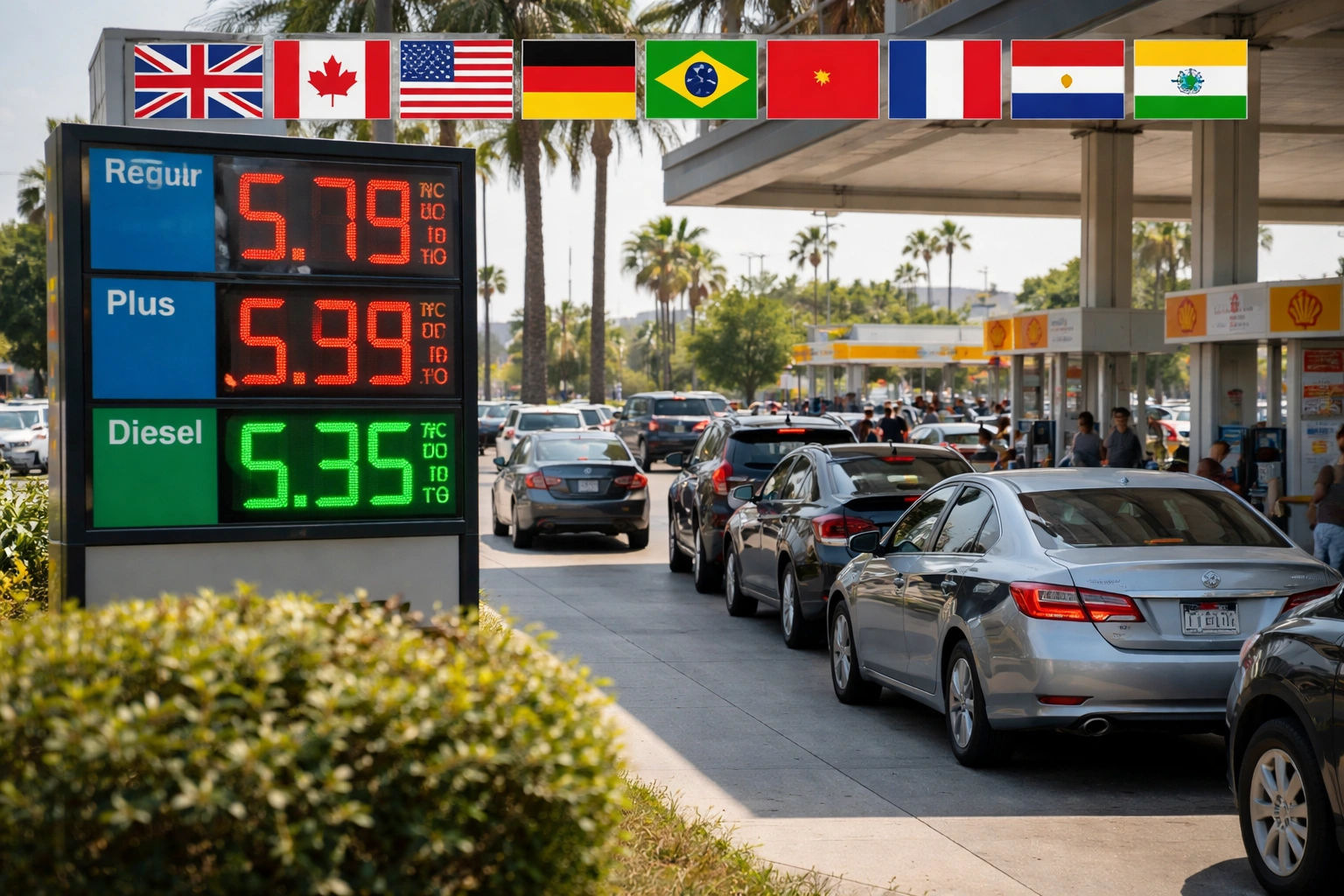
Fuel prices are climbing sharply across major economies as geopolitical tensions in the Middle East intensify. The UK has now joined countries including Canada, the US, Germany, Brazil, China, Italy, the Netherlands, and India in facing a fresh wave of energy cost increases, driven by growing uncertainty around key oil transit routes.
At the center of the concern is the Strait of Hormuz, a vital chokepoint through which a significant portion of the world’s crude oil and liquefied natural gas (LNG) flows. Any disruption to this corridor has immediate and far-reaching consequences for global energy markets.
Strait of Hormuz Under Pressure
The Strait of Hormuz has once again become a focal point of global risk. Recent developments suggest increasing threats to shipping activity in the region, raising fears of a potential choke on oil and LNG supplies.
This narrow waterway connects major oil-producing nations in the Gulf to international markets. A disruption here could impact nearly one-third of global crude oil shipments, making it one of the most strategically sensitive locations in the world.
Shipping companies and energy traders are closely monitoring the situation, with many already preparing contingency plans.
Fujairah Port in Spotlight
Fujairah Port, one of the UAE’s most critical energy export hubs located outside the Strait of Hormuz, has emerged as a key point of concern. The port plays a crucial role in bypassing the Strait, allowing oil shipments to continue even during disruptions.
However, rising threats targeting the port have intensified market anxiety. Any potential damage or operational halt at Fujairah would significantly limit alternative export routes, further tightening global supply.
Energy markets are reacting swiftly to these risks, with prices reflecting growing uncertainty.
Global Impact on Fuel Prices
The immediate consequence of these developments is a surge in fuel prices worldwide. Countries heavily dependent on imported energy, including the UK, India, and several European nations, are already experiencing rising petrol and diesel costs.
In North America, both the US and Canada are seeing upward pressure on fuel prices, while economies like Brazil and China are also feeling the strain through increased transportation and production costs.
Higher fuel prices tend to ripple through entire economies, affecting everything from logistics and manufacturing to household expenses.
Airlines Face Rising Operating Costs
The aviation sector is particularly vulnerable to fuel price volatility. Jet fuel accounts for a significant portion of airline operating expenses, and sustained increases are likely to translate into higher airfares.
Airlines across Europe, Asia, and North America are beginning to adjust pricing strategies and capacity planning in response to rising costs. Long-haul routes, especially those connecting continents, may see the most noticeable fare increases.
Travel demand, which has been recovering steadily, could face new challenges if ticket prices rise sharply.
Supply Chains Under Stress
Beyond aviation, global supply chains are also coming under pressure. Increased fuel costs directly impact shipping rates, leading to higher costs for transporting goods across continents.
This can result in delayed shipments, increased product prices, and logistical bottlenecks. Industries ranging from retail to manufacturing are already preparing for potential disruptions.
Companies are exploring alternative routes and suppliers, but such adjustments often come with added costs and complexity.
Governments Respond to Energy Shock
Governments around the world are actively monitoring the situation and considering measures to cushion the impact on consumers and businesses. Strategic petroleum reserves, subsidies, and policy adjustments are among the tools being evaluated.
European nations, including Germany, Italy, and the Netherlands, are particularly focused on managing energy costs amid existing economic pressures. Similarly, India and China are balancing energy security with economic growth priorities.
The coordinated response of governments will play a crucial role in stabilizing markets.
Consumer Costs Begin to Rise
As fuel prices increase, consumers are starting to feel the impact in everyday expenses. Transportation costs are rising, which in turn affects the price of goods and services.
From grocery bills to utility expenses, the broader cost of living is being influenced by energy market dynamics. This is especially significant for emerging economies where fuel price sensitivity is higher.
Inflationary pressures may intensify if the situation persists.
Market Uncertainty Remains High
Energy markets are currently navigating a period of heightened uncertainty. Prices are reacting not only to actual disruptions but also to the perceived risk of escalation.
Investors and analysts are closely tracking developments in the Middle East, particularly any changes that could affect shipping routes or production levels.
Volatility is expected to remain elevated in the near term as the situation evolves.
What Happens Next
The outlook depends heavily on how geopolitical tensions unfold in the coming days and weeks. If stability can be maintained, markets may gradually adjust and stabilize.
However, any escalation that disrupts key infrastructure or shipping lanes could lead to sharper price spikes and broader economic consequences.
For now, countries across the globe are bracing for continued uncertainty, while industries and consumers adapt to a rapidly changing energy landscape.
A Global Ripple Effect
The current situation underscores the interconnected nature of the global economy. Events in one region can quickly influence fuel prices, travel costs, and daily expenses worldwide.
As the UK joins other major economies in facing rising fuel costs, the need for coordinated responses and adaptive strategies becomes increasingly clear.
For businesses, travelers, and households alike, staying informed and prepared will be essential in navigating the challenges ahead.