
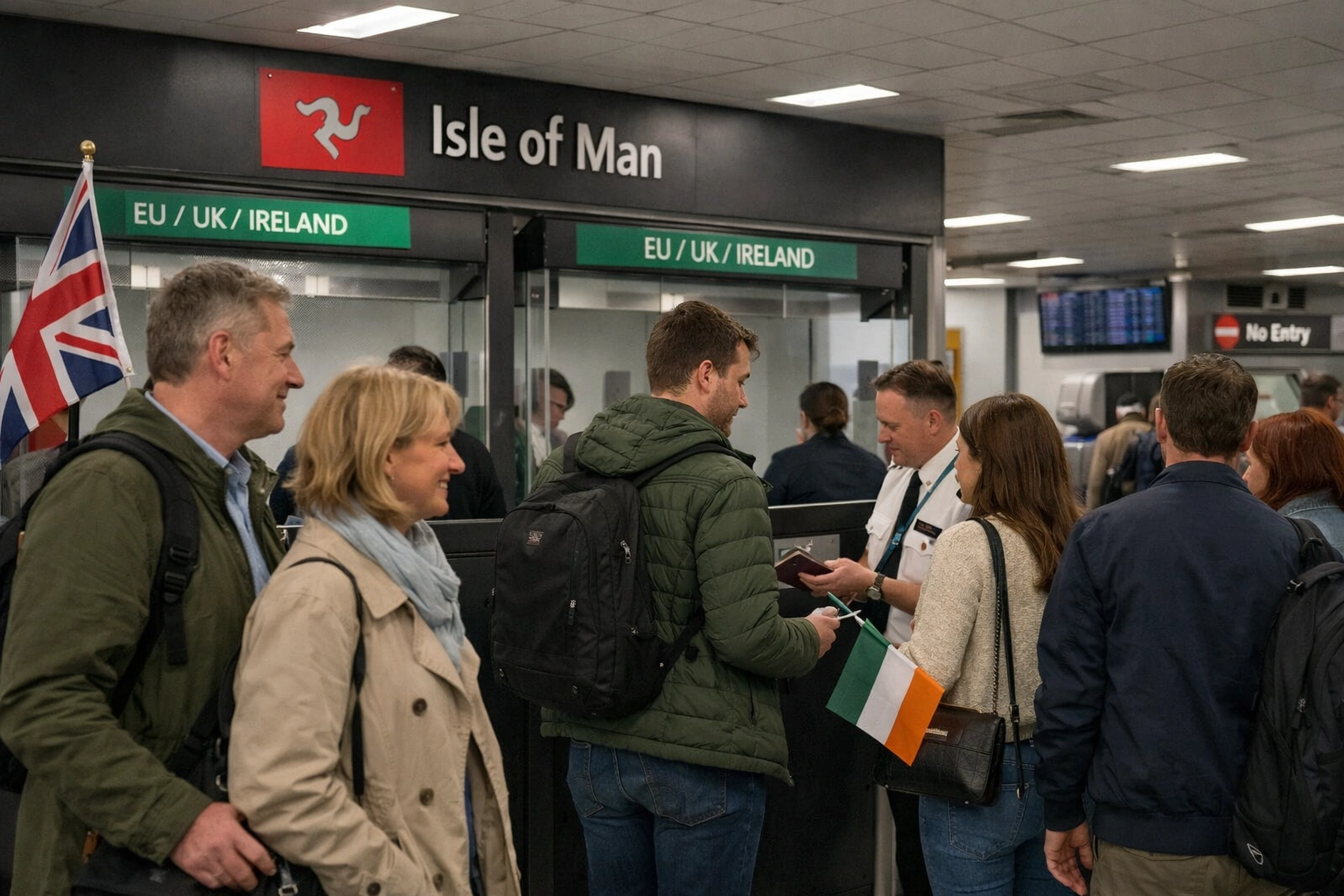
A new digital visa policy introduced by the Isle of Man is reshaping entry requirements for many international travelers. However, in a notable development, visitors from the United Kingdom and Ireland will continue to enjoy unrestricted access, remaining completely unaffected by the new system.
This selective implementation highlights a broader trend in global travel—tightening entry controls for some while preserving long-standing travel arrangements for others.
A Targeted Policy, Not a Universal Change
The Isle of Man’s newly introduced digital visa is not a blanket requirement for all visitors. Instead, it is a targeted measure aimed at streamlining entry procedures for certain nationalities while maintaining existing agreements with key partners.
Travelers from the UK and Ireland are exempt from the new digital visa rules, meaning they can continue to enter the island using current identification and travel processes without additional documentation.
This approach reflects a growing pattern in international travel policies—balancing modernization with diplomatic and regional relationships.
Why UK and Ireland Are Exempt
The exemption for UK and Irish travelers is rooted in longstanding travel agreements and geographic proximity. The Isle of Man is part of the Common Travel Area (CTA), which allows free movement between the UK, Ireland, and associated territories.
As a result, citizens of these regions are not subject to the same immigration controls as visitors from outside the CTA. The new digital visa policy respects this arrangement, ensuring seamless travel continuity.
This decision reinforces the importance of regional cooperation in shaping travel regulations.
What the Digital Visa Means for Other Travelers
For travelers outside the UK and Ireland, the new digital visa introduces a more structured entry process. Applicants may now need to complete an online authorization before arrival, providing travel details and personal information in advance.
The goal is to enhance border security while improving efficiency at entry points. Digital systems can reduce wait times, minimize paperwork, and allow authorities to pre-screen visitors.
While this may add an extra step for some travelers, it aligns with a broader global shift toward digital border management.
A Global Trend Toward Digital Entry Systems
The Isle of Man is not alone in adopting digital visa or travel authorization systems. Countries around the world are implementing similar measures to modernize border control.
From electronic travel authorizations to fully digital visas, governments are increasingly leveraging technology to manage visitor flows more effectively.
These systems offer benefits such as faster processing, improved security, and better data collection. However, they also raise questions about accessibility and the impact on spontaneous travel.
Minimal Impact on Regional Tourism
For the Isle of Man, the decision to exempt UK and Irish travelers is significant. These visitors make up a substantial portion of the island’s tourism base.
By maintaining easy access for these key markets, the island is protecting its tourism economy while still introducing modernization for other segments.
This selective approach ensures that the new policy does not disrupt core travel flows.
Balancing Security and Accessibility
One of the key challenges for any new visa system is finding the right balance between security and convenience. The Isle of Man’s digital visa aims to achieve this by focusing on travelers who require additional screening while keeping entry simple for trusted partners.
This strategy reflects a nuanced understanding of modern travel demands—enhancing safety without creating unnecessary barriers.
Traveler Reactions and Expectations
Early reactions suggest that UK and Irish travelers appreciate the continuity. The absence of new requirements means they can plan trips without additional steps or uncertainty.
For other international visitors, the introduction of a digital visa may initially require adjustment. However, as digital systems become more common worldwide, travelers are increasingly familiar with such processes.
Over time, these systems are likely to become an expected part of international travel.
Economic and Policy Implications
The move also carries broader economic and policy implications. By introducing a digital visa, the Isle of Man is aligning itself with global standards in border management.
At the same time, maintaining exemptions for key regions helps preserve strong economic ties and tourism flows.
This dual approach allows the island to modernize without risking a decline in visitor numbers from its most important markets.
A Strategic Move in a Changing Travel Landscape
The introduction of the digital visa reflects a strategic response to evolving global travel trends. As countries seek to manage increasing travel volumes and security concerns, digital solutions are becoming essential.
The Isle of Man’s policy demonstrates how smaller destinations can adopt these innovations while tailoring them to their unique circumstances.
What This Means for Future Travel
Looking ahead, the selective nature of the Isle of Man’s digital visa could serve as a model for other destinations. Rather than applying uniform rules to all travelers, governments may increasingly adopt differentiated approaches based on relationships, risk assessments, and travel patterns.
For travelers, this means staying informed about destination-specific requirements will become even more important.
A New Phase in Travel Policy Evolution
The Isle of Man’s digital visa marks another step in the ongoing evolution of global travel policies. While some travelers will encounter new procedures, others—like those from the UK and Ireland—will continue to benefit from established agreements.
This layered approach underscores a key reality of modern travel: not all changes affect everyone equally.
As the UK joins Ireland in witnessing their travelers remain unaffected, the message is clear—travel rules are becoming more sophisticated, more targeted, and more reflective of a rapidly changing world.