
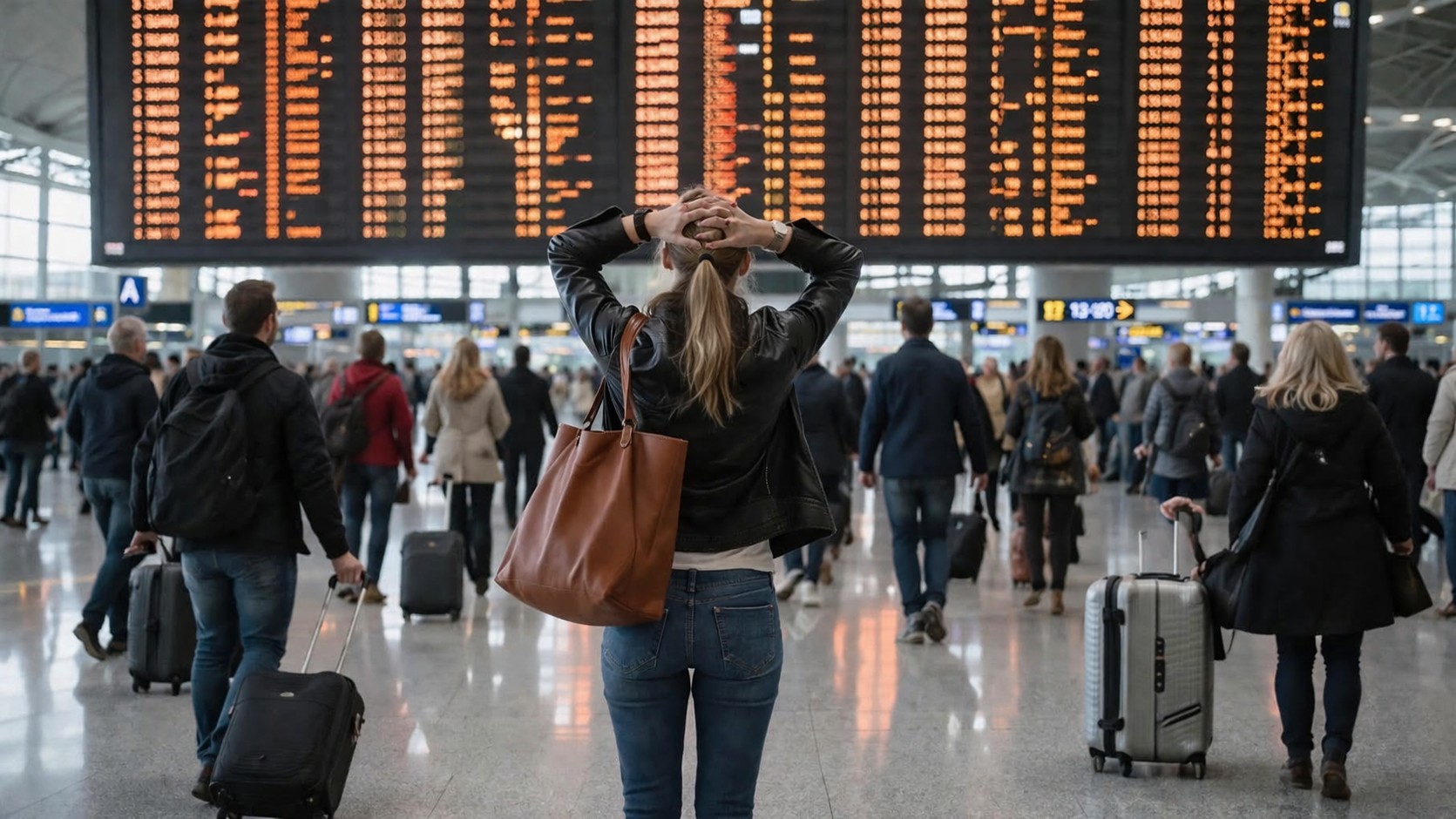
A wave of aviation disruption has swept across Europe, leaving thousands of passengers stranded as major airlines cancel 58 flights and delay more than 1,379 others. Key travel hubs including Paris, London, Oslo, and Madrid have been heavily affected, creating ripple effects across international and domestic routes. The disruption has impacted prominent carriers such as SAS, KLM, British Airways, and Lufthansa, intensifying travel chaos across multiple countries.
Major Airports Face Operational Strain
Europe’s busiest airports have borne the brunt of the disruption. London’s primary hubs, including Heathrow and Gatwick, reported extensive delays throughout the day, with passengers facing long queues and limited assistance. In Paris, Charles de Gaulle Airport struggled to maintain operations as cancellations mounted, while Amsterdam’s Schiphol Airport experienced cascading delays due to aircraft and crew displacement.
Oslo Airport in Norway and Madrid-Barajas Airport in Spain also faced operational slowdowns, with delayed departures affecting connecting flights across the continent. The interconnected nature of European aviation means that even minor disruptions in one region quickly escalate into widespread delays elsewhere.
Airlines Under Pressure
Airlines including SAS, KLM, British Airways, and Lufthansa have been forced to adjust schedules rapidly, often with limited notice to passengers. Aircraft rotations have been disrupted, and crew availability has become a growing concern, particularly on long-haul routes.
Many airlines have issued travel advisories urging passengers to check flight statuses before heading to the airport. However, the sheer volume of delays has overwhelmed customer service channels, leaving many travelers without timely updates or rebooking options.
Low-cost carriers and regional airlines have also been affected, further compounding the issue as budget travelers face fewer alternatives when flights are canceled.
Weather and Air Traffic Congestion
Adverse weather conditions across parts of Western and Northern Europe have played a significant role in triggering the disruptions. Strong winds, low visibility, and intermittent storms have reduced airport capacity, forcing air traffic controllers to space out flights more widely.
In addition to weather, increased air traffic demand has stretched Europe’s airspace to its limits. As travel demand continues to rebound, skies are becoming increasingly congested, making it more difficult for controllers to manage sudden disruptions without causing widespread delays.
Air traffic control restrictions in key corridors connecting France, the UK, and the Netherlands have further intensified the situation, slowing down flight movements across the region.
Passengers Left Stranded
For travelers, the impact has been immediate and frustrating. Thousands have found themselves stranded at airports, with some waiting hours or even overnight for alternative flights. Hotels near major airports have quickly filled up, leaving many passengers scrambling for accommodation.
Families, business travelers, and tourists alike have reported missed connections, disrupted itineraries, and unexpected expenses. Social media platforms have been flooded with complaints, highlighting the lack of clear communication and support during the disruption.
Passengers traveling on connecting flights have been particularly affected, as missed transfers often result in extended delays and complicated rebooking processes.
Economic and Tourism Impact
The disruption is not only affecting travelers but also has broader implications for Europe’s tourism and business sectors. With peak travel seasons approaching, repeated delays and cancellations risk undermining traveler confidence.
Tour operators, hotels, and local businesses in major tourist destinations like Paris and Madrid may experience short-term losses as visitors arrive late or cancel trips altogether. Business travel has also been impacted, with professionals missing meetings and events due to flight uncertainties.
Airlines themselves face financial strain, as compensation claims, operational adjustments, and customer service demands add to their costs.
Efforts to Restore Normalcy
Authorities and airlines are working to stabilize operations, but recovery is expected to take time. Additional staff have been deployed at airports to assist passengers, while airlines are attempting to reposition aircraft and crews to restore schedules.
Air traffic control agencies are also coordinating efforts to manage congestion and minimize further disruptions. However, with ongoing weather concerns and high traffic volumes, a full return to normal operations may not happen immediately.
Travelers are being advised to remain flexible, allow extra time for airport procedures, and stay updated through airline apps and official airport channels.
What Travelers Should Do
Passengers planning to travel across Europe in the coming days should take precautionary steps to minimize inconvenience. Checking flight status regularly, arriving early at the airport, and having contingency plans can make a significant difference.
Travel insurance may also provide some relief for unexpected expenses, while keeping essential items such as medications and important documents in carry-on luggage is strongly recommended.
Flexibility remains key, as airlines continue to adjust schedules in response to evolving conditions.
A Challenging Period for European Aviation
The current wave of cancellations and delays highlights the fragility of Europe’s aviation network during periods of high demand and external disruption. While airlines and authorities are taking steps to recover, the situation underscores the need for improved resilience in the face of growing travel volumes.
For now, passengers across France, England, the Netherlands, Norway, Spain, and beyond must navigate an uncertain travel landscape, as Europe’s skies gradually work toward stability once again.