
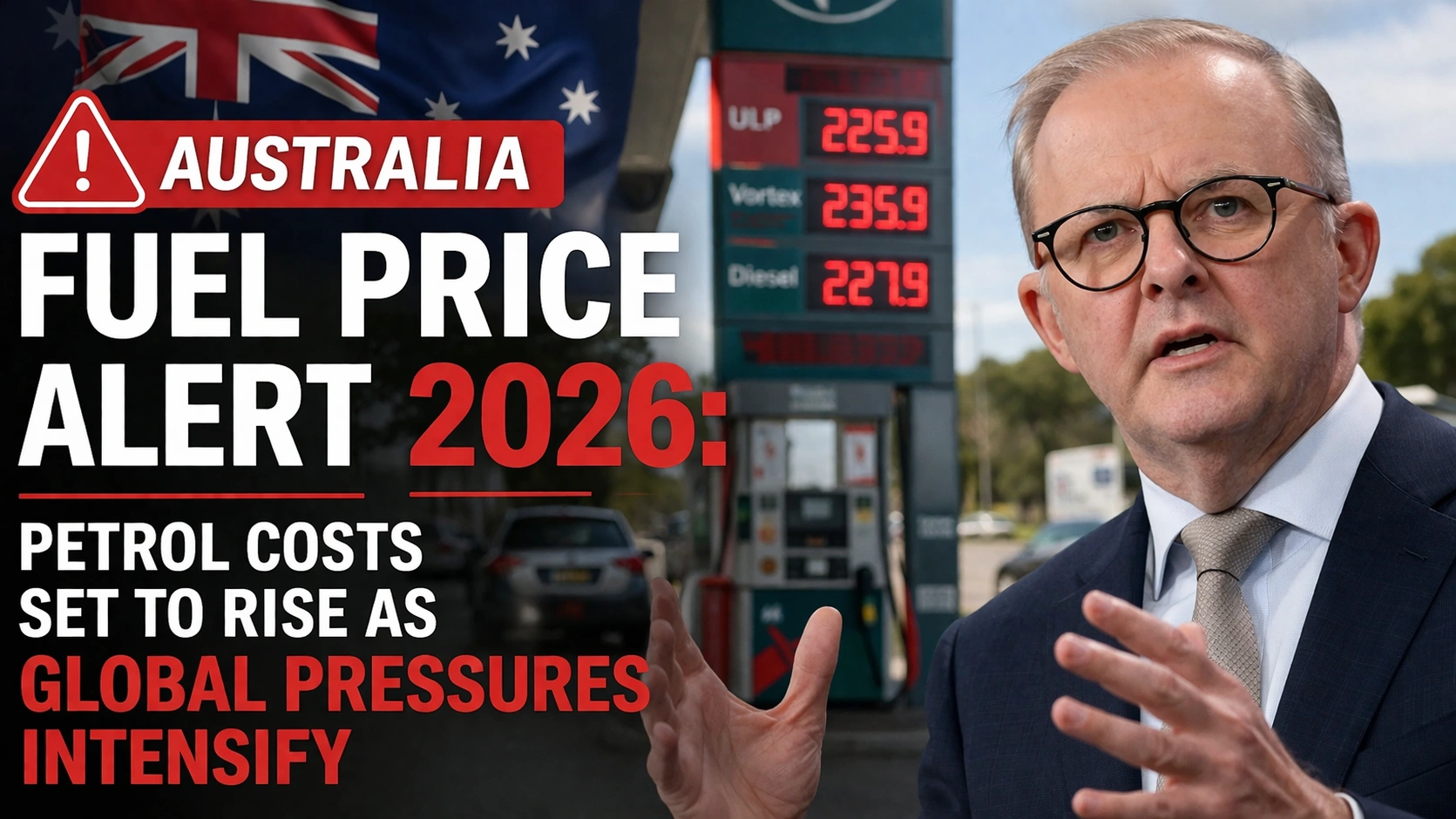
Australia Fuel Price Alert 2026: Petrol Costs Expected to Rise as Global Pressures Build
Fuel prices across Australia are once again under scrutiny as global pressures begin to push petrol costs higher in 2026. Motorists, businesses, and households are being warned to prepare for potential increases at the pump, driven by a mix of international and domestic factors.
After periods of relative stability, the outlook is shifting, with experts pointing to rising crude oil prices, geopolitical tensions, and supply chain challenges as key contributors to the expected surge.
What Is Driving Petrol Price Increases
Several global factors are converging to influence fuel prices. One of the primary drivers is the fluctuation in crude oil markets, where supply constraints and increased demand are pushing prices upward.
Geopolitical tensions in key oil-producing regions are also adding uncertainty, often leading to sudden spikes in global oil prices. When crude prices rise, the cost is quickly passed on to consumers through higher petrol prices.
Additionally, currency exchange rates play a role. A weaker Australian dollar can make imported fuel more expensive, further contributing to price increases.
Impact of Global Supply and Demand
Global demand for oil has been rising steadily as travel, trade, and industrial activity continue to recover and expand. At the same time, supply has faced constraints due to production limits and logistical challenges.
This imbalance between supply and demand is creating upward pressure on prices. Major oil-producing countries are carefully managing output, which can tighten supply and influence global pricing trends.
For Australia, which relies heavily on imported refined fuel, these global dynamics have a direct impact on domestic petrol costs.
Local Factors Adding to the Pressure
While global conditions play a significant role, domestic factors are also contributing to rising fuel prices. Refining capacity, transportation costs, and regional supply logistics all influence the final price at the pump.
Taxes and government policies, including fuel excise, remain a consistent component of petrol pricing. Changes in these policies can either ease or increase the burden on consumers.
Seasonal demand patterns, such as increased travel during holidays, can also lead to short-term price spikes in certain regions.
How Rising Fuel Prices Affect Australians
Higher petrol prices have a ripple effect across the economy. For households, increased fuel costs mean higher daily expenses, particularly for those who rely on cars for commuting or living in regional areas.
Businesses, especially those in transport and logistics, face increased operational costs, which can lead to higher prices for goods and services. This, in turn, contributes to broader inflationary pressures.
For many Australians, rising fuel costs are not just an inconvenience—they directly impact overall cost of living.
Regional Differences in Fuel Costs
Fuel prices can vary significantly across Australia depending on location. Major cities often experience price cycles, where petrol prices rise and fall in predictable patterns.
In contrast, regional and remote areas may face consistently higher prices due to transportation and supply challenges. Limited competition in some المناطق can also contribute to higher costs.
Understanding these regional differences can help consumers make informed decisions about when and where to purchase fuel.
What Experts Are Predicting for 2026
Analysts suggest that fuel prices could remain volatile throughout 2026, with potential for further increases if global tensions persist. While some short-term fluctuations are expected, the overall trend points toward higher average prices compared to previous years.
However, factors such as changes in oil production, shifts in demand, and currency movements could influence the trajectory. This means that while increases are likely, the exact extent will depend on evolving conditions.
Consumers are advised to stay informed and monitor market trends.
Tips for Managing Rising Fuel Costs
With petrol prices expected to rise, Australians can take steps to reduce their fuel expenses. Driving efficiently, maintaining vehicles, and planning trips can help improve fuel efficiency.
Using fuel price comparison apps can also help identify the cheapest options in local areas. Filling up during lower points in price cycles can lead to savings over time.
Carpooling, using public transport, or considering alternative modes of travel can further reduce reliance on petrol.
Potential Government Responses
Governments may consider measures to ease the impact of rising fuel prices. These could include temporary adjustments to fuel excise, subsidies, or targeted support for vulnerable groups.
In the past, such measures have provided short-term relief, though they are often balanced against broader economic considerations.
Long-term strategies may focus on reducing dependence on fossil fuels and promoting alternative energy sources.
Shift Toward Alternative Energy
Rising fuel prices are also accelerating interest in alternative energy solutions. Electric vehicles (EVs), hybrid cars, and renewable energy options are becoming more attractive as petrol costs increase.
Government incentives and infrastructure investments are supporting this transition, making it easier for Australians to explore sustainable alternatives.
While the shift will take time, it represents a significant change in how energy is consumed and managed.
What Australians Should Do Now
With fuel prices expected to rise in 2026, preparation is key. Monitoring fuel trends, adjusting budgets, and adopting cost-saving strategies can help manage the impact.
Staying informed about global developments and local pricing patterns will also enable consumers to make better decisions.