
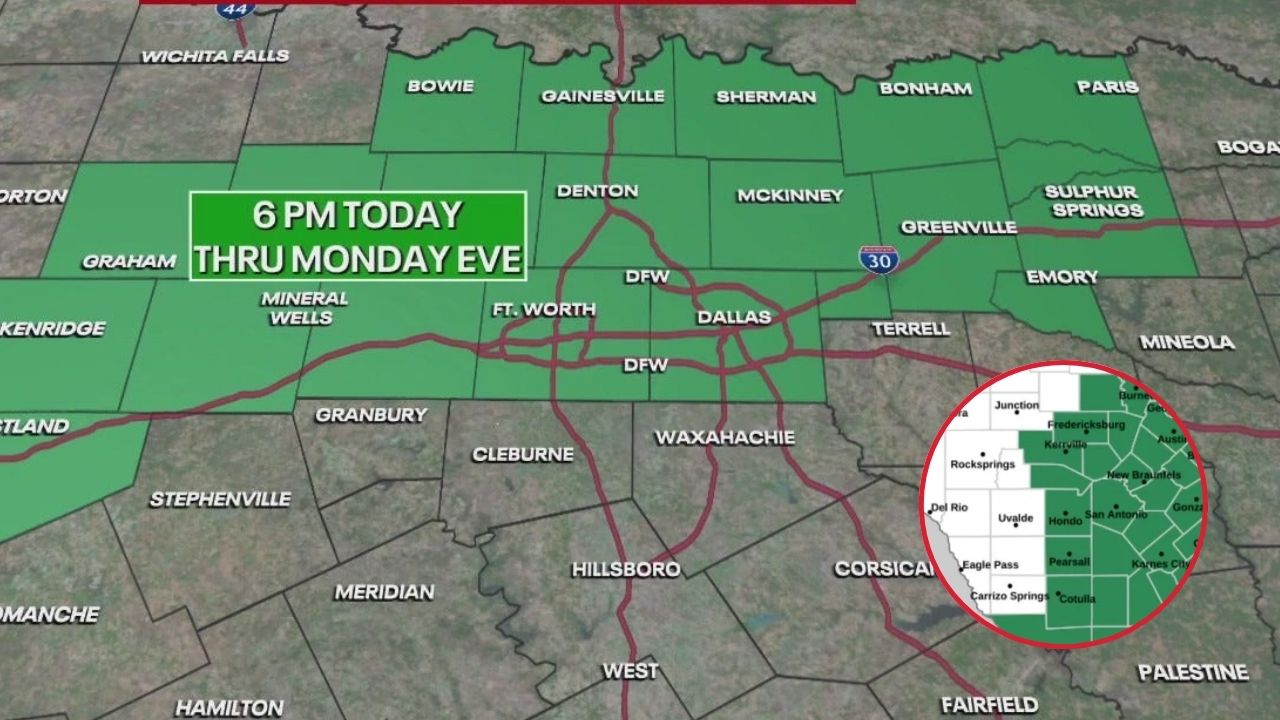
The National Weather Service (NWS) has issued an extensive flood watch covering large portions of Texas as forecasters warn that multiple rounds of heavy rainfall could trigger dangerous flooding conditions across the state.
Meteorologists are closely monitoring a weather system capable of producing intense downpours, flash flooding, and rapidly rising rivers. Officials are urging residents to remain alert as saturated ground conditions and repeated storms increase the risk of significant flooding in vulnerable areas.
The flood watch comes as Texas continues to experience an active weather pattern that has already brought substantial rainfall to many communities in recent weeks.
Widespread Flood Threat Emerges
According to weather officials, the flood watch encompasses a broad region of Texas where conditions are favorable for excessive rainfall over a relatively short period.
Forecasters warn that thunderstorms may repeatedly develop over the same locations, a phenomenon known as “training,” which can quickly overwhelm drainage systems and cause water levels to rise.
Urban areas face a particular risk because roads, parking lots, and other paved surfaces limit the ground’s ability to absorb rainfall. Rural regions could also experience problems as creeks, streams, and rivers respond to heavy precipitation.
Emergency management agencies are monitoring forecasts closely as rainfall totals continue to fluctuate based on storm development.
Heavy Rainfall Expected
Meteorologists indicate that several waves of storms may move across the state during the watch period.
Some locations could receive multiple inches of rain in just a few hours, creating conditions favorable for flash flooding. Areas that have already experienced recent rainfall may be especially vulnerable because the soil is less capable of absorbing additional moisture.
Weather experts note that even communities that do not typically experience flooding can face problems when rainfall rates become extreme.
The exact placement of the heaviest storms remains uncertain, but forecasters agree that a significant flooding threat exists across a large portion of Texas.
Flash Flooding Remains Major Concern
Among the greatest concerns is the possibility of flash flooding.
Unlike river flooding, which can develop over several days, flash floods can occur within minutes after intense rainfall begins. Water can quickly cover roads, enter homes and businesses, and create hazardous travel conditions.
Emergency officials routinely emphasize the dangers associated with driving through flooded roadways. Even a relatively small amount of moving water can sweep away vehicles, making flooded streets particularly dangerous.
Authorities are encouraging residents to stay informed about changing weather conditions and heed any warnings that may be issued.
Rivers and Streams Could Rise
In addition to flash flooding, hydrologists are watching river systems throughout Texas for signs of rising water levels.
When heavy rainfall occurs over large areas, runoff eventually flows into rivers, creeks, and reservoirs. If precipitation remains persistent, some waterways may approach or exceed flood stage.
Communities located near rivers are often advised to monitor forecasts carefully because river flooding can continue even after rainfall has ended.
Water management officials are also evaluating reservoir levels and drainage systems as part of ongoing flood preparedness efforts.
Emergency Agencies Prepare
Local and state emergency management agencies have activated monitoring operations in anticipation of potential impacts.
Officials are coordinating with weather forecasters, transportation departments, and first responders to ensure resources are available if flooding develops.
Emergency personnel may be positioned in areas considered most vulnerable to severe weather and flood-related incidents. Preparations can include reviewing evacuation procedures, monitoring flood-prone roadways, and ensuring communication systems remain operational.
Authorities stress that preparation before flooding occurs is often critical to minimizing risks and protecting lives.
Travel Conditions May Deteriorate
The expected storms could significantly affect transportation across parts of Texas.
Heavy rainfall often reduces visibility, creates standing water on roadways, and increases the likelihood of traffic accidents. Flooded roads can become impassable, forcing temporary closures and detours.
Air travel may also experience disruptions if thunderstorms affect major airports. Delays and cancellations are common during periods of severe weather, particularly when lightning and heavy rainfall impact airport operations.
Residents planning travel are encouraged to check weather conditions and road reports before departing.
Residents Urged to Stay Alert
The National Weather Service is encouraging Texans to remain vigilant throughout the flood watch period.
Weather conditions can change rapidly, and flood watches may be upgraded to flash flood warnings if dangerous flooding begins to develop. Officials recommend monitoring local forecasts, weather alerts, and emergency notifications.
Residents in flood-prone areas are encouraged to review emergency plans, identify safe routes, and prepare for the possibility of rapidly changing conditions.
Having access to reliable weather information can provide valuable time to react if flooding threatens homes or neighborhoods.
Texas Faces Familiar Weather Challenge
Flooding has long been one of Texas’ most significant weather hazards.
The state’s size, geography, and climate make it particularly susceptible to heavy rainfall events. Storm systems moving across the region can produce large amounts of rain in short periods, especially during active weather seasons.
Major flood events in Texas have historically caused extensive property damage, transportation disruptions, and public safety concerns. As a result, emergency officials often treat widespread flood watches with heightened attention.
The current threat serves as another reminder of how quickly weather conditions can change across the state.
Looking Ahead
Forecast models suggest that the flood threat could continue until the weather system responsible for the storms moves out of the region.
Meteorologists will continue refining rainfall forecasts as new data becomes available, while emergency officials remain prepared to respond if conditions worsen.
For now, the National Weather Service is urging residents to take the flood watch seriously and remain informed throughout the event. While not every community will experience flooding, the combination of heavy rainfall, saturated ground, and repeated storms creates the potential for dangerous conditions across large portions of Texas.