
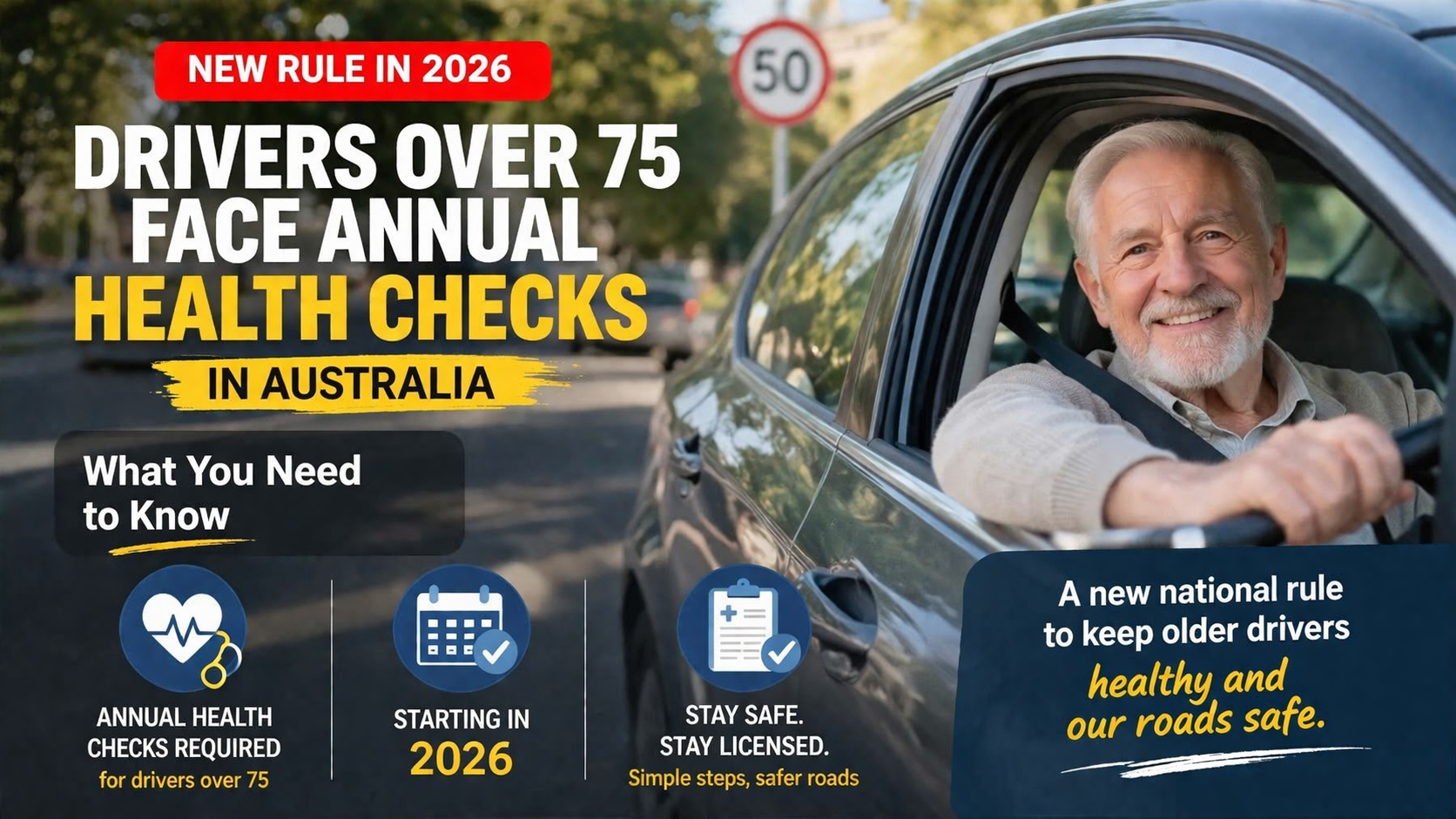
Australia is introducing a significant change for older motorists in 2026, with drivers aged 75 and above now required to undergo annual health checks to retain their licences. The move is part of a broader effort to improve road safety while ensuring seniors can continue driving for as long as it is safe to do so.
For many older Australians, driving represents independence and freedom. However, the new rule aims to balance that independence with the need to address age-related health risks that may affect driving ability.
Why the New Rule Has Been Introduced
As Australia’s population ages, the number of older drivers on the road continues to grow. While many seniors are safe and experienced drivers, certain health conditions—such as reduced vision, slower reaction times, and medical issues—can increase risks over time.
Authorities have introduced the annual health check requirement to identify potential concerns early. The goal is not to remove licences unnecessarily, but to ensure that drivers remain medically fit to operate a vehicle safely.
Road safety data has also played a role in shaping the policy. While older drivers are generally cautious, they are more vulnerable to serious injury in accidents, making prevention a key priority.
What the Annual Health Check Involves
Under the 2026 rule, drivers aged 75 and over must complete a medical assessment each year to renew or maintain their licence.
The health check typically includes:
• Vision testing
• Cognitive function assessment
• Review of medical conditions
• Medication impact evaluation
A general practitioner (GP) usually conducts the assessment and determines whether the individual meets the required standards for safe driving.
In some cases, additional evaluations may be recommended, such as specialist reviews or on-road driving assessments.
No Automatic Licence Cancellation
One of the biggest concerns among seniors is the fear of losing their licence automatically. However, the new rule does not mean that turning 75 results in immediate restrictions.
Instead, it introduces a structured review process. Many older drivers will continue to meet the required standards and retain their licences without issue.
Where concerns are identified, conditions may be applied rather than outright cancellation. These could include restrictions such as daytime driving only or limits on driving distances.
The focus remains on safety and fairness, not unnecessary loss of independence.
How the Rule Applies Across Australia
Driver licensing in Australia is managed at the state and territory level, which means some regions already have medical review systems in place for older drivers.
The 2026 update aims to create a more consistent national approach, reducing confusion and ensuring similar standards across the country.
While specific procedures may still vary slightly between states, the core requirement—annual health checks for drivers over 75—will be widely adopted.
This consistency is expected to make the system clearer and more predictable for seniors and their families.
Impact on Seniors and Daily Life
For many older Australians, the new rule introduces both reassurance and concern. On one hand, regular health checks can provide confidence that they are driving safely.
On the other hand, the process may feel like an added burden, particularly for those managing multiple medical appointments.
Driving plays a crucial role in maintaining independence. It allows seniors to attend medical appointments, shop for essentials, and stay socially connected.
Any changes to licensing rules therefore have a direct impact on lifestyle and wellbeing.
Ensuring the process is accessible, affordable, and respectful will be key to its success.
Costs and Accessibility of Health Checks
The cost of annual medical assessments is another important consideration. While some seniors may be eligible for subsidised healthcare, others could face out-of-pocket expenses.
Access to GPs can also vary, particularly in rural or regional areas where medical services may be limited.
To address these challenges, there are calls for additional support measures, such as:
• Bulk-billed assessments for eligible seniors
• Mobile health services in regional areas
• Streamlined appointment processes
Making the system easy to navigate will help reduce stress and encourage compliance.
Support Options for Older Drivers
In addition to medical assessments, various support programs are available to help seniors adapt to changing driving needs.
Driver refresher courses can help older motorists update their skills and stay confident on the road. Some organizations also offer safe driving workshops tailored specifically for seniors.
For those who may need to reduce or stop driving, alternative transport options are becoming increasingly important. Community transport services, senior-friendly ride programs, and improved public transport access can help maintain mobility.
Planning ahead can make transitions smoother and less disruptive.
Balancing Safety and Independence
The introduction of annual health checks highlights a broader challenge—how to balance road safety with personal independence.
For many seniors, driving is closely tied to identity and freedom. Policies that affect this must be handled with care and sensitivity.
By focusing on regular assessments rather than blanket restrictions, the 2026 rule aims to achieve that balance. It recognises that age alone is not a definitive measure of driving ability.
Instead, individual health and capability are placed at the centre of decision-making.
What Drivers Should Do Now
For those approaching the age of 75, preparation is key. Staying on top of regular health check-ups and discussing any concerns with a GP can make the transition smoother.
Understanding state-specific requirements and timelines will also help avoid unexpected disruptions to licensing.
Family members can play a supportive role by encouraging open conversations about driving safety and future planning.
Being proactive ensures that older drivers can continue to enjoy the benefits of mobility for as long as possible.
Looking Ahead
The 2026 national rule for drivers over 75 marks an important shift in Australia’s approach to road safety and ageing.
While the requirement for annual health checks may take some adjustment, it also offers an opportunity to support safer driving and better health outcomes.