
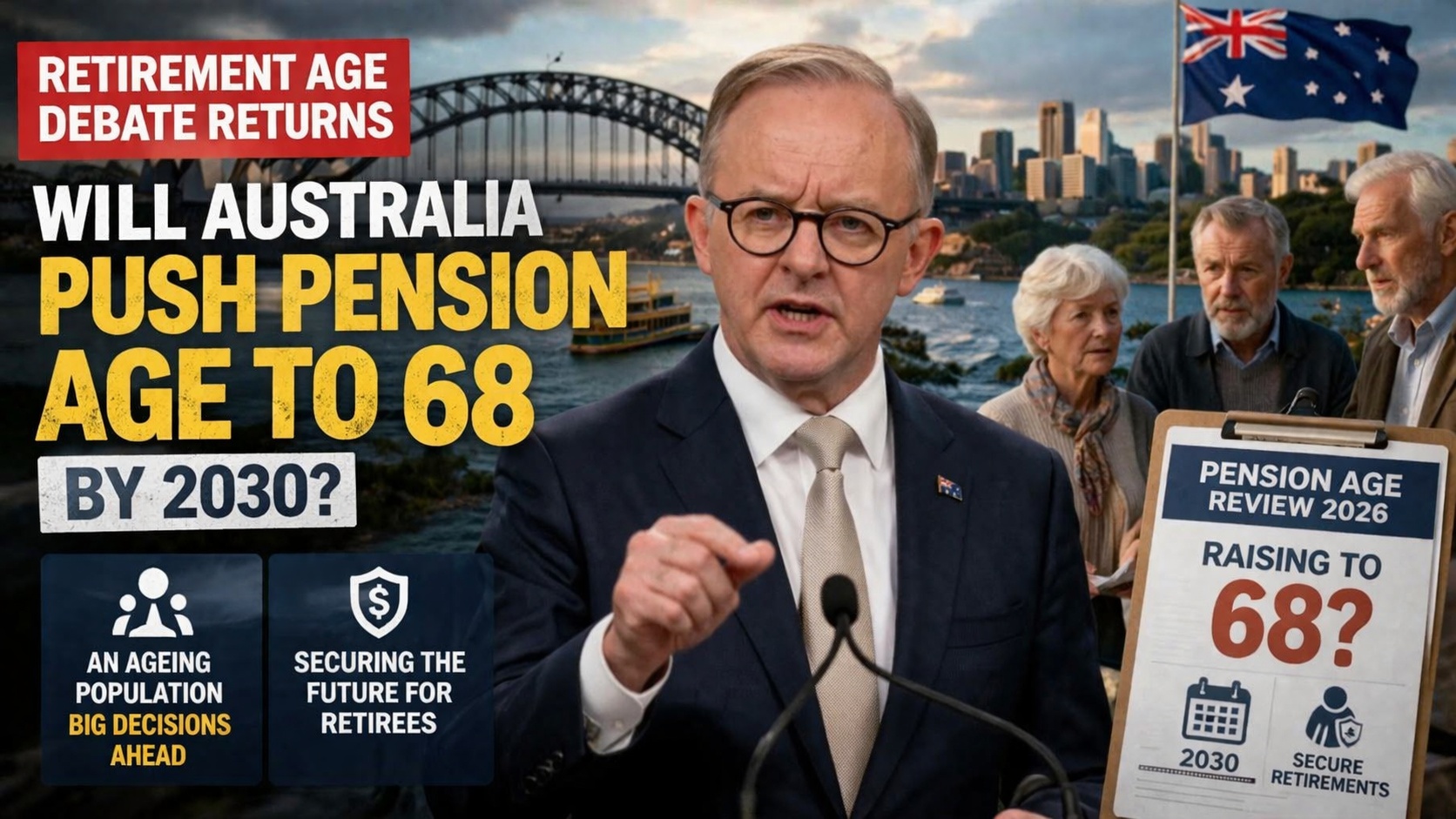
The debate over Australia’s retirement age has resurfaced in 2026, sparking fresh discussion about whether the Age Pension eligibility age could rise to 68 by 2030. While no official decision has been confirmed, growing economic pressures and an ageing population are putting the issue firmly back on the national agenda.
For millions of Australians approaching retirement, the possibility of working longer is raising important questions about financial planning, health, and long-term security.
Why the Retirement Age Is Under Review
Australia’s current pension age has already undergone gradual increases over the past decade, moving toward 67. These changes were introduced to reflect longer life expectancy and the need to maintain a sustainable pension system.
Now, policymakers are once again examining whether further adjustments may be necessary.
Several factors are driving the discussion:
• Increasing life expectancy
• Rising government spending on pensions
• A growing proportion of retirees compared to working-age Australians
As more people live longer and spend more years in retirement, the financial pressure on the system continues to grow.
The Push Toward Age 68
The idea of raising the pension age to 68 by 2030 is not new, but it has gained renewed attention in 2026.
Supporters argue that a higher retirement age would help ensure the long-term sustainability of the pension system. By encouraging people to remain in the workforce longer, the government could reduce the financial burden on public finances.
It would also align Australia with trends seen in other developed countries, many of which are gradually increasing retirement ages in response to demographic changes.
However, the proposal remains under discussion, and no formal policy has been announced.
Concerns from Workers and Retirees
For many Australians, particularly those in physically demanding jobs, the idea of working until 68 raises serious concerns.
Not all workers are able to extend their careers comfortably. Health issues, job availability, and workplace conditions can all affect a person’s ability to remain employed later in life.
There is also concern about fairness. Individuals in white-collar roles may find it easier to work longer compared to those in manual or high-stress occupations.
For people nearing retirement, any change to the pension age can disrupt carefully planned financial strategies, creating uncertainty about when support will become available.
Impact on Retirement Planning
Even the possibility of a higher pension age is influencing how Australians approach retirement planning.
Many are now considering:
• Extending their working years
• Increasing superannuation contributions
• Adjusting retirement timelines
• Exploring part-time or flexible work options
Financial advisors are encouraging individuals to prepare for multiple scenarios, including the potential for delayed access to the Age Pension.
This shift highlights the importance of early planning and adaptability in an uncertain policy environment.
The Role of Superannuation
Australia’s superannuation system plays a key role in supporting retirement income, and any changes to the pension age could increase reliance on personal savings.
For those with sufficient superannuation, a higher pension age may be manageable. However, not all Australians have equal levels of savings.
Gaps in employment, lower incomes, and career interruptions can lead to smaller super balances, particularly among women and low-income workers.
This raises concerns about inequality and the risk of financial hardship for certain groups if the pension age is increased without additional support measures.
Economic Arguments for Change
From an economic perspective, raising the retirement age could provide several benefits.
It may help:
• Reduce pressure on government spending
• Increase workforce participation
• Support economic growth
By keeping experienced workers in the labour market for longer, businesses can benefit from their skills and knowledge.
However, these benefits depend on the availability of suitable jobs and supportive workplace policies for older employees.
Social and Health Considerations
Beyond economics, the debate also involves important social and health factors.
Working longer can have positive effects, such as maintaining social connections and mental engagement. However, it can also present challenges, particularly for those with health issues or caregiving responsibilities.
Access to flexible work arrangements, age-friendly workplaces, and healthcare support will be critical if Australians are expected to remain in the workforce for longer.
Balancing these factors is essential to ensure that any policy changes are both fair and practical.
Government Response So Far
As of 2026, the Australian government has not confirmed any plans to raise the pension age to 68. Officials have acknowledged the ongoing discussion but emphasize that no immediate changes are being implemented.
Public consultation and policy reviews are likely to play a role in shaping any future decisions.
In the meantime, the focus remains on maintaining the current system while exploring options for long-term sustainability.
What Australians Should Do Now
With uncertainty surrounding future retirement age policies, staying informed is more important than ever.
Australians approaching retirement may benefit from reviewing their financial plans and considering different scenarios.
Key steps include:
• Monitoring government announcements
• Seeking professional financial advice
• Reviewing superannuation balances
• Exploring flexible work opportunities
Taking proactive steps can help reduce uncertainty and improve financial security.
Looking Ahead
The return of the retirement age debate in 2026 reflects broader challenges facing Australia’s ageing population and pension system.
While raising the pension age to 68 by 2030 remains a possibility, it is far from certain. Any decision will need to balance economic sustainability with fairness, health, and quality of life.
For now, the discussion serves as a reminder that retirement planning is evolving. Australians must remain adaptable as policies, economic conditions, and life expectancy continue to change.