
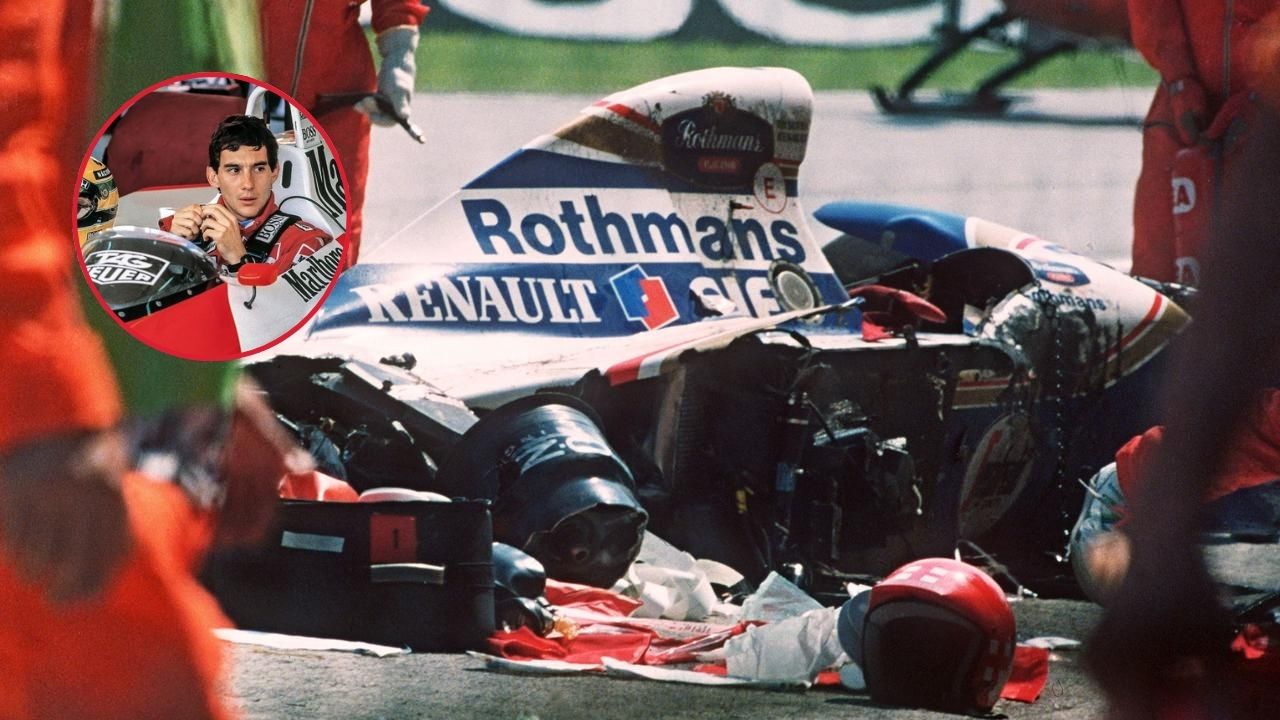
The death of Ayrton Senna remains one of the most heartbreaking moments in motorsport history. Widely regarded as one of the greatest racing drivers ever, Senna lost his life during the 1994 San Marino Grand Prix at Imola, Italy. His fatal crash shocked millions of fans worldwide and triggered sweeping changes that transformed Formula One safety standards.
More than three decades later, the circumstances surrounding the accident continue to be discussed by racing experts, engineers, and fans. While some questions remain unanswered, the impact of that tragic day continues to shape modern motorsport.
A Champion at His Peak
By 1994, Ayrton Senna had already secured three Formula One World Championships and established himself as one of the sport’s most talented competitors. Known for his incredible speed, precision, and determination, the Brazilian driver had earned global admiration.
After leaving McLaren at the end of the 1993 season, Senna joined the Williams team, which was considered one of the strongest teams on the grid. Expectations were high as he pursued a fourth world title.
However, the start of the 1994 season proved challenging. New technical regulations had changed the handling characteristics of Formula One cars, and Williams was still adapting to the new rules.
A Dark Weekend at Imola
The San Marino Grand Prix weekend was already overshadowed by tragedy before the race even began.
On Friday, Brazilian driver Rubens Barrichello survived a frightening crash during practice. Then, on Saturday, Austrian driver Roland Ratzenberger suffered a fatal accident during qualifying.
The Formula One paddock was shaken. Many drivers questioned whether racing should continue, but the Grand Prix proceeded as scheduled on Sunday.
Few could have imagined that another fatal accident was about to occur.
The Crash at Tamburello
On May 1, 1994, Senna started the race from pole position. Following an early safety car period, racing resumed at full speed.
As Senna approached the high-speed Tamburello corner on lap seven, his Williams FW16 suddenly left the racing line. Witnesses observed the car continuing almost straight ahead instead of following the curve.
Despite visible braking attempts, the car failed to negotiate the corner.
Traveling at approximately 305 km/h (190 mph) before braking, the Williams struck the concrete retaining wall at roughly 211 km/h (131 mph). The impact generated enormous forces that instantly destroyed much of the front section of the car.
Television viewers around the world watched in shock as rescue crews rushed to the scene.
What Caused the Fatal Injuries?
Although the collision itself was severe, investigations later revealed that the fatal injuries resulted primarily from debris entering the cockpit.
When the car hit the wall, the front-right wheel and suspension assembly broke apart. A suspension component was thrown backward toward the driver’s position.
The metal piece penetrated Senna’s helmet visor area just above his right eye, causing catastrophic head trauma. At the same time, the extreme deceleration forces produced a fatal basilar skull fracture.
Medical personnel arrived within seconds and worked intensively at the crash site before airlifting Senna to Maggiore Hospital in Bologna.
Despite their efforts, the injuries were too severe. Ayrton Senna was pronounced dead later that afternoon at the age of 34.
The Steering Failure Theory
The cause of the crash became one of the most investigated incidents in Formula One history.
Italian authorities launched a lengthy inquiry that eventually led to legal proceedings involving Williams team personnel.
One major theory centered on the steering column. Prior to the race weekend, Senna had reportedly requested modifications to improve cockpit comfort. Engineers altered and welded the steering column to meet his preferences.
According to the findings later accepted by Italian courts, the modified steering column fractured while the car was traveling through Tamburello. This failure would have left Senna unable to steer properly, explaining why the car continued straight toward the wall.
This conclusion became the official explanation associated with the legal case.
Alternative Explanations
Not everyone agreed with the steering column theory.
Several Williams engineers and renowned designer Adrian Newey suggested that other factors may have played a significant role.
One alternative explanation involved tire pressures and vehicle ride height. Because the race had recently been neutralized by a safety car, tire temperatures and pressures were lower than normal.
Some engineers believed the car may have bottomed out on the track surface, causing a sudden loss of aerodynamic grip. Others proposed that a slow puncture could have reduced stability at the crucial moment.
According to this view, the steering column damage may have occurred during the impact rather than before the crash.
The debate continues today, making Senna’s accident one of the most analyzed incidents in racing history.
Immediate Changes to Formula One
The deaths of Roland Ratzenberger and Ayrton Senna during the same weekend forced Formula One to confront serious safety concerns.
Within months, governing bodies introduced emergency measures aimed at reducing risk. Track layouts were modified, dangerous corners were redesigned, and technical regulations were revised to lower speeds.
The Grand Prix Drivers’ Association, which had become inactive, was re-established to give drivers a stronger voice in safety matters.
These actions marked the beginning of a new era focused on protecting competitors.
Senna’s Lasting Legacy
The influence of Senna’s death extends far beyond the events of 1994.
Over the following decades, Formula One introduced stronger survival cells, improved crash barriers, enhanced helmet standards, and advanced medical response systems. Innovations such as the HANS (Head and Neck Support) device became mandatory and significantly reduced the risk of fatal head and neck injuries.
Many modern safety improvements can be traced back to lessons learned after Imola.
Today, Ayrton Senna is remembered not only for his extraordinary racing talent but also for the lasting impact his tragedy had on the sport. His legacy lives on through the safer environment enjoyed by current drivers, ensuring that future generations benefit from the hard lessons learned on one of Formula One’s darkest days.