
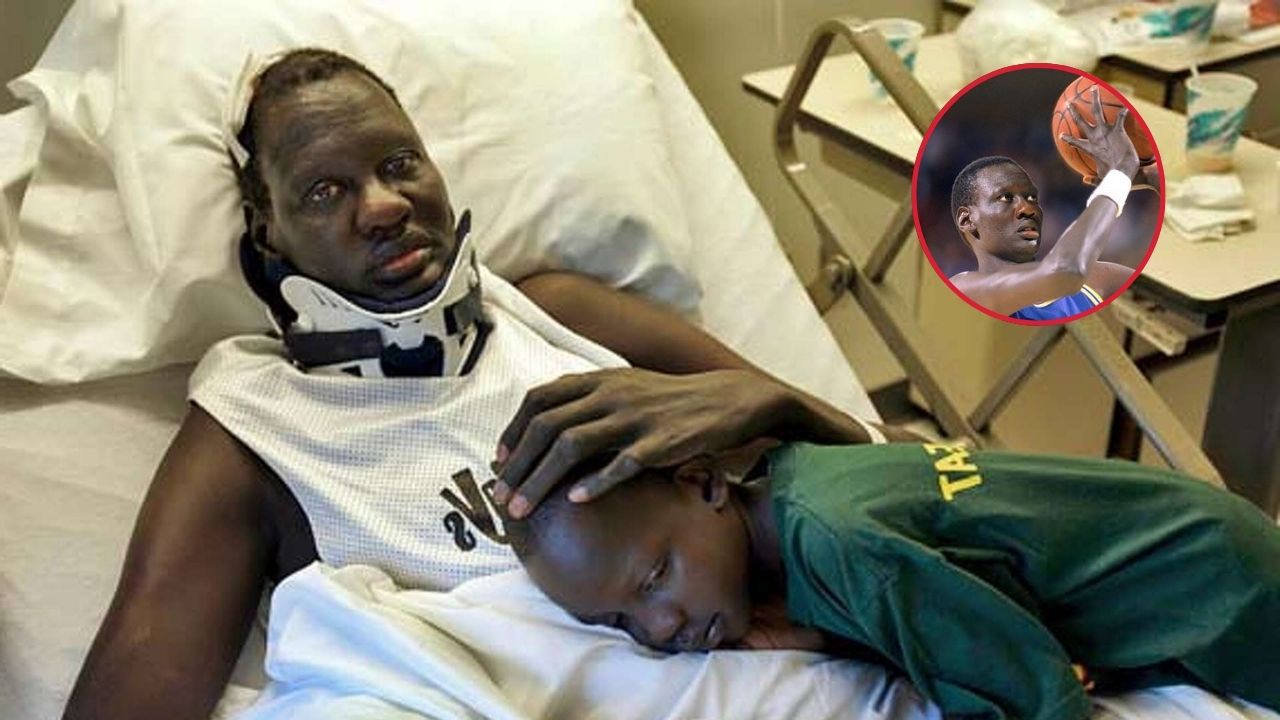
Manute Bol remains one of the most unforgettable figures in basketball history. Standing 7 feet 7 inches tall, the Sudanese-born NBA star became famous for his shot-blocking ability, remarkable height, and dedication to humanitarian causes. Even years after his passing, fans continue to search for details about Manute Bol’s cause of death and the health complications that led to the loss of one of basketball’s most unique personalities.
Bol died on June 19, 2010, at the age of 47 while receiving treatment at the University of Virginia Medical Center in Charlottesville, Virginia. His death was caused by acute kidney failure and complications related to Stevens-Johnson syndrome, a rare and potentially fatal medical condition.
What Caused Manute Bol’s Death?
According to medical reports released at the time, Bol suffered from severe kidney failure after developing Stevens-Johnson syndrome, a rare disorder that can trigger extreme reactions throughout the body.
The illness developed after he reportedly took medication while traveling in South Sudan. What initially appeared to be a treatment for a health issue quickly turned into a life-threatening condition that affected multiple organs.
Doctors fought to stabilize him, but the complications became increasingly severe. After spending weeks in intensive care, Bol ultimately succumbed to the illness and its devastating effects.
Understanding Stevens-Johnson Syndrome
Stevens-Johnson syndrome is an uncommon but serious disorder that is often triggered by certain medications or infections. The condition causes the body’s immune system to react aggressively, attacking the skin and mucous membranes.
In Bol’s case, the disease caused extensive damage throughout his body. Reports indicated that his skin began peeling, while painful sores developed around his mouth, throat, and tongue.
These symptoms made eating and drinking extremely difficult. As the condition worsened, it led to widespread complications that affected his overall health and placed tremendous strain on his organs.
Because the disorder progresses rapidly, patients often require emergency medical care and intensive treatment.
Kidney Failure Became the Critical Complication
While Stevens-Johnson syndrome created severe physical suffering, kidney failure became the primary medical emergency that ultimately led to Bol’s death.
His kidneys gradually stopped functioning properly, preventing the body from filtering waste and maintaining essential fluid balance. Doctors worked to manage the condition, but the damage proved too extensive.
The combination of severe skin reactions, nutritional challenges, infection risks, and organ failure created a situation from which recovery became increasingly unlikely.
Medical specialists noted that the rare disease directly contributed to the collapse of his kidney function and overall health.
Final Weeks in Hospital
During the final weeks of his life, Bol remained under close medical supervision in Virginia. Reports from family members and supporters described a difficult battle as physicians attempted to treat multiple complications simultaneously.
Friends, former teammates, and members of the Sudanese community expressed concern as news of his condition spread.
Despite receiving specialized care, his health continued to deteriorate. On June 19, 2010, the basketball world received the heartbreaking news that Bol had passed away at just 47 years old.
The announcement sparked tributes from across the sports world and beyond.
A Unique NBA Career
Although his life ended far too soon, Bol left behind a basketball legacy that remains remarkable.
After arriving in the United States, he became one of the most recognizable players in professional basketball. He played ten seasons in the NBA, representing teams including the Washington Bullets, Golden State Warriors, Philadelphia 76ers, and Miami Heat.
Known primarily for his defensive abilities, Bol developed a reputation as one of the greatest shot-blockers the league has ever seen. His extraordinary wingspan allowed him to alter games in ways few players could.
Even decades later, his blocked-shot records and defensive achievements continue to earn admiration from basketball fans worldwide.
More Than a Basketball Player
While many athletes are remembered solely for their accomplishments on the court, Bol’s impact extended far beyond sports.
Throughout his life, he remained deeply committed to helping the people of Sudan. He funded schools, medical projects, humanitarian initiatives, and community programs aimed at improving conditions in areas affected by conflict and poverty.
Numerous reports indicated that he devoted a substantial portion of his earnings to charitable work. Those who knew him often described him as a man who placed helping others above personal wealth.
His humanitarian efforts earned respect from political leaders, aid organizations, and ordinary citizens alike.
Commitment to Peace in Sudan
Before his illness, Bol actively supported efforts to promote peace and reconciliation in Sudan.
He worked closely with organizations focused on bringing together communities divided by ethnic and religious conflicts. His goal was to encourage dialogue and cooperation in a country that had endured decades of instability.
Even after achieving fame in the United States, he remained deeply connected to his homeland and consistently used his platform to draw attention to humanitarian concerns.
Many supporters believe this commitment to service became his greatest achievement.
A Legacy That Lives On
More than a decade after his passing, Manute Bol continues to be remembered as both a basketball pioneer and a humanitarian role model.
His death resulted from acute kidney failure caused by complications of Stevens-Johnson syndrome, a rare illness that dramatically altered his health during the final weeks of his life. Yet his story is not defined solely by tragedy.
Bol’s legacy lives on through his contributions to basketball, his charitable work in Sudan, and the inspiration he provided to future generations. His son, Bol Bol, has also continued the family’s basketball journey, introducing a new generation of fans to the Bol name.
For many people, Manute Bol remains an example of how athletic success can be used to create meaningful change far beyond the game itself.