
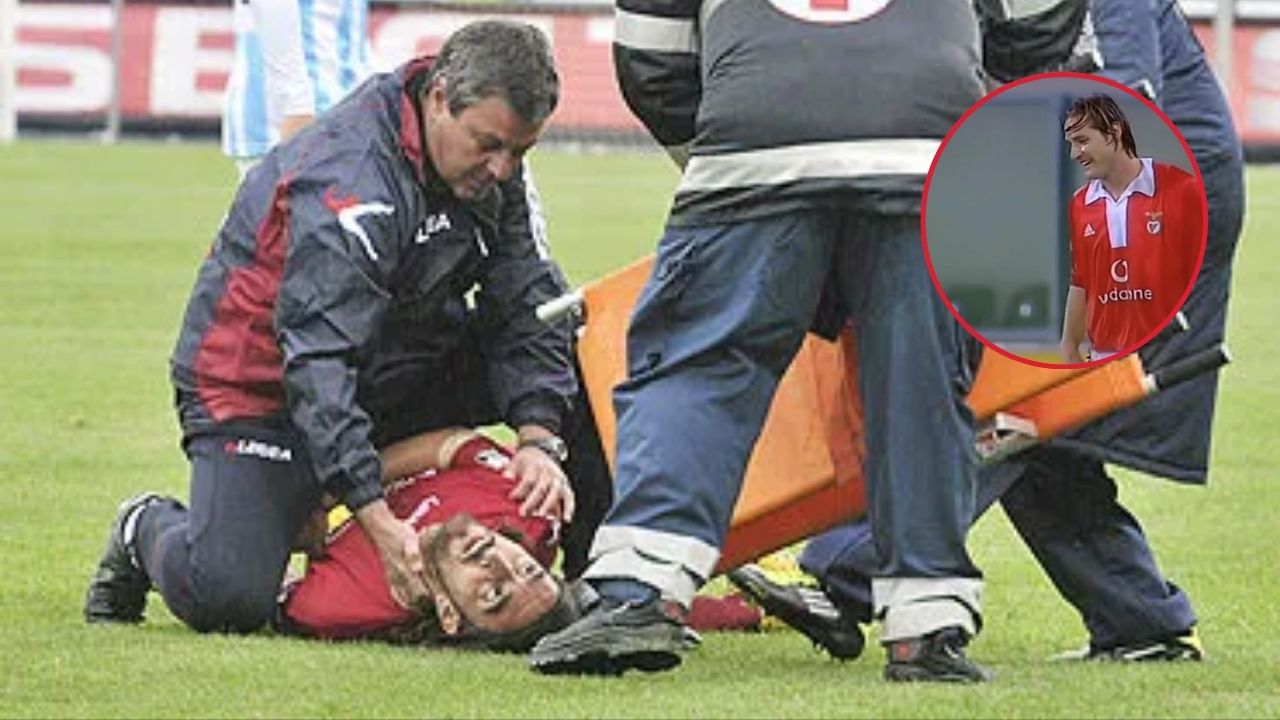
The death of Hungarian footballer Miklós Fehér remains one of the most heartbreaking moments in modern football history. More than two decades later, fans still remember the shocking scene that unfolded during a Portuguese league match when the talented striker suddenly collapsed on the field in front of teammates, opponents, and millions of television viewers.
Fehér was only 24 years old when he died on January 25, 2004. At the time, he was playing for Portuguese giants Benfica and was considered one of Hungary’s most promising football talents.
His tragic passing not only devastated the football community but also helped raise awareness about hidden heart conditions affecting athletes around the world.
What Was Miklós Fehér’s Cause of Death?
Medical examinations later confirmed that Miklós Fehér died from hypertrophic cardiomyopathy, a serious heart condition that can increase the risk of sudden cardiac arrest.
The disease causes abnormal thickening of the heart muscle, making it more difficult for the heart to pump blood effectively throughout the body.
In some cases, individuals with the condition experience no obvious symptoms and may remain unaware they have it.
However, intense physical activity can sometimes trigger dangerous heart rhythm disturbances, potentially leading to sudden collapse and death.
Doctors determined that this underlying condition caused the fatal cardiac arrest that occurred during the match.
The Match That Changed Everything
The tragedy occurred during a Portuguese Primeira Liga fixture between Benfica and Vitória de Guimarães.
The match was nearing its conclusion when Fehér entered the game as a substitute.
Despite limited time on the field, he quickly made an impact by helping create the only goal of the match.
Benfica supporters were celebrating an important victory, and nothing appeared unusual about Fehér’s condition.
He was actively participating in play and showed no visible signs of medical distress.
The evening seemed destined to be remembered as another successful performance in his growing football career.
Instead, it became one of the most tragic nights in the sport’s history.
A Sudden Collapse
In the closing moments of the match, Fehér received a yellow card from the referee.
Television cameras captured him smiling immediately afterward, appearing relaxed despite the booking.
Seconds later, he bent forward slightly before unexpectedly falling backward onto the pitch.
The sudden collapse stunned players and spectators alike.
Initially, many assumed he had suffered a minor injury or momentary discomfort.
However, it quickly became clear that the situation was far more serious.
Teammates immediately called for medical assistance as panic spread across the field.
The images of that moment remain among the most emotional scenes ever broadcast in professional football.
Desperate Efforts to Save Him
Medical teams from both clubs rushed onto the field and immediately began emergency treatment.
Cardiopulmonary resuscitation (CPR) was performed while players stood nearby in visible distress.
The atmosphere inside the stadium changed instantly as concern replaced competition.
Fans watched anxiously while doctors fought to stabilize the young striker.
After receiving emergency treatment on the pitch, Fehér was transported by ambulance to a nearby hospital in Guimarães.
Despite the efforts of medical professionals both at the stadium and later at the hospital, he could not be revived.
Doctors officially pronounced him dead later that evening.
The news sent shockwaves throughout Portugal, Hungary, and the wider football world.
A Rising Star of Hungarian Football
Before his tragic death, Fehér had established himself as one of Hungary’s most promising football talents.
Born in Tatabánya, Hungary, he developed into a highly regarded striker known for his athletic ability, intelligent movement, and goal-scoring instincts.
His performances attracted attention beyond his home country, eventually leading to opportunities in Portugal.
Over the course of his professional career, he represented several clubs and became a regular member of the Hungarian national team.
Many football observers believed his best years were still ahead of him.
His sudden passing ended a career that seemed destined for continued success.
Impact on Benfica
The loss of Fehér deeply affected everyone associated with Benfica.
Players, coaches, supporters, and club officials struggled to come to terms with the tragedy.
The emotional impact was evident in the days and weeks that followed as tributes poured in from around the football world.
To honor his memory, Benfica made a historic decision.
The club permanently retired his No. 29 jersey, ensuring that no future player would wear the number he made famous.
The gesture reflected the profound respect and affection the club held for him.
It remains one of the most significant tributes in Benfica’s history.
A Lasting Memorial
Beyond retiring his jersey number, Benfica also created a permanent memorial in Fehér’s honor.
A bronze bust was installed at Estádio da Luz, allowing supporters and visitors to remember the young striker whose life ended far too soon.
The memorial has become a place where fans continue to pay tribute to him years after his death.
For many Benfica supporters, Fehér remains an important part of the club’s identity and history.
The statue serves as a reminder of both his talent and the fragility of life.
Influence on Sports Medicine
Fehér’s death contributed to increased awareness of cardiac conditions among professional athletes.
Following several high-profile incidents involving sudden cardiac arrest in sports, medical organizations and football authorities intensified efforts to improve screening procedures.
Many clubs expanded cardiovascular testing programs designed to identify hidden heart abnormalities before they become life-threatening.
While no screening system can eliminate every risk, greater awareness has helped improve athlete safety across numerous sports.
Fehér’s case continues to be referenced in discussions about cardiac health and preventive medical evaluations.
Remembering Miklós Fehér
More than twenty years after his death, Miklós Fehér remains one of football’s most remembered figures.
His story is not only about a talented striker whose career was tragically cut short but also about the lasting impact one athlete can have on a club, a country, and a sport.
The official cause of death was hypertrophic cardiomyopathy, which led to cardiac arrest during a professional football match. Yet supporters continue to remember much more than the medical diagnosis.
For fans of Benfica, Hungarian football, and the sport as a whole, Fehér is remembered for his smile, his talent, and the promise of a future that ended far too soon.