
A former suburban Chicago police officer has been sentenced to more than five years in federal prison after being convicted of abusing his authority during traffic stops to obtain cash and illegal drugs from motorists. Federal prosecutors said the misconduct occurred over a two-year period and involved a coordinated scheme designed to target individuals considered unlikely to report the crimes.
The case has become one of the most notable recent public corruption prosecutions involving law enforcement officers in the Chicago metropolitan area, highlighting concerns about accountability, public trust, and abuse of power.
Federal Sentence Issued
Antoine Larry, 50, of Bolingbrook, Illinois, received a prison sentence of five years and three months in federal court after being convicted on multiple criminal charges.
The sentence was handed down by United States District Judge John F. Kness following a jury trial that resulted in guilty verdicts on conspiracy, extortion, and attempted extortion charges.
Federal prosecutors argued that Larry used his position as a police officer to enrich himself through illegal activities while performing official law enforcement duties.
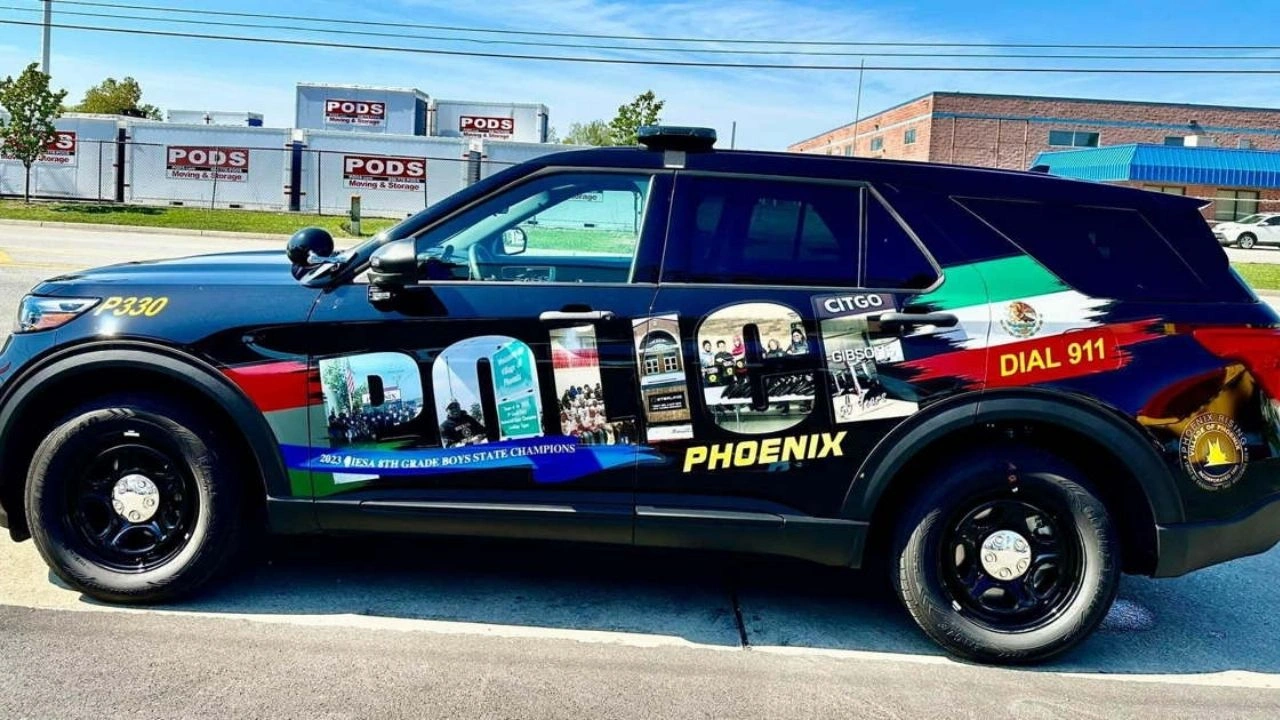
The sentencing marks a major milestone in a corruption investigation that examined conduct within the Phoenix Police Department and its interactions with motorists in south suburban communities.
Scheme Allegedly Operated for Years
According to evidence presented during court proceedings, the misconduct occurred between 2020 and 2022.
Prosecutors alleged that Larry worked closely with then-Sergeant Jarrett Snowden in carrying out the scheme. Authorities said the two officers used traffic stops in Phoenix and nearby Harvey as opportunities to obtain money and controlled substances from drivers and passengers.
Investigators claimed the officers specifically targeted people facing situations that could result in arrest, vehicle impoundment, citations, or other legal penalties.
Federal authorities argued that the officers believed many of these individuals would be reluctant to report misconduct because they feared their own legal troubles.
How the Alleged Extortion Worked
Court testimony revealed that the officers allegedly offered favorable treatment in exchange for money or drugs.
According to prosecutors, motorists were sometimes promised reduced charges, fewer citations, or the opportunity to avoid having their vehicles towed.
In some cases, authorities said individuals were permitted to leave traffic stops without further consequences after providing cash payments or narcotics.
The arrangement allowed the officers to personally benefit from encounters that should have been conducted according to standard law enforcement procedures.
Federal officials described the conduct as a serious breach of public trust and an abuse of police authority.
Use of Secretive Methods
During the trial, prosecutors detailed several methods allegedly used to conceal the scheme.
Witness testimony indicated that the officers occasionally relied on coded language when discussing payments or arranging exchanges. Authorities also claimed that cash deliveries were sometimes directed to off-site locations, including gas stations.
According to court records, intermediaries were occasionally used to collect money on behalf of the officers, creating additional layers of separation between the officers and the alleged bribes.
These tactics, prosecutors argued, were designed to avoid detection and reduce the likelihood that the scheme would be uncovered by supervisors or investigators.
More Than $15,000 Allegedly Stolen
Federal prosecutors stated that the officers unlawfully obtained more than $15,000 in cash and drugs from at least ten victims during the conspiracy.
Court records indicate that individual incidents involved amounts ranging from several hundred dollars to well over $1,000.
Authorities alleged that the scheme generated a steady stream of illegal gains over the course of two years.
While the financial amount may appear relatively modest compared to some public corruption cases, prosecutors emphasized that the damage extended beyond monetary losses.
They argued that the officers undermined confidence in law enforcement and exploited individuals during vulnerable situations.
False Reports Concealed Misconduct
One of the most troubling allegations involved efforts to hide the misconduct through official police documentation.
According to federal prosecutors, Larry and Snowden created inaccurate reports that failed to account for seized cash, cocaine, and other evidence collected during traffic stops.
By omitting important details, investigators said the officers attempted to conceal their actions and make routine reviews appear legitimate.
Court records also indicate that some confiscated narcotics were allegedly diverted rather than properly processed through evidence procedures.
Federal authorities argued that falsifying official records compounded the seriousness of the misconduct and demonstrated deliberate efforts to evade accountability.
Drug Sales Allegedly Part of Scheme
Prosecutors further alleged that some of the narcotics obtained during traffic stops were later sold rather than submitted into evidence.
According to court filings, controlled substances taken from motorists were allegedly transferred to a drug dealer, and the resulting proceeds were shared among participants in the scheme.
These allegations significantly expanded the scope of the case beyond simple bribery or extortion.
Federal officials argued that such conduct transformed the officers from law enforcement personnel into active participants in criminal activity.
The accusations became a major component of the government’s case during trial proceedings.
Co-Defendant Pleaded Guilty
The investigation also led to criminal charges against Jarrett Snowden, a former Phoenix police sergeant.
Unlike Larry, Snowden chose to plead guilty before trial. Court records show that he admitted participating in the conspiracy and acknowledged his role in the scheme.
His guilty plea provided investigators and prosecutors with additional evidence as they prepared the case against Larry.
Snowden’s sentencing is scheduled for October 27, when a federal judge will determine the appropriate punishment based on his involvement and cooperation.
Impact on Public Trust
Cases involving police corruption often generate strong public reaction because officers are entrusted with enforcing laws fairly and protecting communities.
When law enforcement personnel misuse their authority for personal gain, it can weaken confidence in the criminal justice system and damage relationships between police departments and the public.
Federal officials emphasized that accountability remains essential for maintaining trust and integrity within law enforcement institutions.
What Happens Next
With Larry now sentenced, the focus shifts to Snowden’s upcoming sentencing and the lasting impact of the case on local law enforcement agencies.
Federal prosecutors have described the conviction as a reminder that public officials who abuse their positions will face serious consequences.
The case underscores the importance of oversight, transparency, and ethical conduct in policing. It also serves as a warning that corruption, regardless of its scale, can lead to significant criminal penalties when uncovered by investigators.
As the legal proceedings continue, the case remains a prominent example of federal efforts to combat public corruption and uphold accountability within law enforcement.