
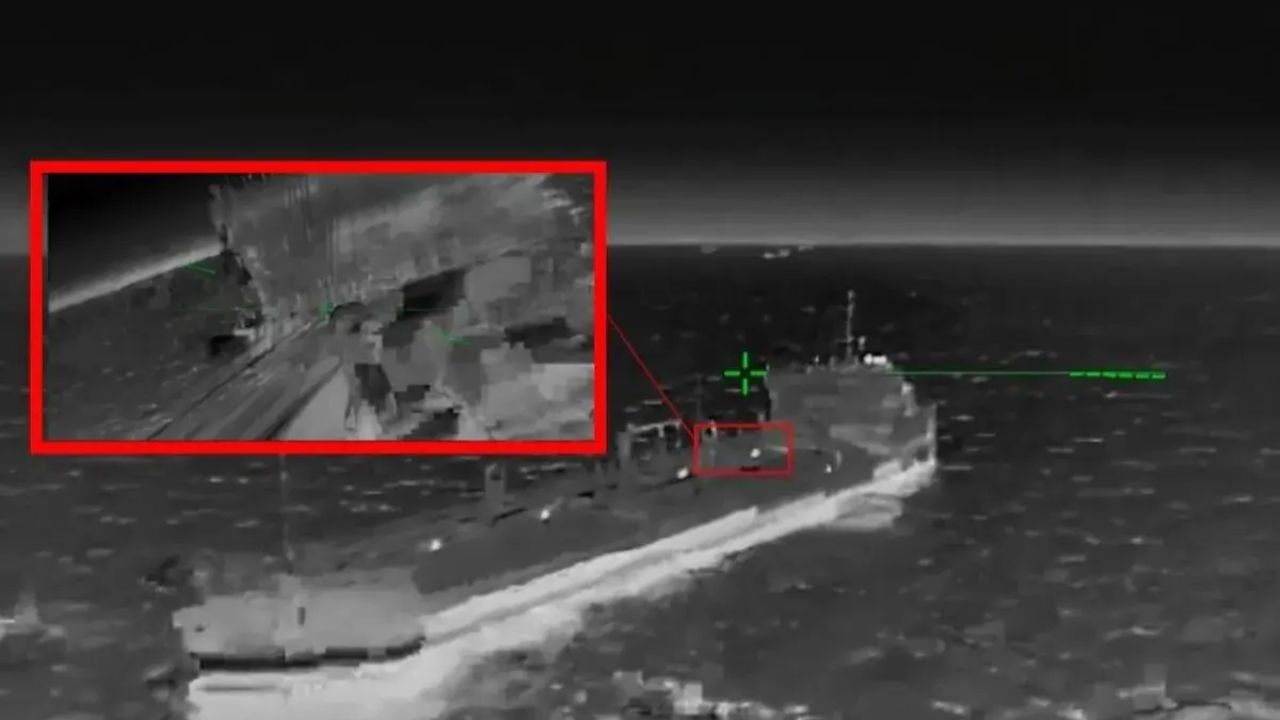
Ukraine has announced another long-range drone operation targeting energy infrastructure linked to Russia’s military logistics, saying overnight strikes hit an oil tanker in the Sea of Azov and a major fuel terminal in the occupied Crimean city of Kerch. The operation, described by Ukrainian military officials on Monday, marks the latest effort to disrupt supply networks that support Russia’s military operations.
While Ukrainian officials released details of the mission, Russian authorities had not independently confirmed the full extent of the reported damage at the time of the announcement. As with many developments during the conflict, some battlefield claims remain difficult to verify independently.
Overnight Operation
According to Ukraine’s Special Operations Forces (SSO), the overnight mission focused on two strategic targets connected to Russia’s fuel distribution network.
Officials said one target was a Volgoneft-class oil tanker operating in the Sea of Azov. The second reported target was an oil terminal in Kerch, a key port city on the Crimean Peninsula that has played an important role in regional logistics since Russia took control of the territory in 2014.
Ukraine described both locations as important components of Russia’s fuel transportation system.
Why These Targets Matter
Military planners increasingly view fuel infrastructure as a critical part of modern warfare.
Oil tankers, storage facilities, and distribution terminals supply petroleum products needed for transportation, industrial activity, and military equipment. Interrupting those supply chains can slow operations without directly engaging frontline positions.
According to Ukrainian officials, the Kerch terminal functions as a transfer point where fuel moves between railway networks, storage tanks, and maritime transport.
The SSO said disrupting those facilities forms part of a broader effort to reduce Russia’s logistical capacity.
Focus on Logistics
Rather than concentrating solely on territory, Ukraine has increasingly emphasized long-range strikes against infrastructure that supports military operations.
This strategy seeks to complicate fuel deliveries, transportation, and supply management far from active front lines.
Military analysts have frequently noted that logistics play a decisive role in prolonged conflicts. Even well-equipped forces can face operational challenges if fuel and supply networks become strained.
Ukraine has repeatedly stated that weakening those systems remains one of its strategic priorities.
Expanding Drone Campaign
Long-range drones have become one of Ukraine’s most significant military tools.
Over the past two years, increasingly sophisticated drone technology has enabled Ukrainian forces to target locations hundreds of kilometers from the battlefield. These operations have reportedly focused on oil depots, refineries, airfields, and military facilities.
The latest reported strike follows several previous Ukrainian announcements involving attacks on fuel infrastructure inside Russian-controlled territory.
The growing use of drones reflects how unmanned systems continue reshaping modern military operations.
Pressure on Fuel Supplies
Ukrainian officials argue that repeated attacks on energy infrastructure are placing additional pressure on Russian fuel distribution.
According to statements released by Ukraine, these operations are intended to limit the movement of petroleum products needed for transportation and military logistics.
Ukraine has described the campaign as a form of long-range economic and logistical pressure designed to reduce Russia’s ability to sustain prolonged military operations.
Independent verification of the broader impact on Russia’s nationwide fuel supply remains limited, and assessments vary among analysts.
Crimea’s Strategic Importance
Crimea continues to hold enormous strategic value for both Ukraine and Russia.
The peninsula serves as an important transportation hub linking maritime routes, ports, military facilities, and infrastructure across the Black Sea region.
Kerch, in particular, plays a central role because of its port facilities and connections to rail and road networks.
For that reason, infrastructure in and around Crimea has frequently been the focus of military operations from both sides since the conflict intensified.
Evolving Battlefield Strategy
Military observers note that both Ukraine and Russia have increasingly relied on long-range precision strikes rather than exclusively focusing on direct battlefield engagements.
Infrastructure, supply depots, transportation corridors, and logistics centers have become frequent objectives as each side attempts to limit the other’s operational flexibility.
The growing importance of drones has accelerated this shift, allowing strikes against targets located far from traditional combat zones.
As drone technology continues advancing, logistical facilities are expected to remain significant objectives throughout the conflict.
Looking Ahead
The reported operation highlights Ukraine’s continued emphasis on targeting infrastructure it believes supports Russian military operations. While Ukrainian officials presented the strikes as another successful effort to disrupt fuel logistics, independent confirmation regarding the scale of the reported damage remains limited.
With both sides continuing to expand their use of long-range drones and precision attacks, infrastructure is likely to remain at the center of military planning. Developments in the coming days may provide additional information about the reported strikes, their operational impact, and any response from Russian authorities as the conflict continues to evolve.