
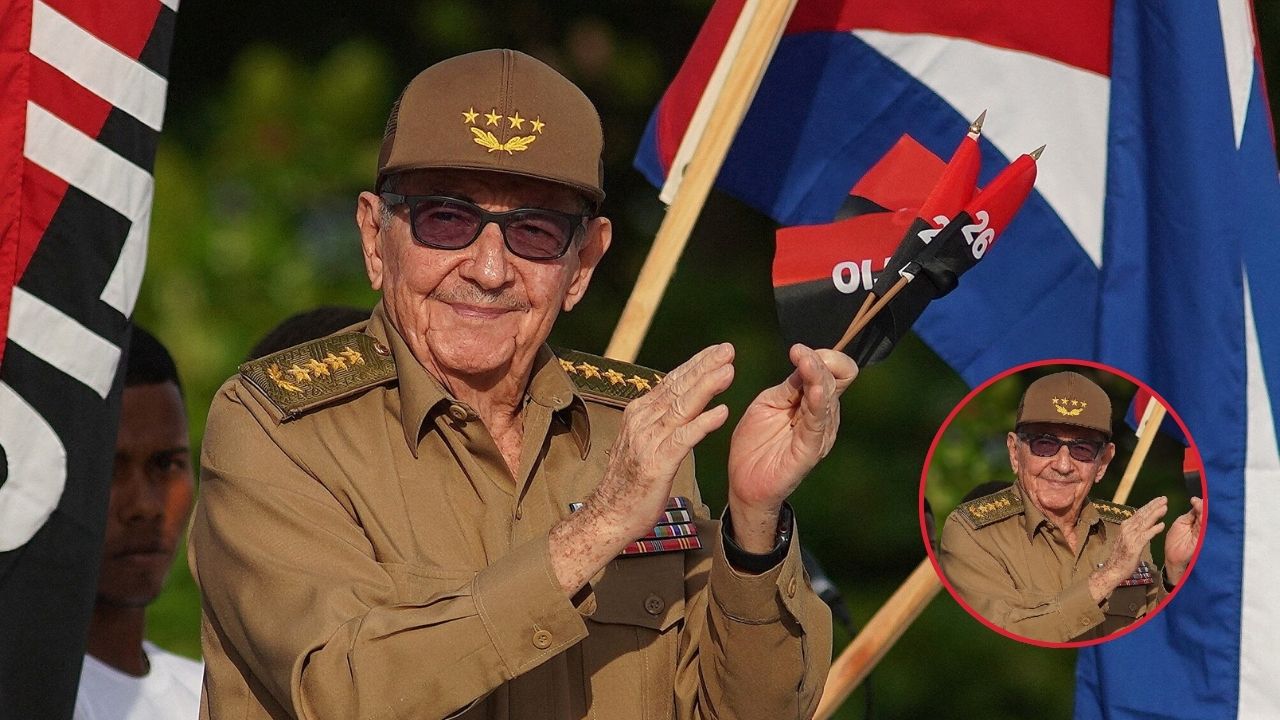
Former Cuban leader Raúl Castro has entered a dramatic new chapter in his long political history after U.S. federal prosecutors announced murder-related charges tied to a deadly 1996 aircraft shootdown that killed four Americans.
The legal action marks one of the most serious escalations in U.S.-Cuba tensions in decades and has reignited global attention around Castro’s revolutionary past, military leadership, and lasting influence over Cuba’s communist government.
At 94 years old, Raúl Castro now finds himself at the center of an international legal and political storm that connects Cold War history, Cuban exile politics, and modern geopolitical conflict.
From Revolutionary Fighter to Cuban Power Broker
Raúl Castro became one of the most influential figures in modern Cuban history through his role in the Cuban Revolution alongside his older brother Fidel Castro.
During the 1950s, the Castro brothers led a guerrilla movement against the government of Cuban leader Fulgencio Batista. After years of armed conflict, the revolution succeeded in 1959, bringing Fidel Castro to power and transforming Cuba into a communist state aligned with the Soviet Union.
While Fidel became the international face of the revolution, Raúl Castro quietly built enormous influence through military leadership and state security control.
Over time, he developed a reputation as one of the revolution’s most disciplined and powerful strategists.
Raúl Castro’s Rise Through Cuba’s Government
After the revolution, Raúl Castro became a central figure inside Cuba’s armed forces and political structure.
He served as defense minister for nearly five decades and helped oversee the modernization of Cuba’s military during some of the Cold War’s most tense periods. His influence expanded through intelligence operations, military alliances, and internal political control.
When Fidel Castro became seriously ill in the mid-2000s, Raúl gradually assumed leadership responsibilities before officially becoming president of Cuba in 2008.
Unlike Fidel’s fiery and theatrical public style, Raúl projected a quieter and more pragmatic image.
During his presidency, he introduced limited economic reforms while still maintaining the country’s one-party communist system.
The 1996 Plane Shootdown Case
The murder allegations now facing Raúl Castro stem from a controversial 1996 incident involving the Miami-based humanitarian organization Brothers to the Rescue.
The group regularly flew missions over waters near Cuba searching for migrants attempting dangerous sea crossings to Florida. Cuban authorities accused the organization of violating Cuban airspace and engaging in anti-government political activity.
In February 1996, Cuban MiG fighter jets shot down two civilian aircraft connected to the organization, killing four people on board.
The incident immediately sparked international outrage and severely damaged U.S.-Cuba relations.
An international investigation later concluded the planes were attacked over international waters rather than inside Cuban territory.
U.S. Prosecutors File Historic Charges
Nearly three decades after the shootdown, U.S. federal prosecutors announced criminal charges against Raúl Castro in a Miami court.
The indictment reportedly includes conspiracy to kill U.S. nationals, murder charges, and destruction of aircraft connected to the 1996 incident.
American officials described the move as an effort to hold foreign leaders accountable for attacks involving U.S. citizens.
The indictment also names several other former Cuban officials and military figures connected to the operation.
Legal experts say the case is historically significant because it marks one of the rare instances where the United States formally charged a former foreign head of state with murder linked to an international incident.
Audio Evidence Reignites the Investigation
Part of the renewed attention surrounding the case involves newly highlighted recordings reportedly connected to Raúl Castro.
According to recent reports, audio evidence from the 1990s allegedly captures Castro discussing orders related to the aircraft operation. Investigators and former intelligence officials reportedly consider the recordings significant in strengthening the case against him.
Cuban officials, however, strongly reject the accusations and describe the charges as politically motivated attacks connected to U.S. foreign policy pressure.
The Cuban government continues insisting the aircraft posed a threat to national sovereignty.
Tensions Between the U.S. and Cuba Escalate
The indictment arrives during another period of strained relations between Havana and Washington.
Under renewed political pressure from conservative American leaders, the United States increased criticism of Cuba’s government regarding human rights, economic policy, and political freedoms.
The legal action against Raúl Castro is widely viewed as part of a broader strategy aimed at increasing pressure on Cuba’s communist leadership.
Some analysts believe the case carries symbolic importance even if Castro never appears in a U.S. courtroom.
Others argue the indictment could further damage diplomatic possibilities between the two countries.
Raúl Castro’s Lasting Influence in Cuba
Although Raúl Castro formally stepped down from Cuba’s Communist Party leadership in 2021, many observers believe he still holds enormous behind-the-scenes influence within the Cuban political system.
For loyal supporters of the revolution, Castro remains a historic figure connected to national independence and resistance against foreign pressure.
Critics, however, view him as a symbol of authoritarian rule, political repression, and economic stagnation.
That divide reflects the larger global debate surrounding the legacy of Cuba’s revolutionary leadership.
Cuban Exile Communities Demand Justice
The indictment generated especially emotional reactions within Cuban exile communities in Florida.
Families connected to the victims of the 1996 aircraft shootdown have spent decades demanding accountability for the incident. Several exile organizations described the charges as long-overdue recognition of the deaths of the four men killed in the attack.
Political leaders in South Florida also praised the legal action and framed it as an important historical moment for Cuban-American communities.
For many families, the case represents unfinished justice connected to one of the Cold War’s most painful chapters.
Legal Questions Remain Unclear
Despite the historic nature of the indictment, major legal questions remain unresolved.
Because Raúl Castro still resides in Cuba, extradition to the United States appears highly unlikely under current political conditions. Cuba has no indication of cooperating with the prosecution effort, and legal analysts say the case may remain largely symbolic.
Still, experts note that symbolic prosecutions can carry enormous political significance internationally.
The charges also place renewed global attention on Cuba’s revolutionary history and its complicated relationship with the United States.
A Revolutionary Legacy Under Scrutiny
Raúl Castro’s life reflects one of the most dramatic political journeys of the modern era.
He moved from guerrilla revolutionary fighter to military commander, communist leader, president of Cuba, and now a federal murder suspect in the United States.
Supporters continue viewing him as a defender of Cuban sovereignty and revolutionary ideals. Opponents see him as part of a government responsible for decades of repression and political violence.
The latest indictment ensures that debates surrounding his legacy are far from over.
As tensions between Cuba and the United States continue evolving, Raúl Castro remains one of the most controversial and historically significant political figures connected to the Western Hemisphere’s modern history.