
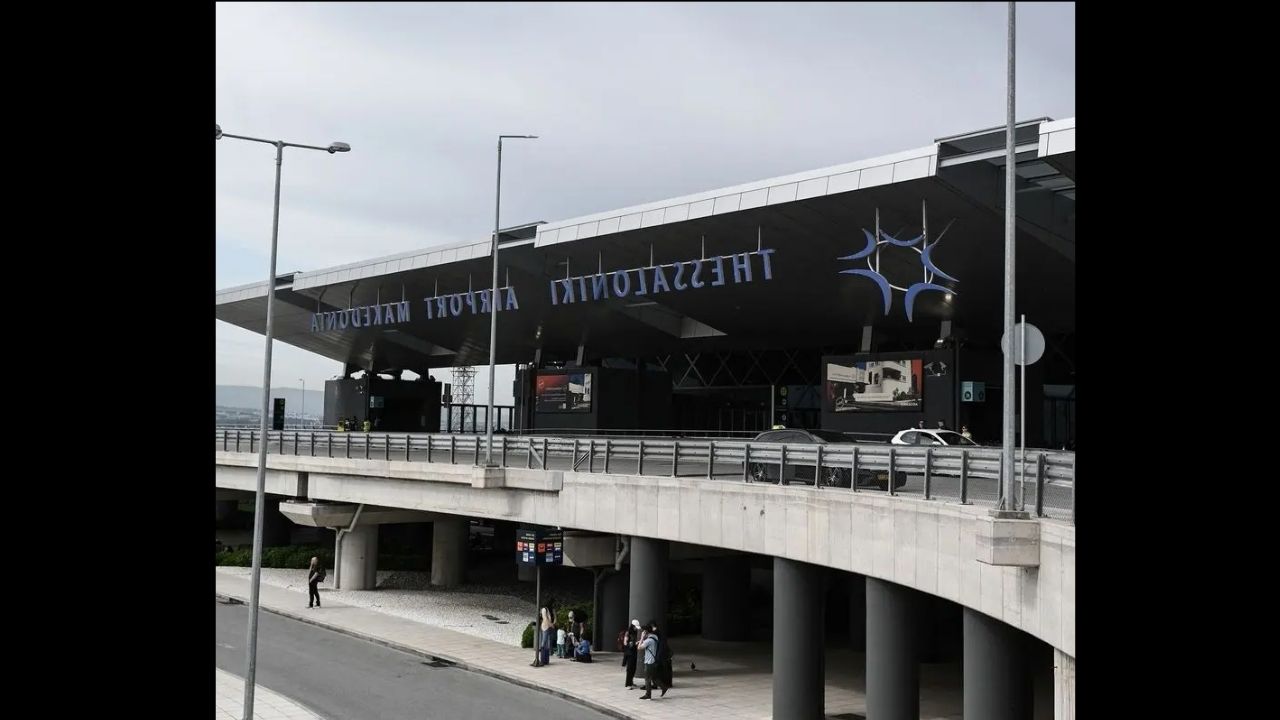
A Ryanair flight traveling from Thessaloniki, Greece, to Memmingen, Germany, was forced to return shortly after takeoff following a serious cabin pressurization incident. The aircraft safely landed back at Thessaloniki Airport after a passenger window became dislodged during the climb, leading to a rapid loss of cabin pressure.
The flight was operated by Malta Air using a Boeing 737-8AS. Although the incident created a frightening experience for those onboard, the crew completed a safe emergency landing, and passengers were later transferred to another aircraft to continue their journey.
The event is now under investigation by aviation authorities in Greece, with support from international regulators.
What Happened
According to flight tracking information, the aircraft departed Thessaloniki as scheduled on the morning of July 10, 2026.
While climbing to approximately 16,000 feet, a passenger window reportedly became detached, causing an immediate cabin decompression. Following emergency procedures, the pilots discontinued the flight and returned to the departure airport.
The aircraft landed safely after remaining airborne for just over an hour.
Emergency teams were already in position when the aircraft arrived, allowing passengers to leave the aircraft under controlled conditions.
Passenger Receives Medical Care
Greek media reported that a passenger seated next to the affected window experienced the most serious impact from the decompression.
According to eyewitness accounts, the sudden pressure change caused the passenger to be pulled toward the opening before nearby travelers helped keep him safely inside the aircraft.
Medical personnel met the aircraft after landing and provided treatment before transporting the passenger for further evaluation.
Hospital officials reported injuries to the neck and shoulder along with friction-related wounds. No other significant injuries were reported among passengers or crew.
Inside the Cabin
Passengers described the incident as unfolding within seconds.
Several travelers said they first heard a loud explosive sound before oxygen masks automatically dropped from the overhead compartments.
Many initially believed another type of emergency had occurred until the aircraft began descending rapidly.
Witnesses also described confusion and fear inside the cabin as passengers reacted to the unexpected loss of pressure.
Despite the stressful circumstances, several passengers praised the cabin crew for remaining calm while giving clear instructions throughout the emergency.
Crew Response
Commercial flight crews undergo regular emergency training to prepare for cabin decompression events.
After recognizing the pressure loss, the pilots followed standard procedures by descending to a lower altitude where breathable air is naturally available.
At the same time, flight attendants checked passengers, ensured oxygen masks were being used correctly and prepared the cabin for an emergency landing if required.
The coordinated response allowed the aircraft to return safely without additional complications.
Aviation experts frequently cite crew training as one of the most important safety measures during unexpected in-flight events.
Airline Statement
Ryanair confirmed that the aircraft returned to Thessaloniki after a passenger window became dislodged during flight.
The airline stated that passengers safely returned to the terminal following the landing and that one traveler requested medical assistance after arriving on the ground.
To reduce travel disruption, Ryanair arranged a replacement aircraft, allowing passengers to continue their journey to Memmingen later the same morning.
The airline also confirmed that it is cooperating fully with investigators reviewing the incident.
Airport Response
Airport operator Fraport Greece activated emergency procedures immediately after receiving notification that the aircraft was returning.
Ground crews, emergency responders and airport operations personnel coordinated closely to prepare for the arrival of the aircraft and assist passengers after landing.
Officials said established emergency protocols functioned as intended, helping ensure the aircraft was handled safely from touchdown through passenger disembarkation.
Airport operations gradually returned to normal following completion of the emergency response.
Investigation Underway
The Hellenic Air and Rail Safety Investigation Authority (HARSIA) has opened a formal investigation into the incident.
Investigators will inspect the aircraft, review maintenance records and analyze operational information recorded during the flight.
The cockpit voice recorder and flight data recorder are also expected to provide valuable information regarding aircraft systems, pilot actions and the sequence of events leading to the decompression.
Authorities have stressed that no conclusions regarding the cause have been reached.
Every possible contributing factor will be evaluated before a final report is prepared.
International Cooperation
Because the aircraft was operated by Malta Air, multiple aviation authorities are involved in the review.
The Irish Aviation Authority has confirmed it is monitoring the investigation and is prepared to provide technical assistance if requested.
The Maltese Civil Aviation Directorate is also expected to participate alongside Greek investigators.
International cooperation is common during aviation investigations involving aircraft registered or operated in different countries, ensuring all technical expertise is available throughout the review.
What Happens Next
The aircraft will remain out of service while engineers perform a detailed structural inspection.
Investigators will examine the window assembly, surrounding fuselage, pressurization systems and maintenance history to determine exactly why the failure occurred.
Although some passengers have speculated about possible causes, aviation authorities have emphasized that only the official investigation can establish what happened.
The safe return to Thessaloniki demonstrated the effectiveness of modern emergency procedures, aircraft design and crew training. As investigators continue their technical analysis, the findings are expected to contribute to future safety improvements while providing a clearer understanding of one of the most unusual in-flight incidents reported this year.