
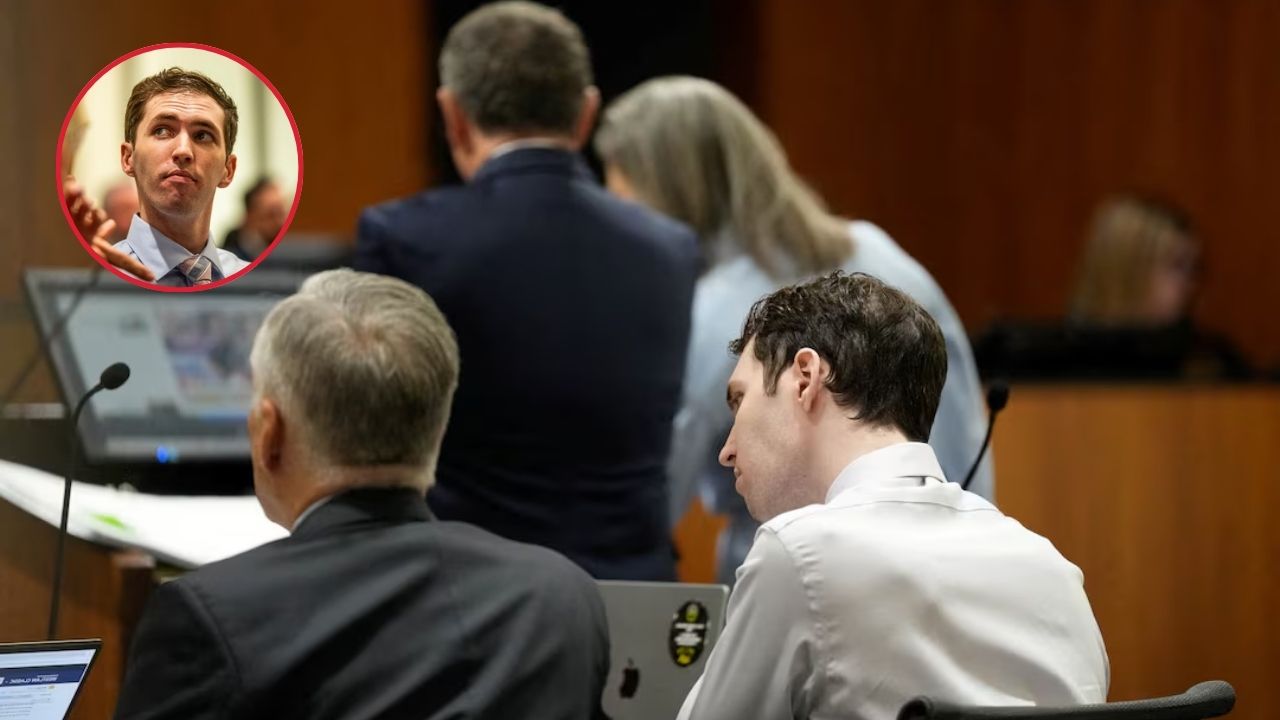
A major development unfolded in the criminal case involving conservative activist Charlie Kirk as prosecutors began presenting evidence during the opening day of a weeklong preliminary hearing in Provo, Utah. The proceedings, which started on Monday, July 6, 2026, are expected to determine whether the case against 23-year-old Tyler Robinson will advance to a full trial.
Held in Utah’s 4th District Court, the hearing has drawn widespread national attention because of Charlie Kirk’s public profile and the seriousness of the charges filed by the Utah County Attorney’s Office. Prosecutors are pursuing aggravated homicide and several additional felony counts, making this one of the state’s most closely watched legal proceedings.
Hearing Begins
The preliminary hearing marks an important step in the judicial process.
Unlike a trial, the purpose of this proceeding is not to determine guilt or innocence. Instead, the court must decide whether prosecutors have presented enough evidence to establish probable cause for the case to continue.
Robinson currently faces 10 criminal charges, including aggravated homicide, obstruction of justice, witness tampering, and first-degree felony discharge of a firearm causing injury.
If the judge determines that the legal standard has been met, the case will proceed to trial.
Judge’s Rulings
Before testimony began, several legal issues were resolved by State District Judge Tony Graf.
The judge rejected multiple defense requests seeking to block courtroom cameras and microphones. He also allowed hearsay evidence to be considered during the preliminary hearing, a decision that prosecutors argued was appropriate under Utah law.
Although the hearing is being broadcast, Judge Graf enforced strict courtroom rules, including a ban on portable electronic devices inside the courtroom throughout the proceedings.
The measures were designed to maintain courtroom order while balancing public access to the case.
Family Attends
Charlie Kirk’s widow, Erika Kirk, attended the hearing alongside his parents, Robert and Kathryn Kirk.
Prior to the proceedings, the family released a written statement acknowledging the emotional difficulty of participating in the court process.
They described Charlie as a devoted husband, father, son, brother, and friend while expressing gratitude for the prayers, encouragement, and support received since the 2025 tragedy.
The family also requested continued privacy and stated they would not provide additional public comments while the legal process remains ongoing.
Media Challenge
The courtroom restrictions prompted objections from attorneys representing several news organizations.
Media lawyers filed an emergency request over the holiday weekend, arguing that professional journalists require laptops and smartphones to report accurately and provide timely updates.
According to their filing, limiting electronic devices would make it more difficult for reporters to produce detailed coverage while the hearing was taking place.
Despite those arguments, the court maintained its restrictions for the duration of the preliminary hearing.
Defense Arguments
Defense attorneys challenged several aspects of the prosecution’s planned evidence.
Among their objections was the proposed use of photographs, video recordings, autopsy materials, and recorded testimony instead of requiring every witness to appear in person.
The defense specifically objected to introducing a recorded statement from Robinson’s former roommate, Lance Twiggs, arguing that cross-examination is necessary to properly evaluate the reliability of his testimony.
Attorneys described Twiggs as an important witness whose appearance in court should be required rather than replaced with previously recorded evidence.
These issues are expected to remain central as the hearing continues.
Evidence Presented
One of Monday’s witnesses was former Utah Valley University police officer Chris Bagley.
Bagley described the investigation conducted shortly after the September 2025 shooting and explained what officers discovered on the roof of the Losee Center building.
Among the items that caught investigators’ attention was a red-and-black screwdriver that Bagley said appeared unusual because it seemed out of place.
He also testified about markings found in the rooftop gravel, describing the disturbed area as resembling what he called a “sniper pad.”
Prosecutors presented this testimony as part of their effort to explain the investigative findings gathered at the scene.
Charges Explained
The prosecution’s case includes a wide range of allegations beyond the primary aggravated homicide charge.
Investigators allege Robinson committed obstruction of justice and witness tampering in connection with the incident. Prosecutors also accuse him of illegally discharging a firearm during the events under investigation.
Because aggravated homicide is classified as a capital offense under Utah law, prosecutors continue seeking the state’s most severe available punishment if a conviction is ultimately secured.
The defense has not publicly addressed the allegations in detail during the preliminary hearing, and Robinson has not been found responsible for any of the charges.
What Comes Next?
The hearing is scheduled to continue throughout the week, with prosecutors expected to introduce additional witnesses, forensic specialists, investigators, and physical evidence.
Defense attorneys will have opportunities to question witnesses and challenge the state’s presentation before the judge determines whether the evidence satisfies the probable cause standard.
Only after that decision will the court determine whether the case should move forward to trial.
The proceedings continue to attract nationwide attention because of Charlie Kirk’s influence in American politics and the legal questions surrounding the investigation. Monday’s testimony provided the public with a closer look at the prosecution’s evidence while also highlighting the defense’s concerns regarding witness testimony and courtroom procedure.
As additional testimony unfolds during the remainder of the hearing, the judge’s eventual ruling will determine the next stage of one of Utah’s highest-profile criminal cases. Until then, the preliminary hearing remains focused on evaluating the available evidence rather than reaching a final verdict.